CABEÇAS FEITAS
The CABEÇAS FEITA project is the result of the challenge posed to 50 creators from the creative community of Loulé who were invited to develop a lid that would go beyond the utilitarian function and take on a facet of personification, exercising a new look at the traditional pot.


Casa do Esparto
Trança de esparto pisado
At 89 years old, vivid memories and appreciative
of storytelling, Aldegundes Gomes says that
It is by working the esparto that he can rest. Rest, even if it's from housework or work behind the counter of the old grocery store that still has its doors open in the center of the village. She is the oldest of the four artisans who continue to show, at Casa do Esparto, opened in the village of Sarnadas, parish of Alte, how this wild fibre is worked and transformed into utilitarian and decorative pieces.
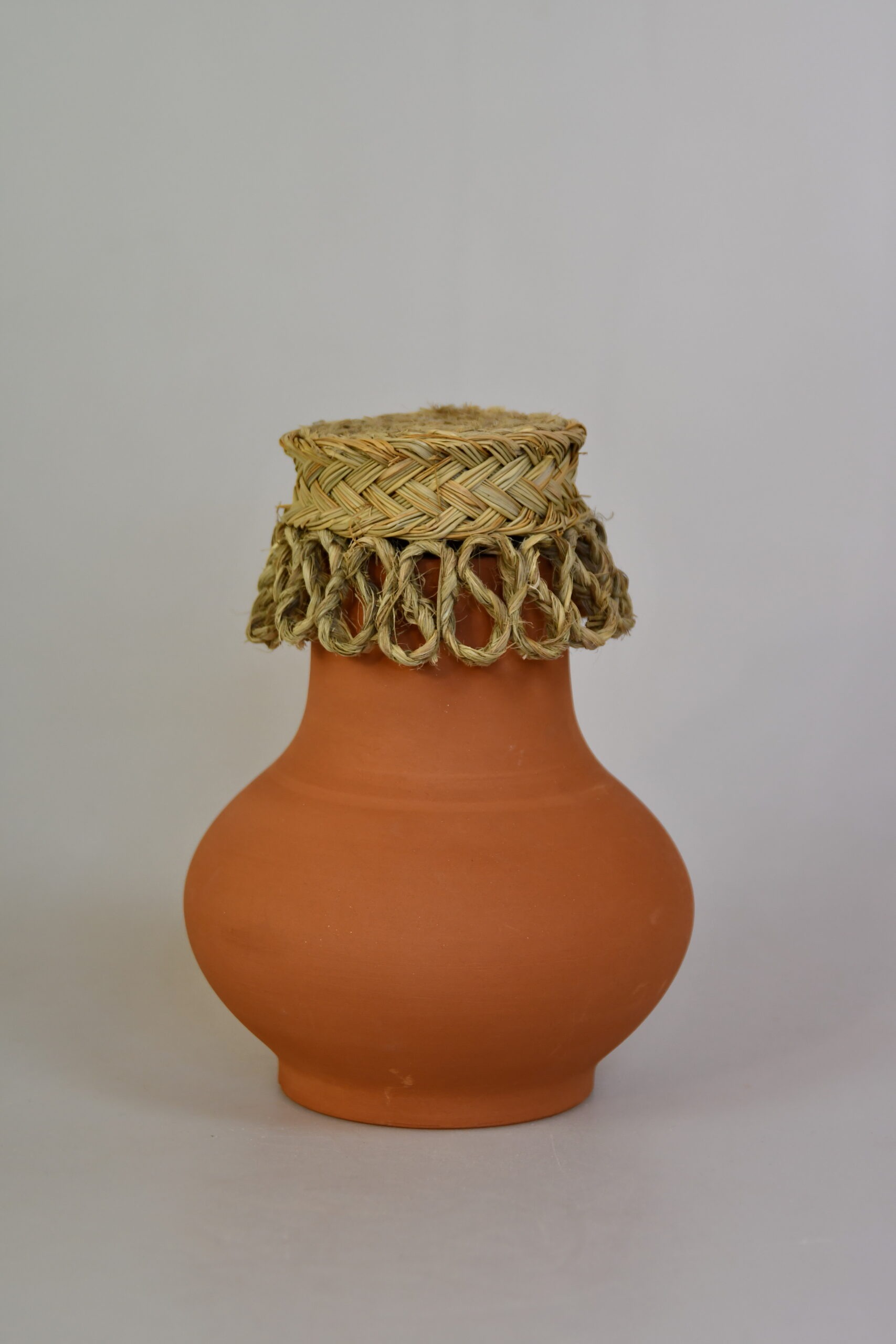
Aldegundes Gomes
Barro vermelho e esmalte produzido em roda de oleiro
Alessa Dresel works as a graphic and product designer. In 2017 she did an internship at the Loulé Design Lab and got to know the various traditional artisanal methods of the Algarve region. Even before and after, Dresel worked mainly with ceramics, developing concepts of tableware culturally influenced by the places he visits. He is currently back in Germany to pursue a master's degree.
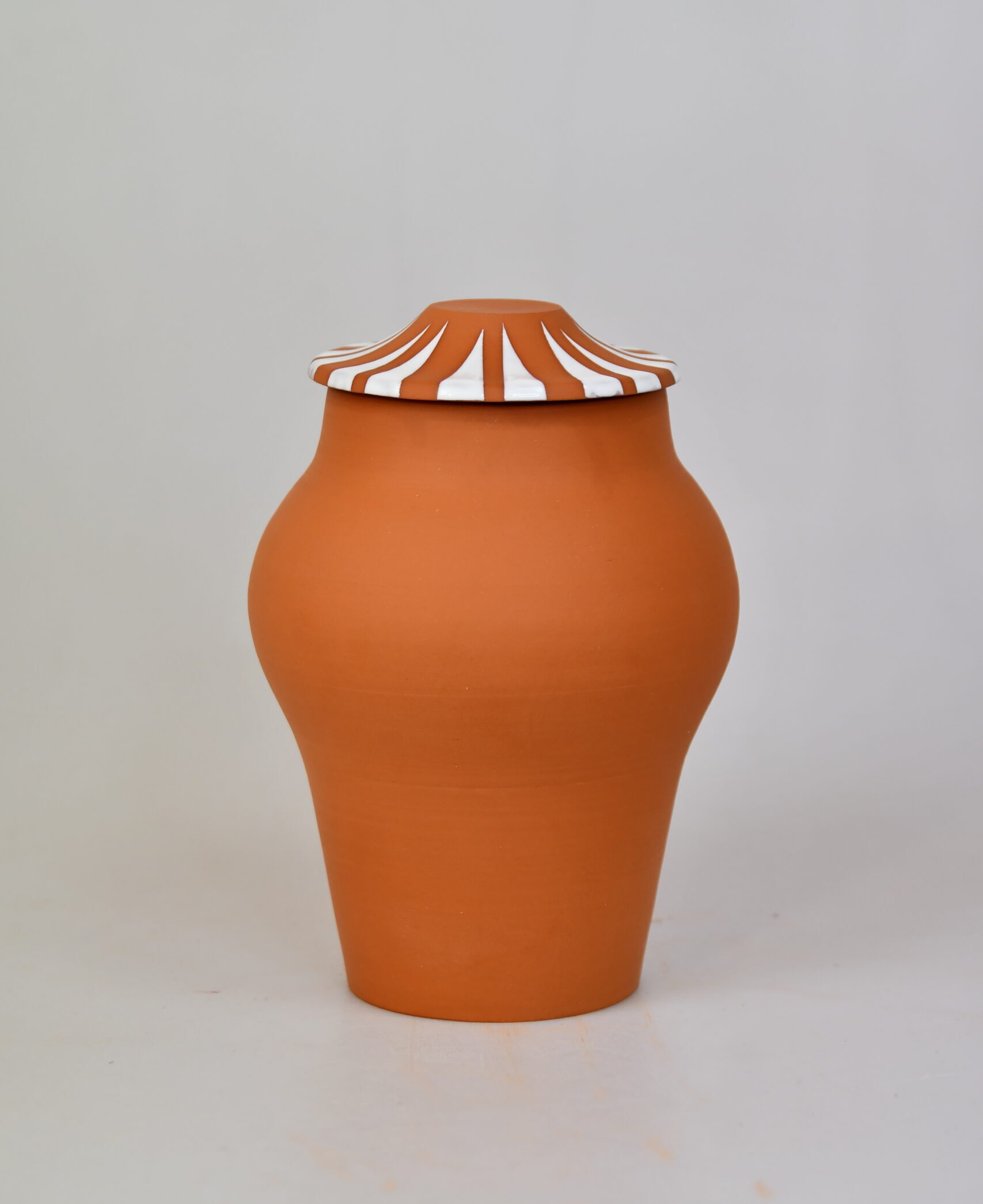
Alessa Dresel
Casa da Empreita
Empreita de Palma
Alzira is part of the group of artisans who dedicate herself
to work in Palma for more years. Since 1991 he has participated in numerous craft fairs throughout the Algarve, where he highlights Fatacil, in which he exhibited his work for many years. He has always participated in the Serra Fair and the Loulé Handicraft Fair. Born in Boliqueime, he learned to work palm with his mother, at the age of 11 and at 18 he earned his first money from the sale of pieces of his own. From then on he never stopped. He currently divides his time between
the contract and the field work. The pieces she likes to make the most are the traditional models: carrycots, rugs, fans, doormats and deuces - one of her trademarks. She is a master of colorful patterns, in the construction of 7 and 9 extensions, in the construction of nozzles and in the chain. He is proud of his work and of being part of Casa da Empreita since its foundation.
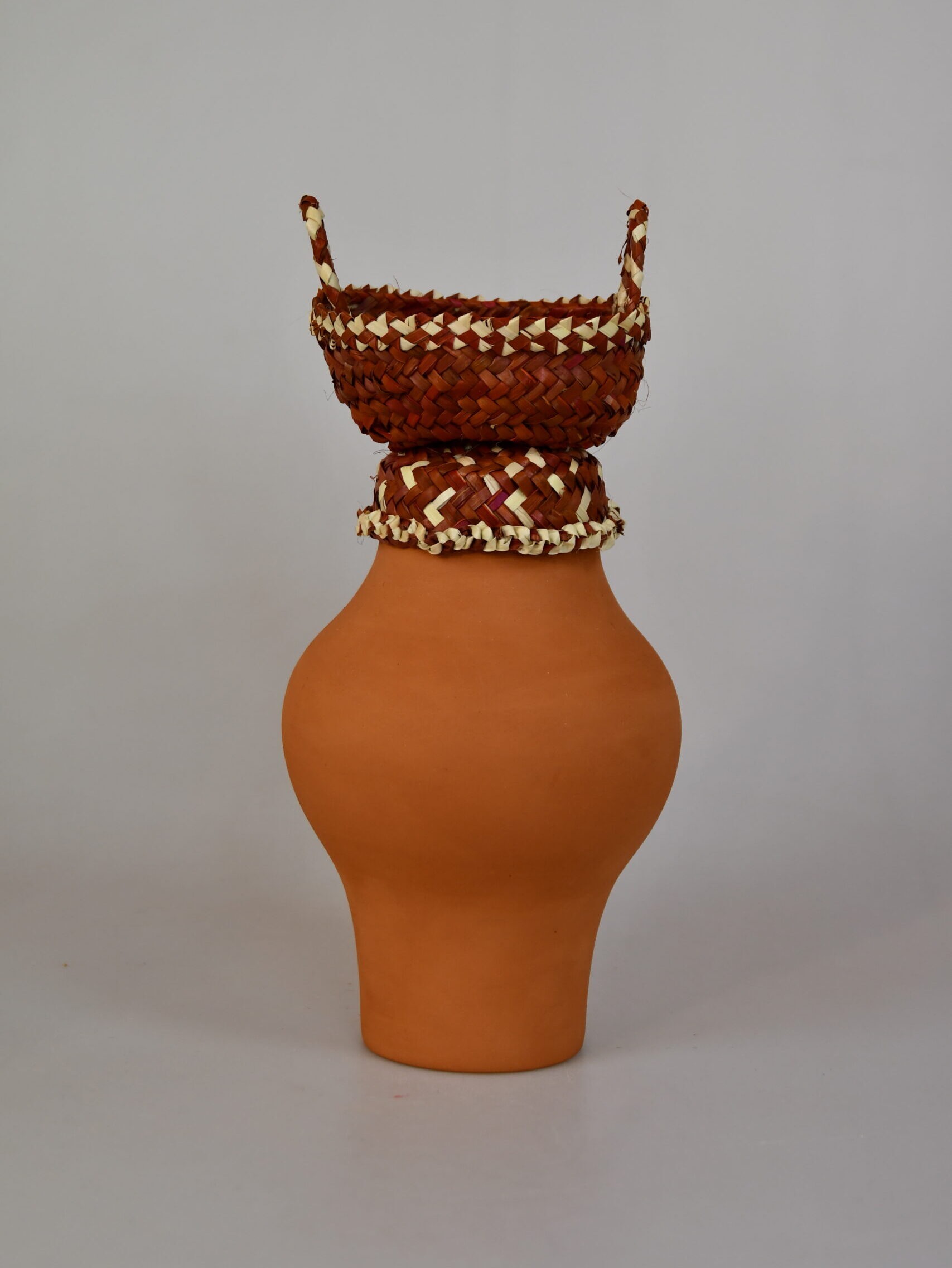
Alzira Neves
Esparto batido tecido com ponto colmeia
Ana Rita Contente was born in Santarém on the eve of the 25th of November, with chaimites in the streets. Despite the uncertain beginning, he has had a quiet life between Ribatejo and Alentejo, passing through the capital, to learn the craft of Design, with some of the best ever in Portugal.
He develops his activity in various areas of design, in the company he founded more than twenty years ago, from the Alentejo to the world.
The inability to have her hands still has always transformed her into an artisan, with materials and techniques that vary according to the taste of the moment.
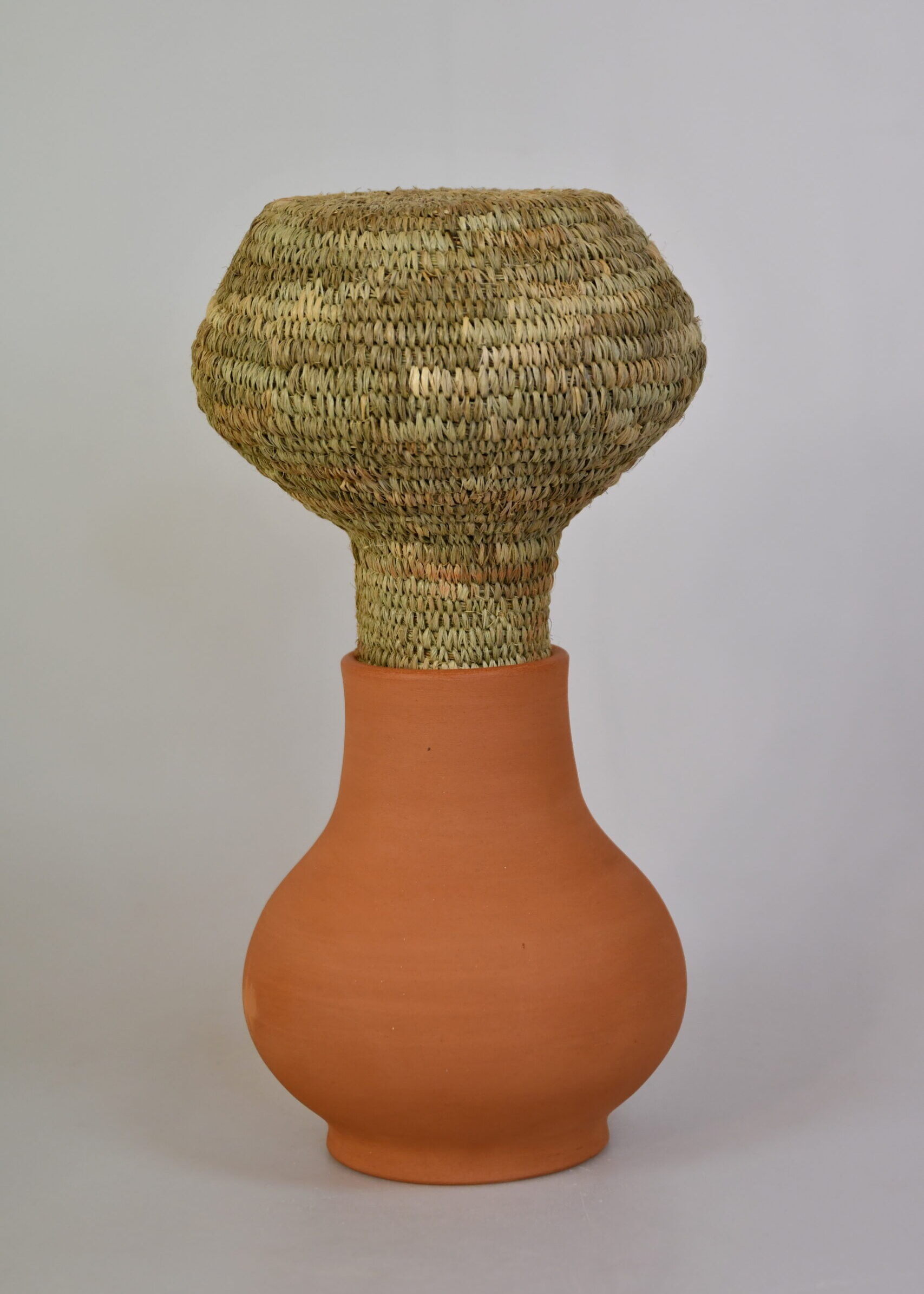
Ana Rita Contente
Oficina de Caldeireiros
Chapa e varão de cobre
Born in Loulé, in 1948, he began his career in the Barracha copper workshop - the most prestigious in the city - at the age of 12. There he started as an apprentice, under the guidance of the master of the workshop and remained until he was 27 years old - when he opted for a job in the cement industry. By the time he left the trade, he was already a workshop master. In 2016, already retired, he resumed his activity as a boilermaker, at the invitation of the Municipality of Loulé, to coordinate training in the artisanal boilermaking course implemented by the Loulé Criativo project. The art of artisanal boilermaker was disappearing and the municipality of Loulé tried to revitalize this art by training new artisans and opening the Boilermakers' Workshop, where master Anal ide continues to work. Analide Carmo is currently the only coppersmither producing copper and brass pieces in the traditional molds. Cataplanas, wire pots, chocolatiers, everything is made and hammered by hand according to the traditional method.
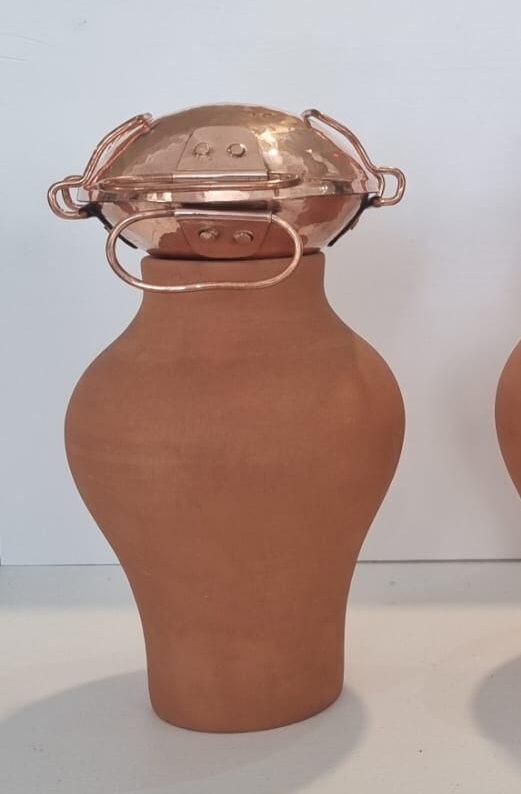
Analide Carmo
Olaria Xavier
Terracota Roda de Oleiro
Son of a potter, at the age of 25 António Xavier decides to continue his family's legacy, combining traditional techniques that were passed on to him by his father with the modern sensibility that his young age brings him.
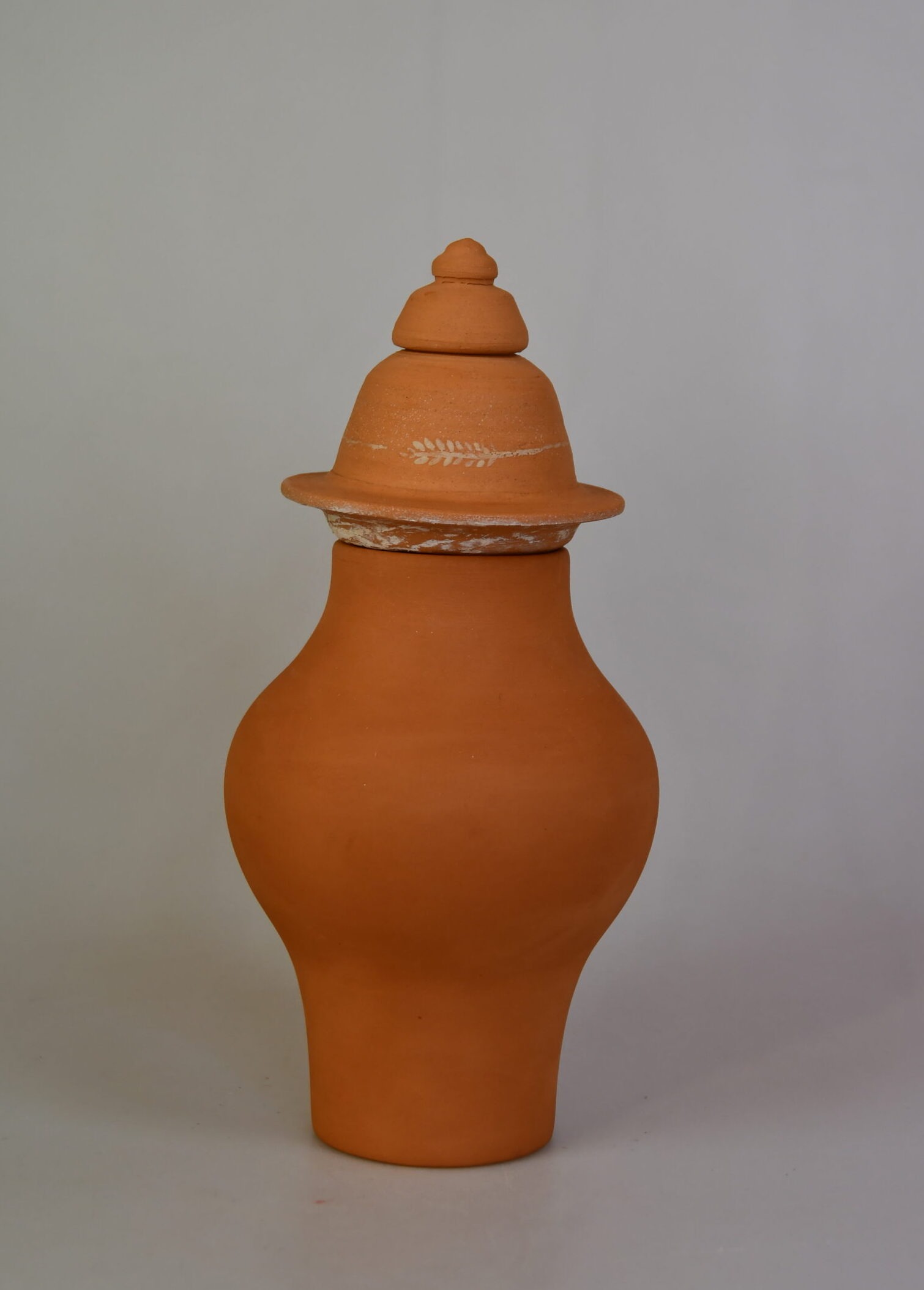
António Xavier
Oficina do Barro
Grés 1280ºC
Bernadette Martins was born in France, and currently lives and works in Loulé. He has always developed an aptitude for the arts. She graduated in Design from IADE in Lisbon and later attended a course in tile and ceramic painting in Loulé. In 2007 he opened his own tile and ceramic painting studio. In 2013 she started as a teacher of creative ceramics courses at IEFP Faro, continuing to teach children and adults. She is currently a resident at the clay workshop, integrated in the Loulé Criativo workshop network and incubated at the Loulé Design Lab with her brand Fragil Jewellery.
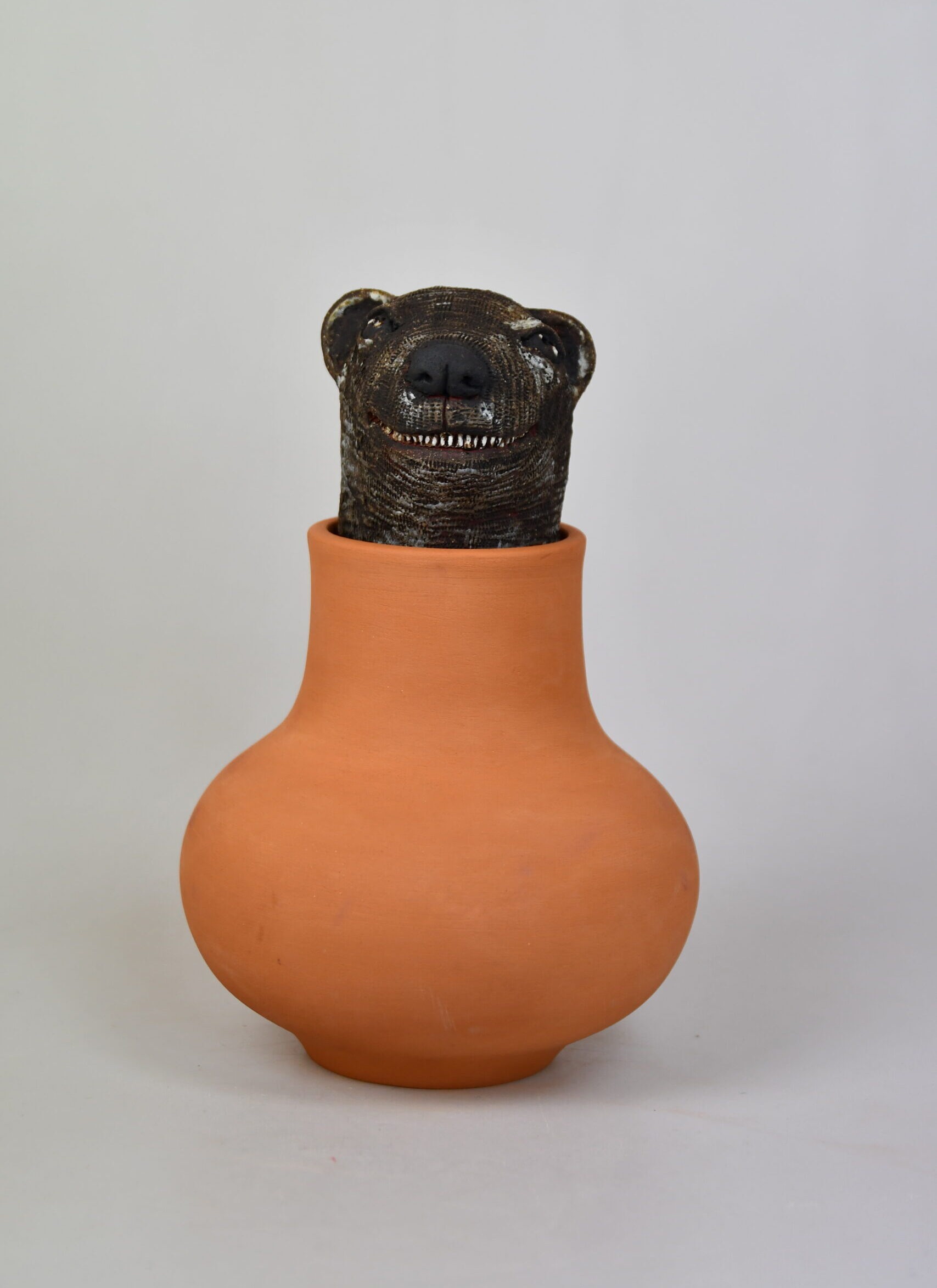
Bernadette Martins ceramics
Oficina do Barro
Grés e vidrados de alta
temperatura 1280º
A ceramist from Lacobrigense, he began his journey in clay after returning to Portugal. The potter's wheel is her preferred technique. She creates from functional to decorative pieces in stoneware. It is inspired by the beauty of shapes and textures, simplicity and the everyday. Each piece is made to be timeless and treasured. Her project aims to explore the duality between utility and beauty, combining the tradition of stoneware and the potter's wheel technique to create contemporary pieces with a minimalist touch.
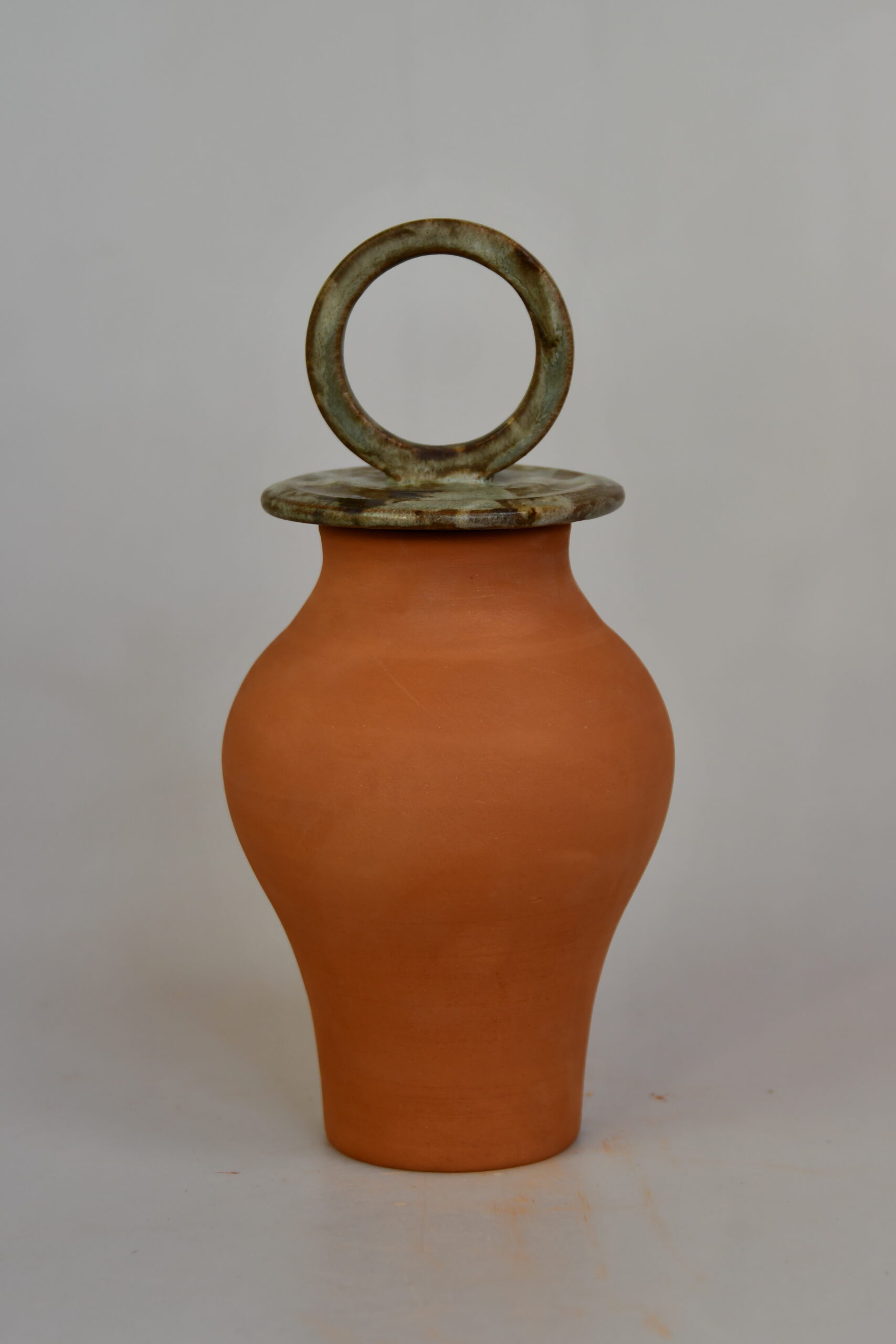
Catarina Gonçalves
Tanta Design
Lã merino
Feltragem molhada e de agulha
Cláudia Moreira has a degree in Architecture from the Faculty of Architecture of the Univ. of Lisbon and a master's degree in Metropolis: Urban Culture from the Universitat Politécnica de Catalunya/CCCB. He has collaborated with several offices in Portugal, the United Kingdom, the Netherlands. He has participated in several international competitions and exhibitions. He founded MOTE Design Studio, a firm specializing in architecture, urbanism and strategy. He has courses in manual felting, millinery and weaving.
The Tanta project includes the design and production of yarns, objects and textile accessories. It explores the manual dyeing of wicks and skeins of wool and mixed fibers with natural and synthetic pigments as a basis for the manual spinning of "art yarn" and construction and manipulation of objects in manual felt. It is currently developing a project to value and use the wool of the Churra Algarvia sheep.
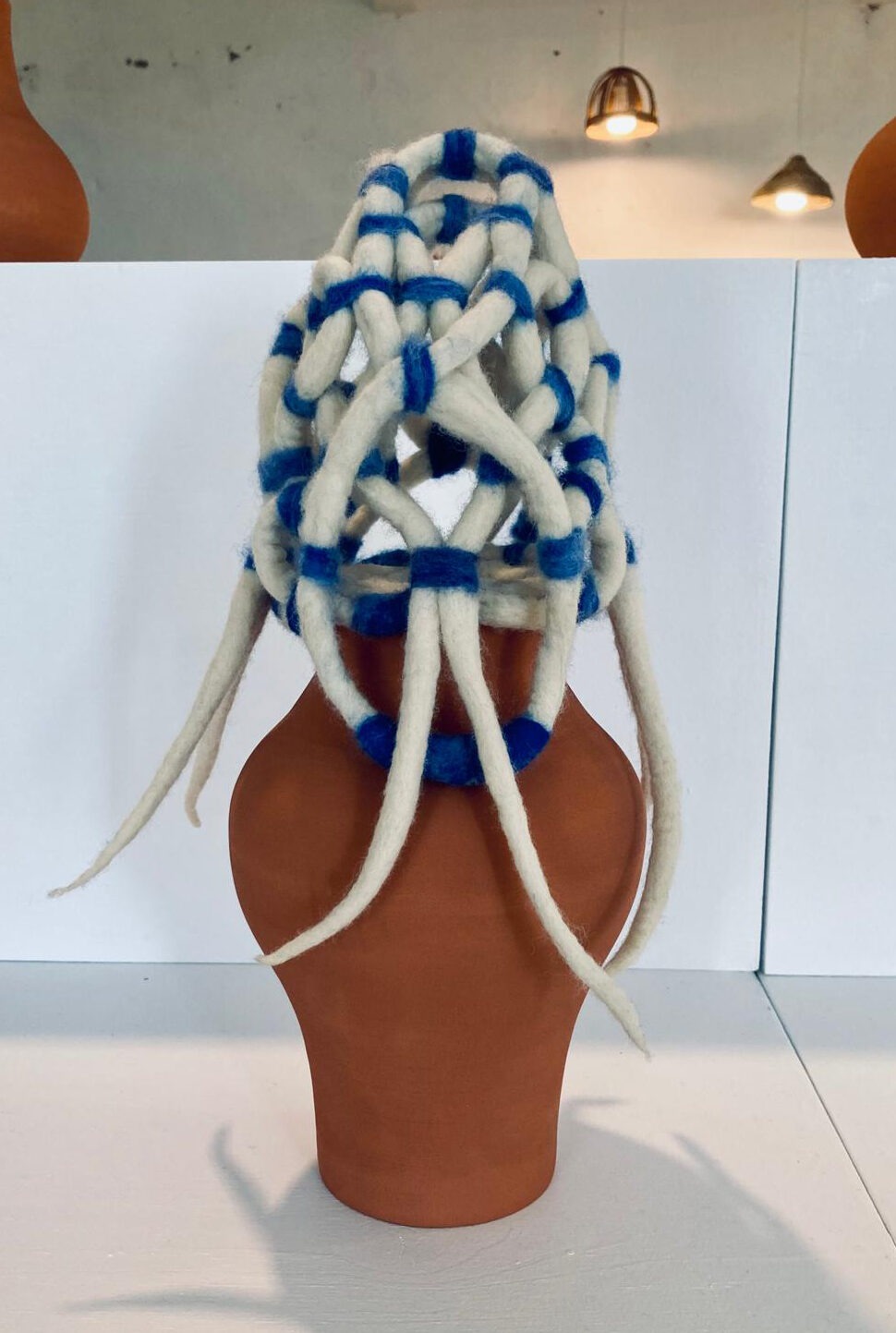
Cláudia Moreira
Casa da Empreita
Empreita de palma repassada, cosida à máquina, tecido e fio de algodão
With a restless spirit and a will to constantly improve, the art of crafting came late into this artisan's life. She began sewing at a young age, and at the age of 45, she attended a course in palm and esparto weaving—a long-held dream she now has the opportunity to fulfill. With a particular taste for innovation, she combines her talent for sewing with diverse techniques and materials, resulting in unique objects that strive for perfection.
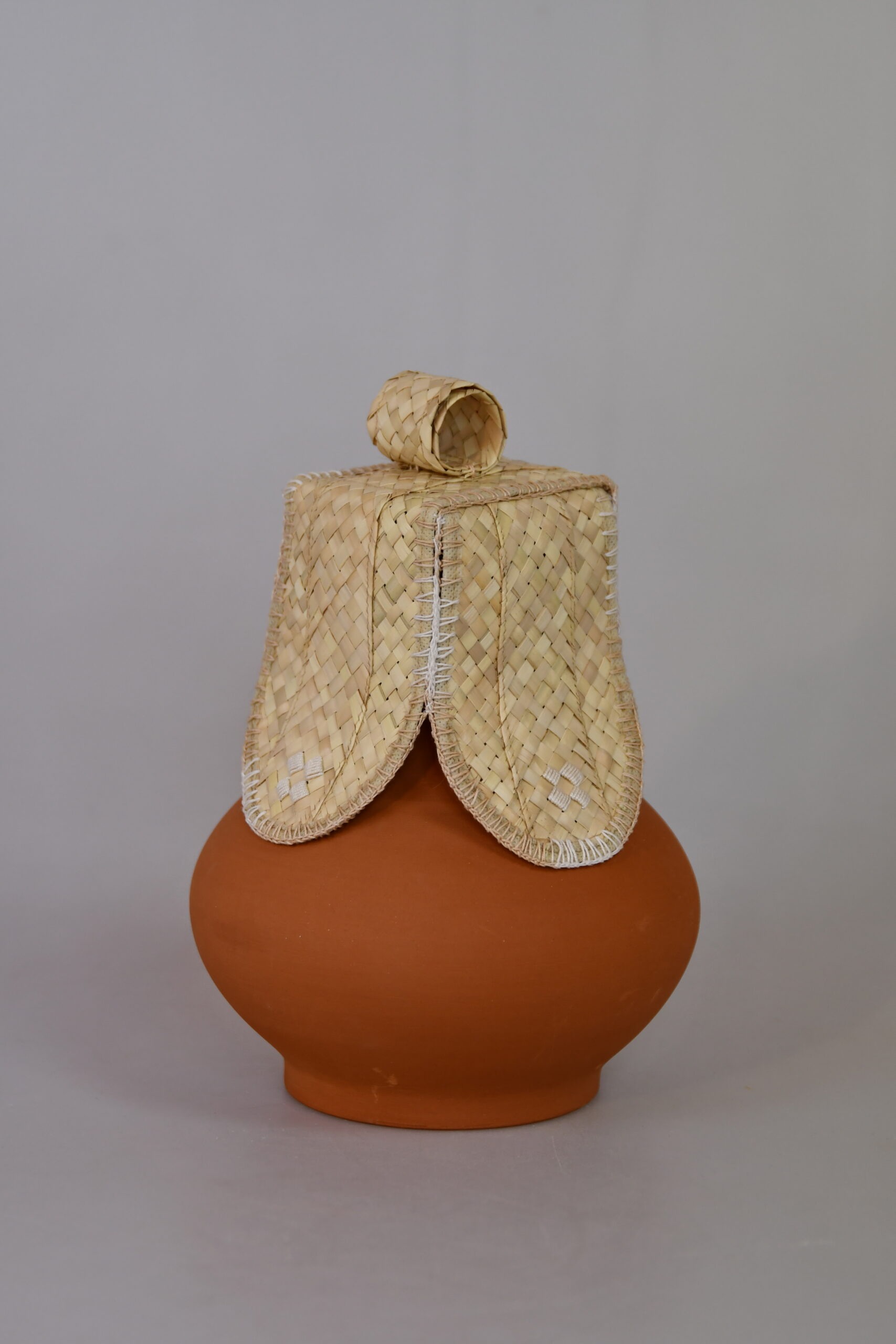
Cremilde Lourenço #1
Casa da Empreita
Empreita de palma repassada cosida
à máquina
With a restless spirit and a will to constantly improve, the art of crafting came late into this artisan's life. She began sewing at a young age, and at the age of 45, she attended a course in palm and esparto weaving—a long-held dream she now has the opportunity to fulfill. With a particular taste for innovation, she combines her talent for sewing with diverse techniques and materials, resulting in unique objects that strive for perfection.
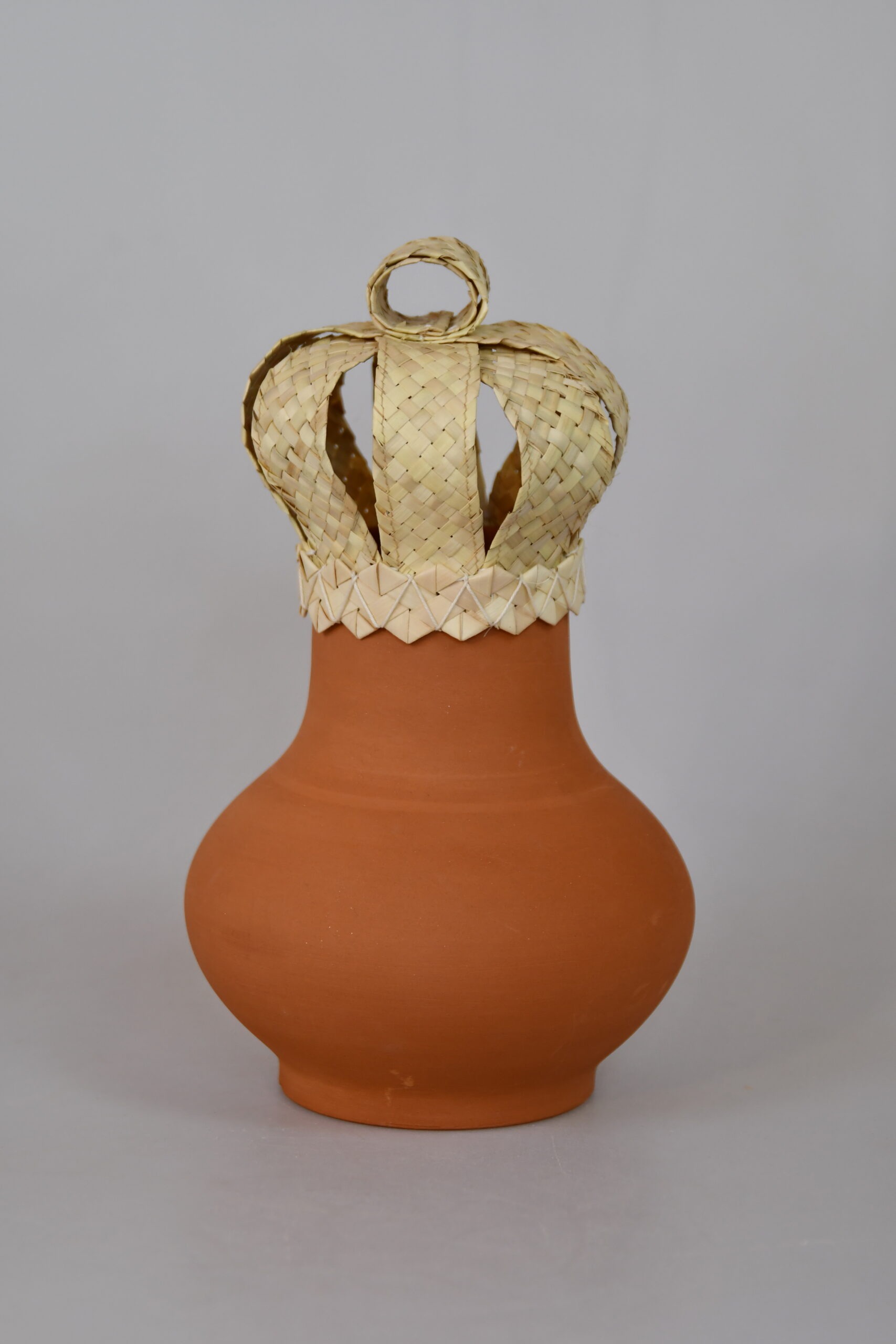
Cremilde Lourenço #2
Oficina dos Têxteis
Cordão de algodão tricotado, barbas de madeira trabalhadas com várias técnicas de macramé
Desi is Dutch and has lived in Portugal for about 15 years. Macramé came into her life a little by chance, at the time of the pandemic, when she became interested in the technique and started attending courses and workshops. From then on she never stopped, having been completely surrendered to this fascinating technique of manual weaving with the use of knots.
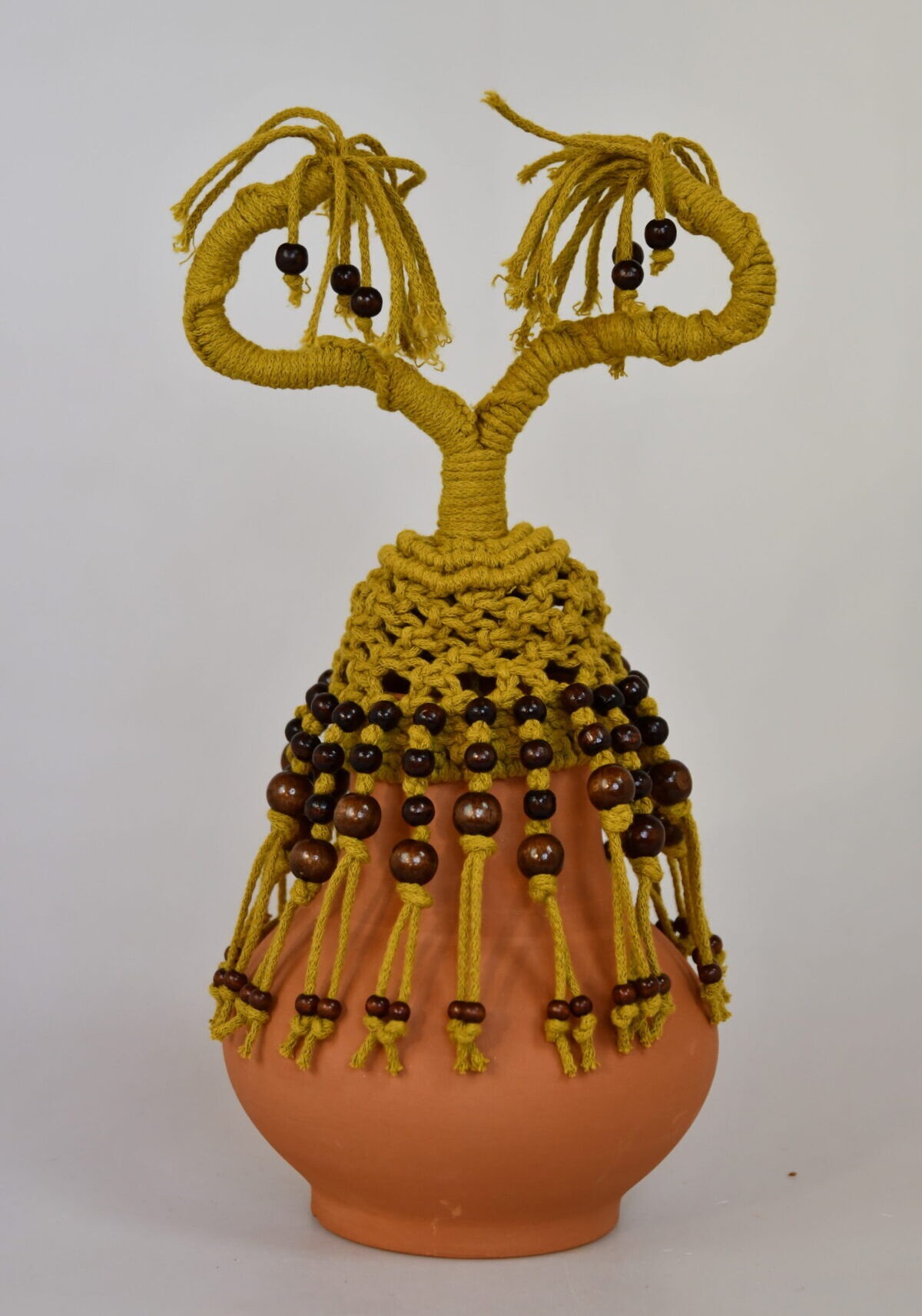
Jomo Handmade
Casa da Empreita
Empreita e baracinha de palmas
verdes
Eugénia Duarte is one of the newest artisans at the Palm Weaving shop. Born in Monte Seco, Loulé (a land where palm weaving had a long tradition), everyone around her did it, from her grandmothers to her mother, aunts, cousins, and neighbors. She never learned how to do it, having emigrated to the United States at an early age. There she lived, studied, and graduated in Business Administration and Marketing. She returned to Portugal at 26, started a family, and became a banker, a profession to which she dedicated her entire working life. Recently, in her pre-retirement years, she attended a 42-hour Palm Weaving course at Loulé Criativo, where she learned the different techniques of palm weaving. Today, she is a member of the Palm Weaving Shop and sees it as a hobby. She enjoys innovating and imagining new models and applications in palm weave, and she loves making hats. She enjoys teaching, and her main goal is to help ensure this art is not lost.
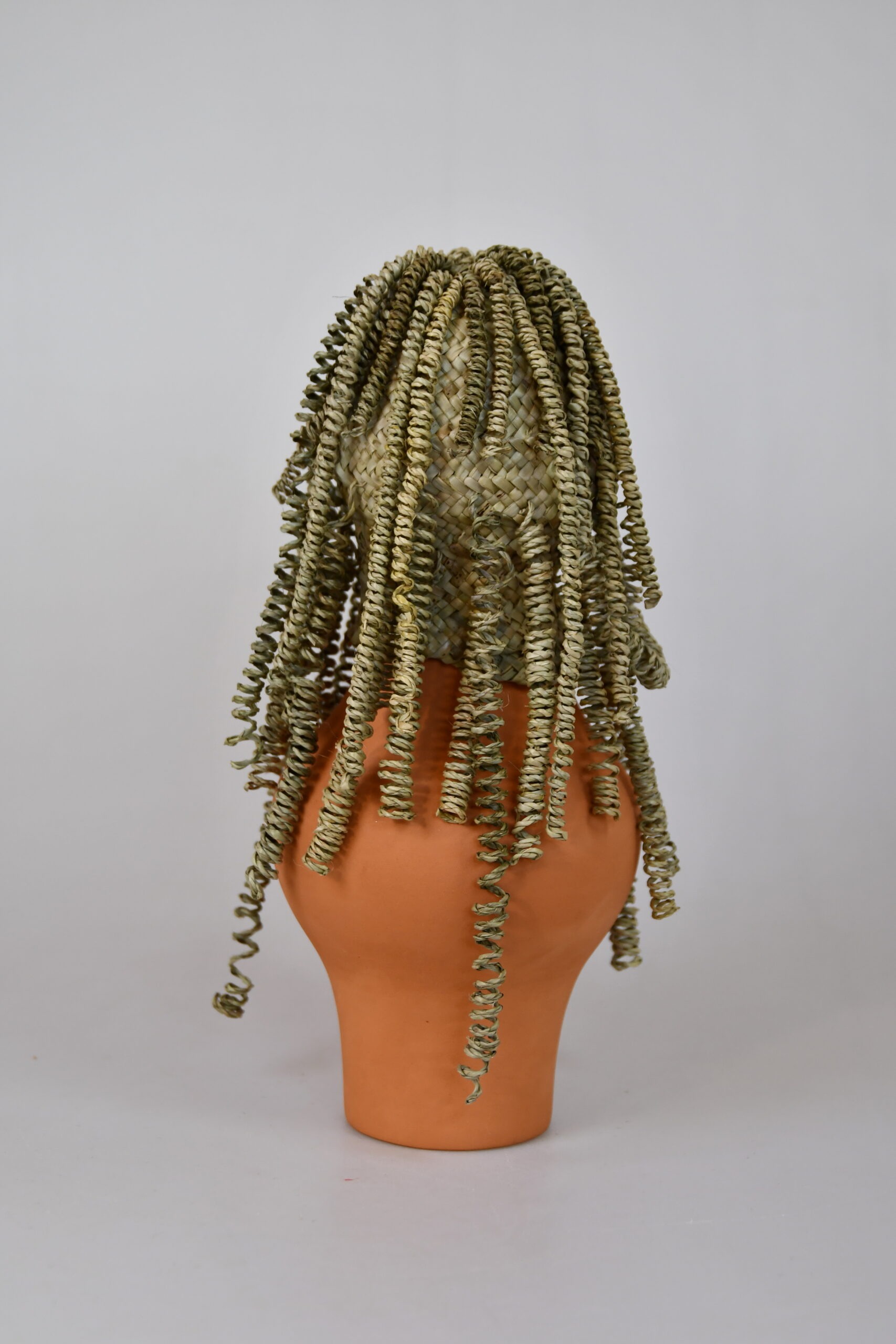
Eugénia Duarte #1
Casa da Empreita
Malha de palma e ripas de palma
tingida
Eugénia Duarte is one of the newest artisans at the Palm Weaving shop. Born in Monte Seco,
Loulé (land where the palm oil palm enterprise had a great tradition), all the people around it made the contract, from their grandmothers, to their mother, aunts, cousins and neighbors. She never learned how to do it, having emigrated to the United States at an early age. There she lived, studied, and graduated in Business Administration and Marketing. She returned to Portugal at 26, started a family, and became a banker, a profession to which she dedicated her entire working life. Recently, already in pre-retirement, he attended a 42-hour Contract Course,
of Loulé Criativo, where he learned the different techniques of palm work. Today, she is a member of the Palm Weaving Shop and sees it as a hobby. She enjoys innovating and imagining new models and applications in palm weave, and she loves making hats. She enjoys teaching, and her main goal is to help ensure this art is not lost.
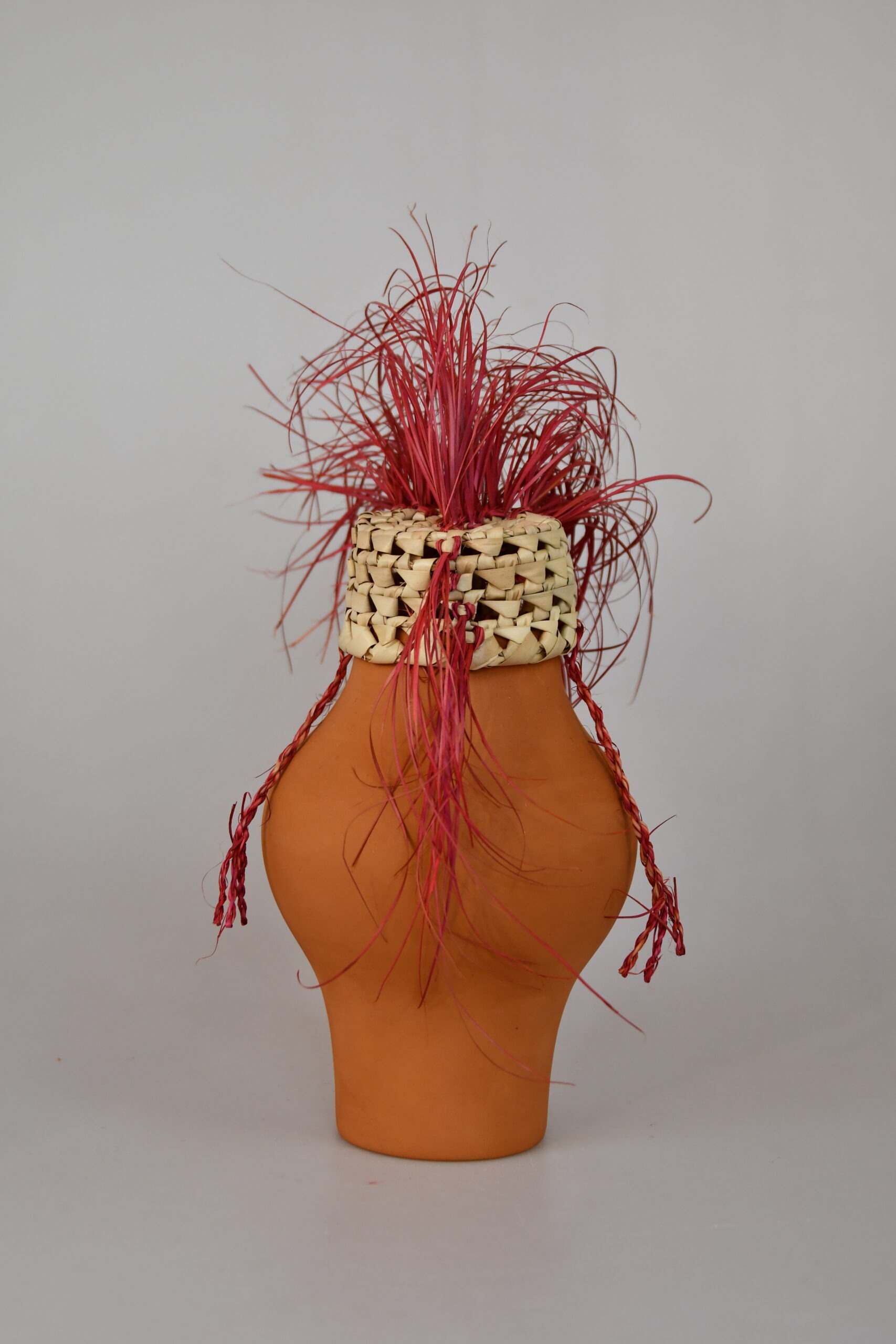
Eugénia Duarte #2
Casa da Empreita
Empreita de palma repassada
matizada, empreita de bicos,
baracinha
She was born in Portugal, in the Algarve, at 11 months old she went to live in France, daughter of Portuguese parents, was a kindergarten teacher all her life, retired and returned to the Algarve (Parragil). She saw her mother doing work in her childhood, and it was her cousin, on her return to the Algarve, who taught her the first techniques of the contract. She has always liked handicrafts (sewing, crochet, among other handicrafts). To improve and gain new skills, she took a training course with artisan Sónia Mendez, at Loulé Criativo. He picked up the technique very easily. In May 2023 he joined the house of the contract and founded the club of the company in Loulé Criativo.
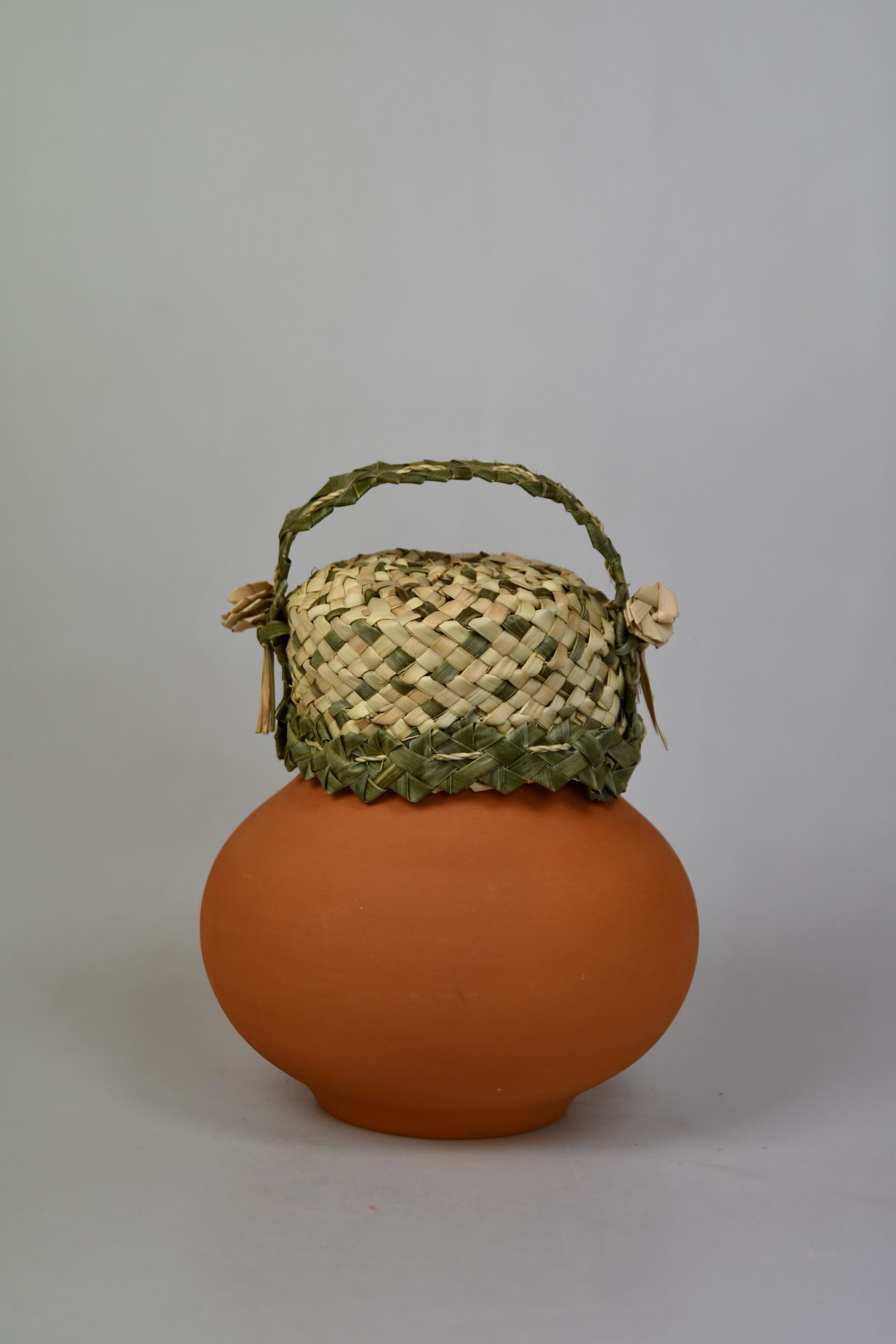
Eugenia Gonçalves
Casa da Empreita
Empreita de palma e empreita de
bicos de palma verde
Florentina Guerreiro is from Cerro Alto (Parragil), in Loulé. His fascination with the palm enterprise arose from the influence of his mother, when, as a child, he began to create his first pieces. Not even the season she spent in France served to keep her away from these struggles. On vacation in Portugal, the nostalgia for art was stronger and Flor made a point of practicing so as not to forget. Upon returning permanently to Portugal, he dedicated himself with commitment to his passion, making varied pieces to offer to friends and family. She is famous for her skill and perfection.
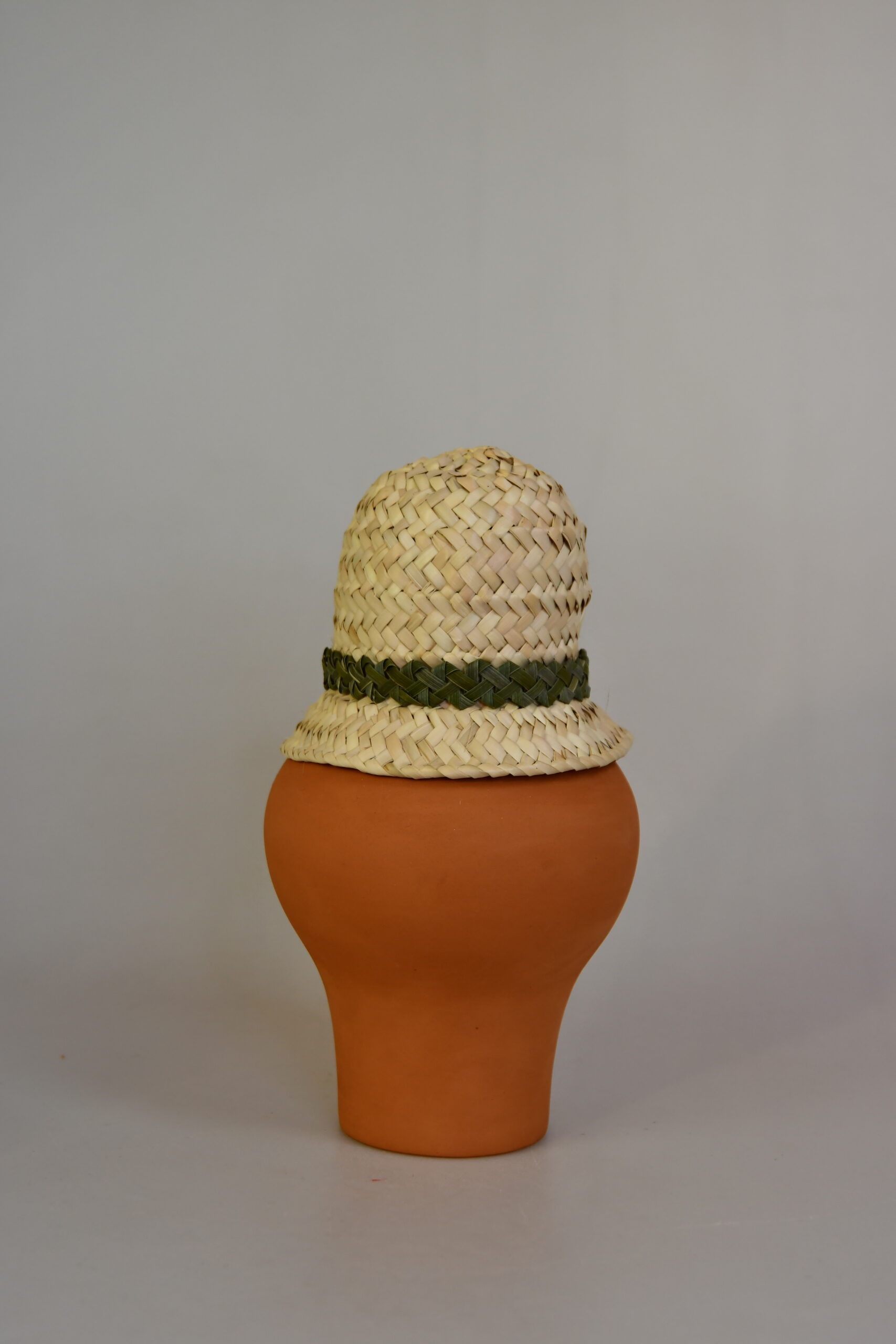
Florentina Guerreiro
Casa da Empreita
Malha de palma e palma ripada
Born in France and married to a Portuguese man, Françoise began learning the art of knitting as a hobby with artisan Margarida Cortez and fell in love with the art of palm weaving. Her connection to the arts stems from her work with real, natural plants, stabilized through a completely natural biological process that maintains their appearance, color, texture, and flexibility for years. What characterizes her is the perfection and care she brings to her creations.
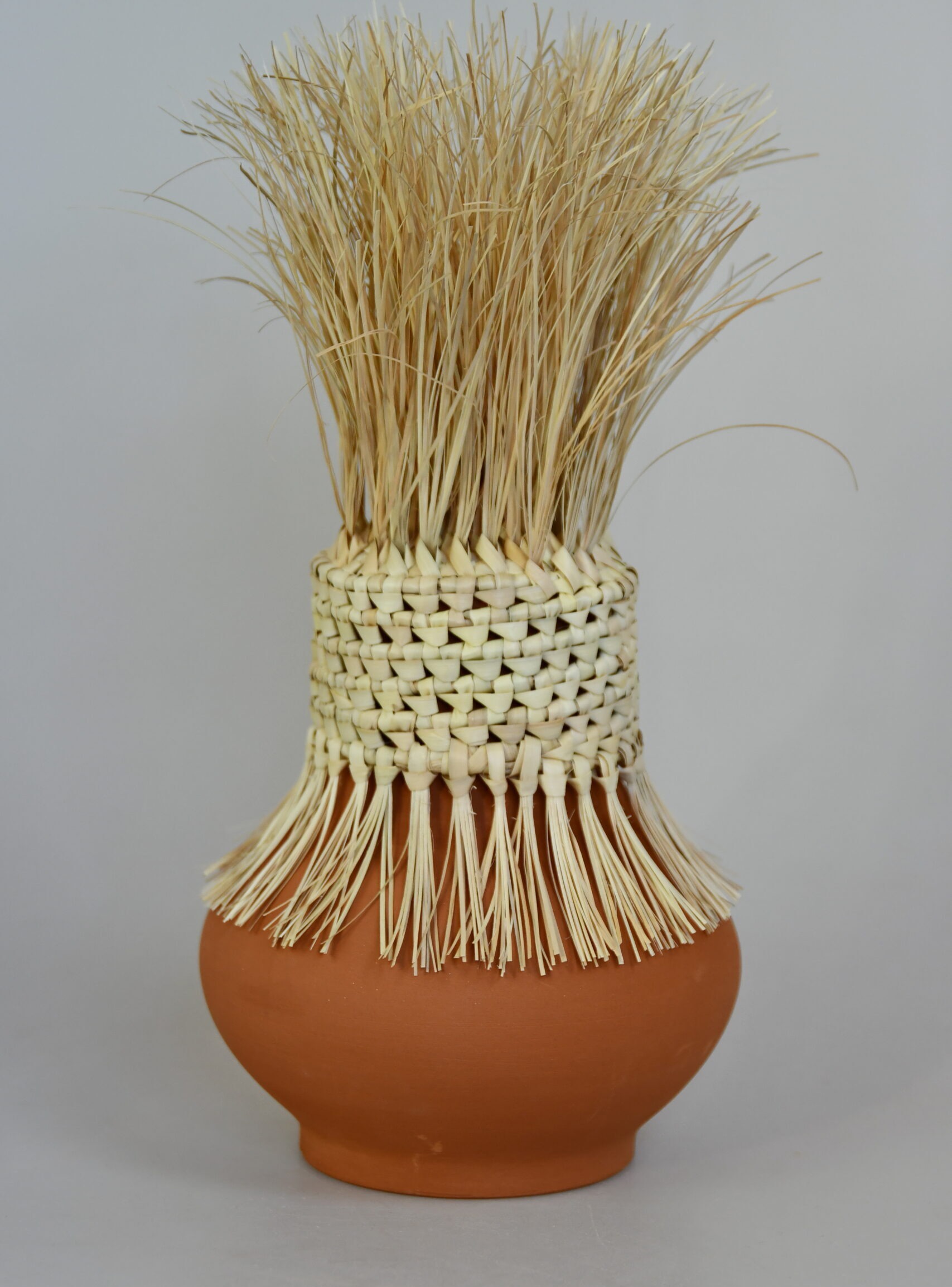
Françoise Lenet
Malha de palma
Gonçalo Gama, Master in Product Design and Degree in Industrial Design, from ESAD. CR. He has the profile of a Designer/Artisan who seeks innovation in the product, both through design and manufacturing. The palm and its ancestral techniques are used in the creation of utilitarian objects, in an intensive research and experimentation of its potential on different levels: from the technical challenges and the search for new typologies to the environmental and social dimensions.
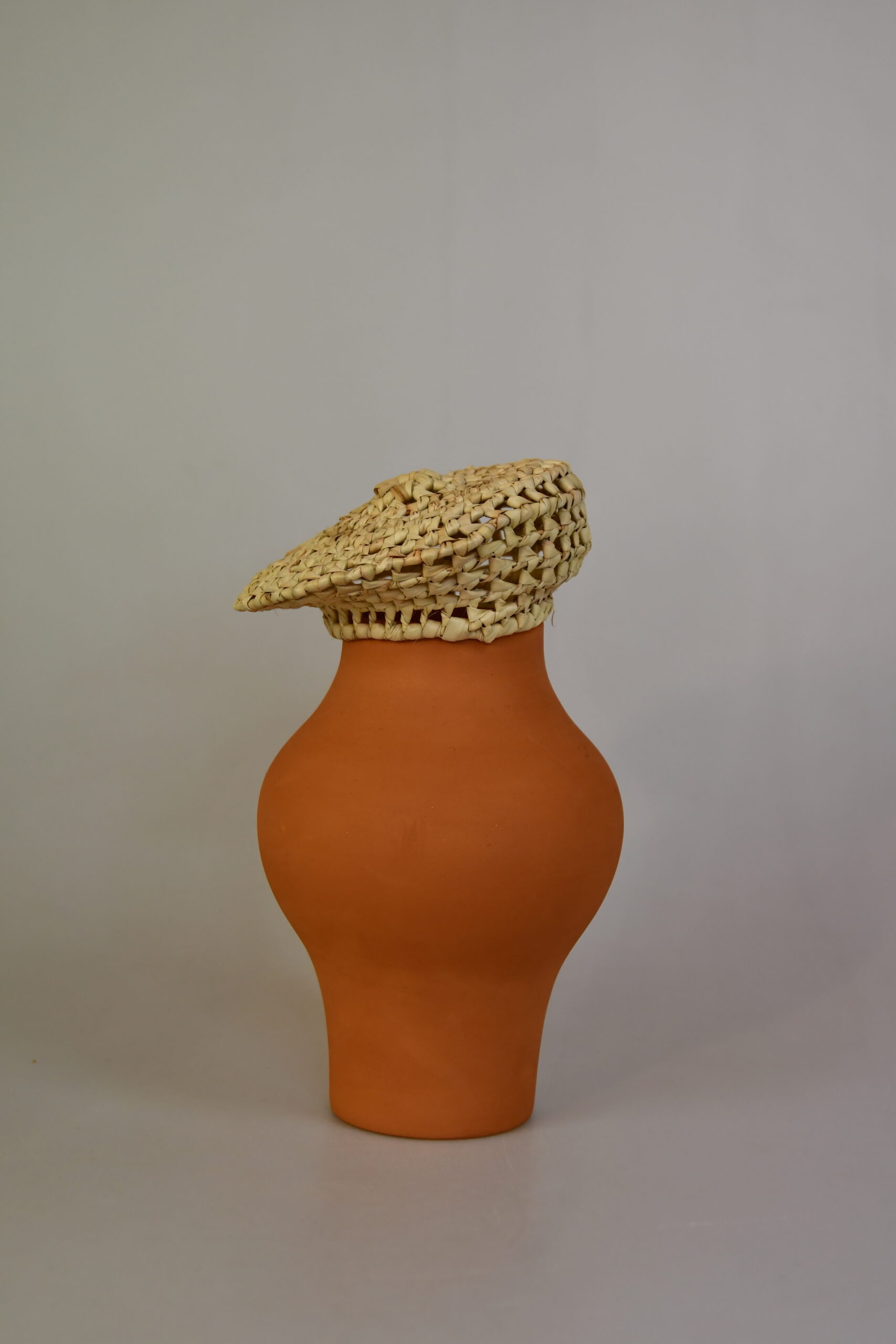
Gonçalo Gama
Oficina dos Têxteis
Técnicas várias de croché e bordado em algodão português, arame e fio de bordar
From an early age, Nini has been fascinated by the world of crochet, influenced by her maternal grandmother and great-aunt, who created beautiful quilts and other handicrafts. She learned from them the basic stitches and, later, at the age of 15, she entered the world of knitting, creating her first sweater! Over the years, her curiosity for new techniques has not stopped: sewing, Arraiolos, macramé, cross stitch, embroidery... And, with the pandemic, she fell in love with the art of amigurumi, a Japanese technique for creating knitting and crochet dolls! Nini is recognized for the care and attention to detail in its work, always using cotton from high quality Portuguese brands. Currently, it is developing new pieces inspired by the roots and symbols of the Algarve, with the desire to preserve and promote regional handicrafts.
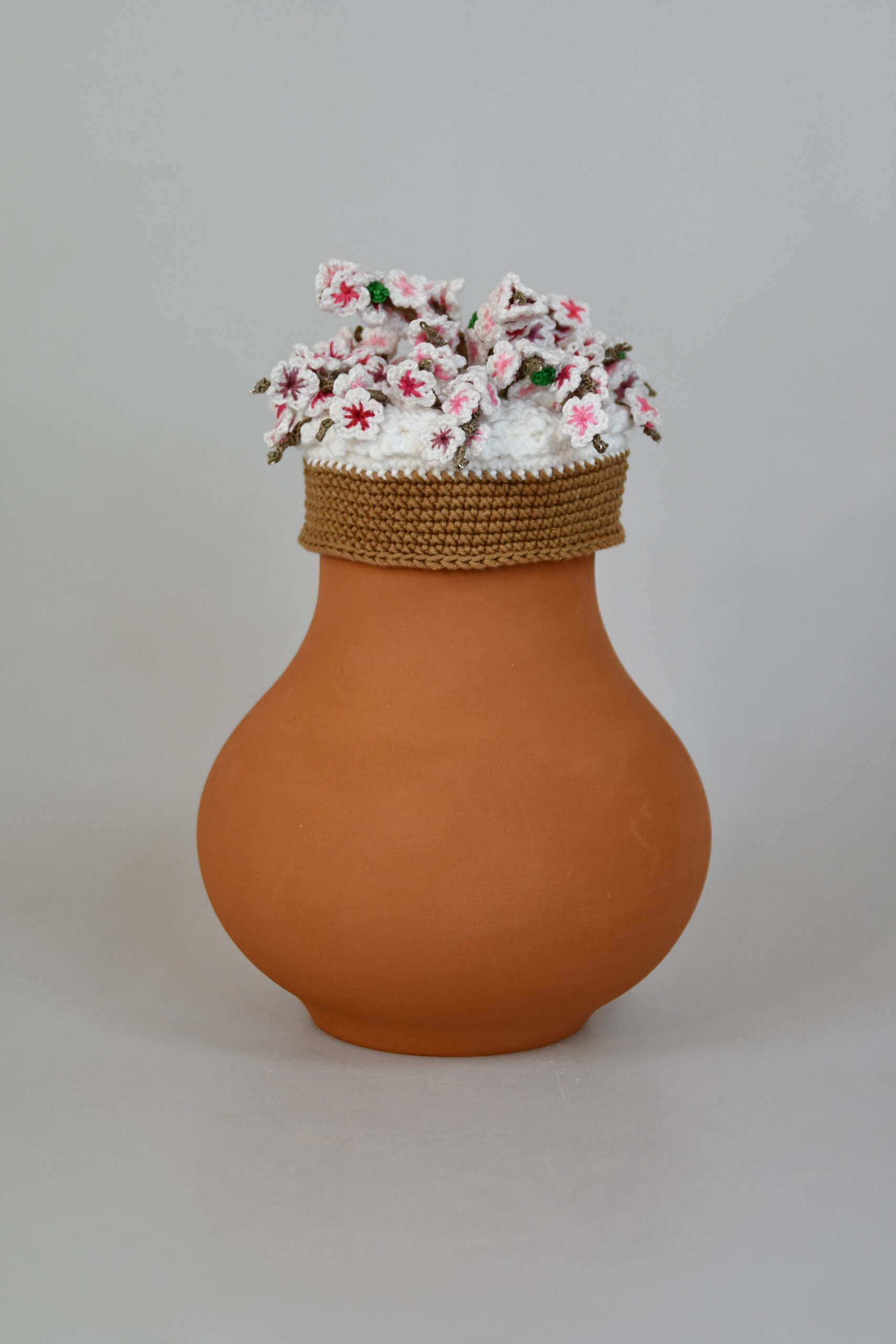
Graça Carvalho
Empreita de esparto de vários ramais, trança de lãs e fio de coser
Isidoro, 59, learned esparto work with his grandmother and mother, but only dedicated himself fully to the craft about 4 years ago. Since then, he has been one of the few to harvest this native plant that grows wildly in his hometown and surroundings in the Algarve. He is active in keeping art alive through training and other promotional activities.
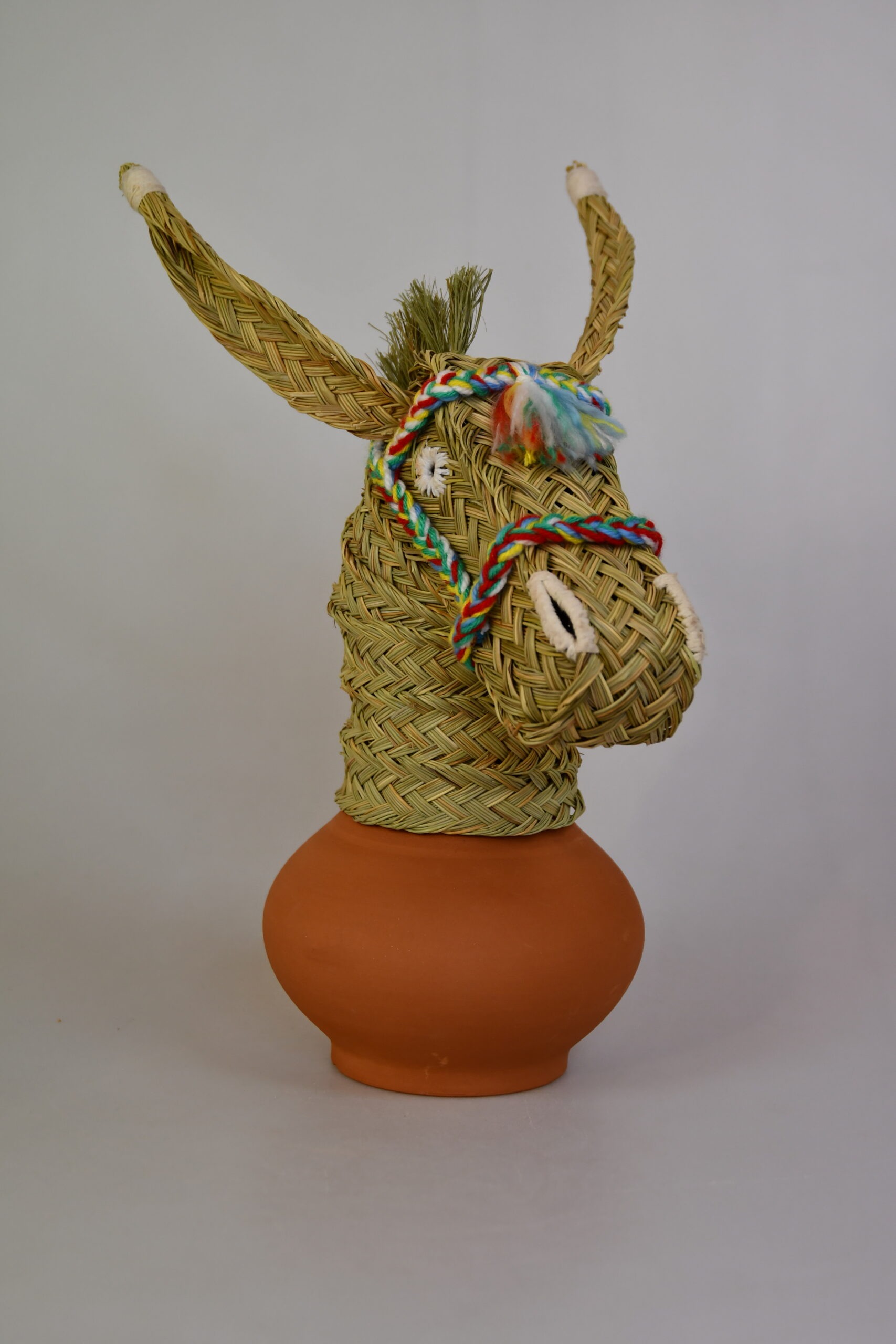
Isidoro Ramos
Isidoro, 59, learned esparto work with his grandmother and mother, but only dedicated himself fully to the craft about 4 years ago. Since then, he has been one of the few to harvest this native plant that grows wildly in his hometown and surroundings in the Algarve. He is active in keeping art alive through training and other promotional activities.
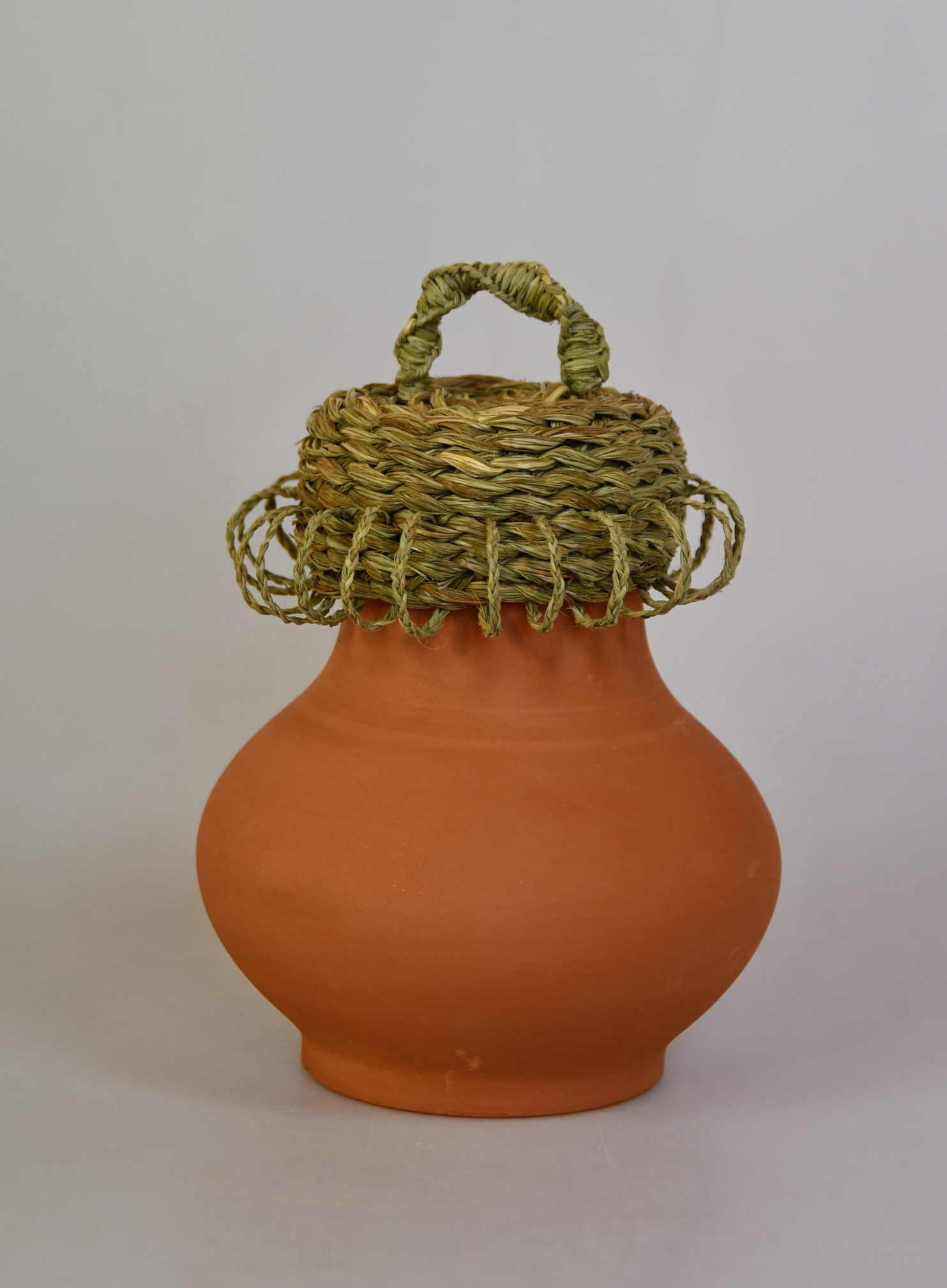
Isidoro Ramos
metal e madeira com técnicas de
enrolamento e tecelagem
Jane's journey as a textile artist began with a weaving workshop that sparked her love for the slow and tactile process of this art. Since then, he has dedicated himself to the world of yarns and fibers, exploring various techniques such as weaving, felting and spinning. She is inspired by the changing colors of nature and loves to explore ways of representing abstract ideas or visions - concepts that seem intangible, like the essence of simplicity in a complex and ever-evolving world - through symbolism, color and form.
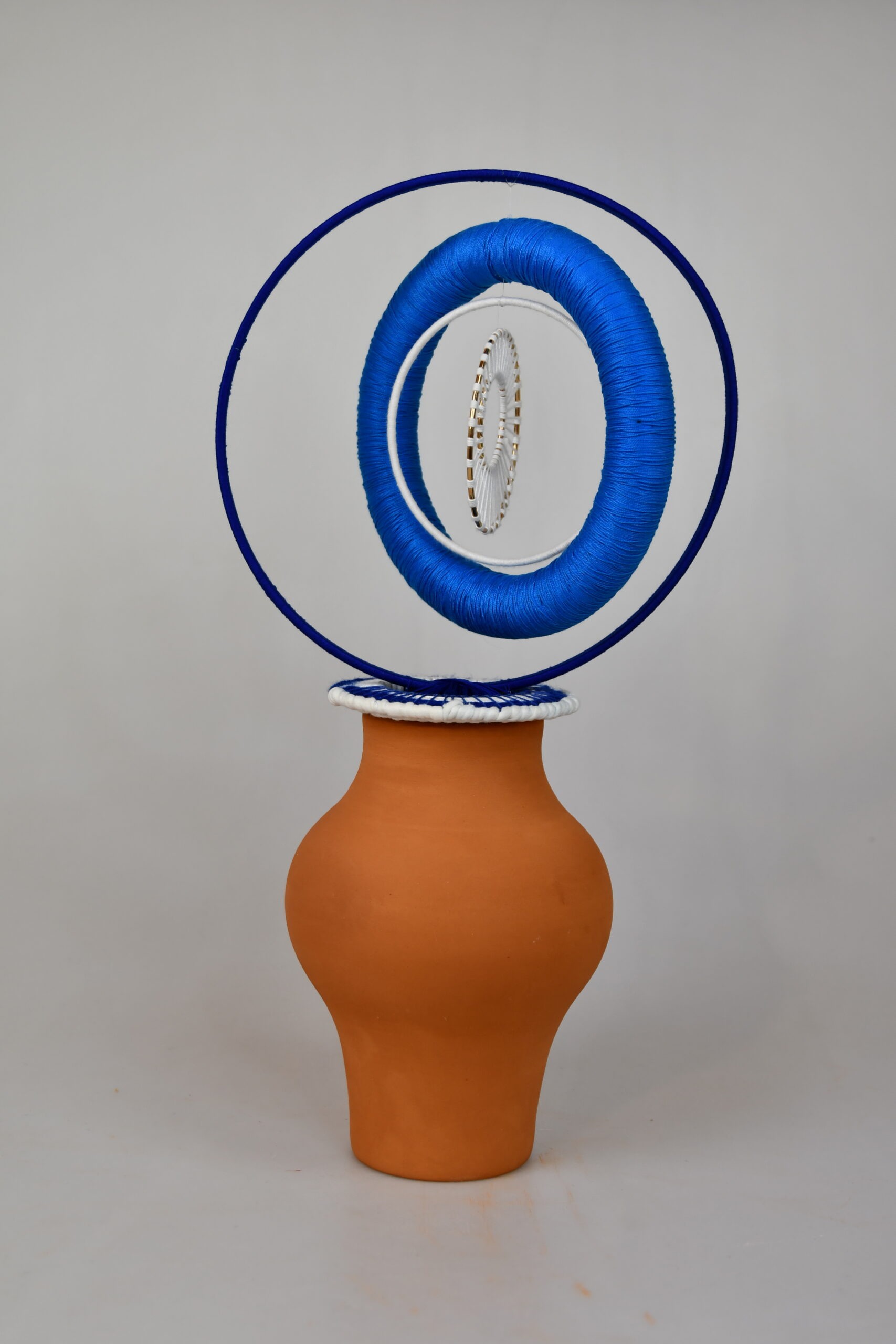
Jane Preza
In Brazil, from an early age, the interest and creativity in using his hands made him understand the meaning of things and led him to Engineering. Later, the Caldeiraria opened the horizon of combining technique with art. Respect for history and traditions, with a contemporary look, became a hallmark in his works made with sweat and fire.
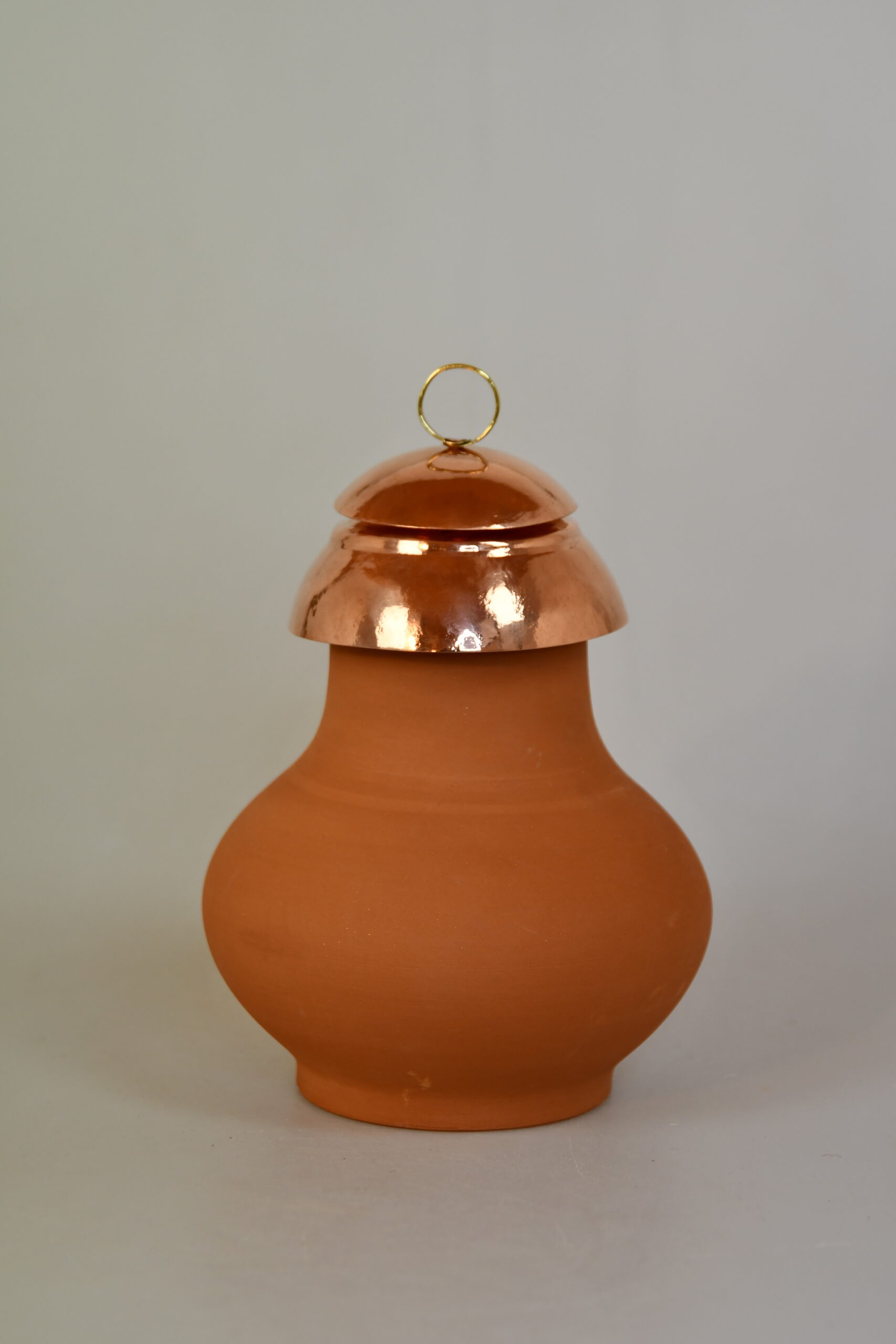
Jorge Dória
cetim, Cartolina e Cartão prensado
em encadernação com costura copta
Juliett Sarmiento, visual artist and graphic designer born in Barranquilla, Colombia, has been living in Portugal since 2019. Master in Contemporary Artistic Creation from the University of Aveiro (2021). He was 15 years old when his father taught him the craft of bookbinding, but it was at the age of 19, when he was studying graphic design, that he decided to delve into this area. Then, in 2013 she began to study fine arts and explore the editorial projects she developed from a more artistic perspective; for which he has made artist's books, object books, digital books, hand-sewn bitácores.
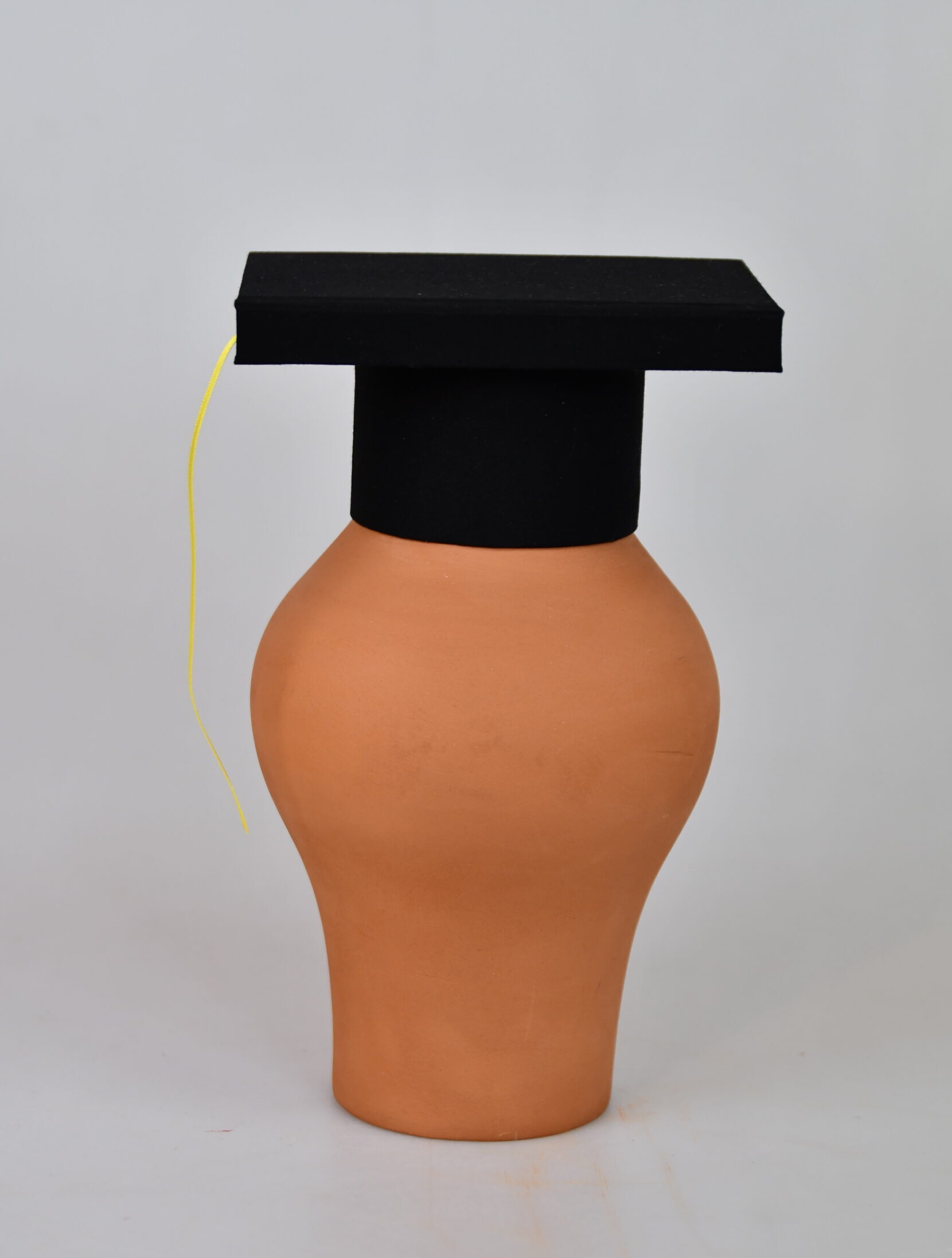
Juliett Sarmiento
Chapa e varão de cobre
Jürgen Cramer was born in Germany. He is passionate about metalworking and his academic and professional career has always been linked to this area. He is a mechanical engineer by training and likes to build things. He came to Portugal about 20 years ago. He has a renewable energy business. In 2016 he had the opportunity to attend the Artisanal Boilermaker course, launched by the Municipality of Loulé, where he learned from master Analide Carmo how to work copper and brass according to traditional methods and techniques. Today he is part of the group of artisans of the Boilermakers' Workshop and there he develops the most varied objects. Designs, produces accessories and invents new parts
and utilitarian, but her favorites are decorative and contemporary pieces where she can let her imagination run wild.
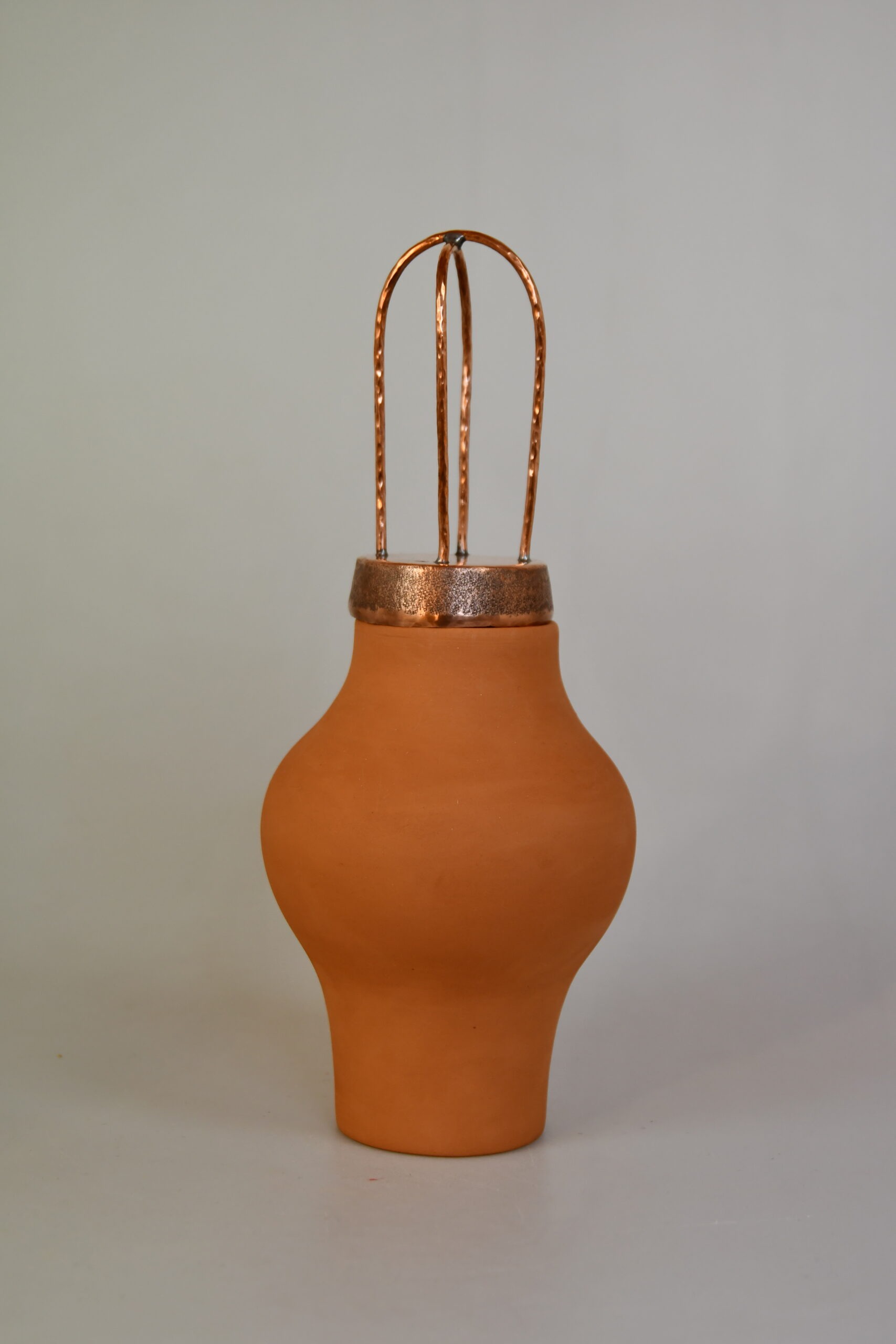
Jurgen Cramer
com Jorge Lúcio
Restos de varão de ferro soldados
com acabamento lacado preto mate
Leni Farenzena, studied architecture at the University of Florence (UniFI) and took a master's degree in architecture at the University Institute of Lisbon (ISCTE-IUL). After completing his architectural studies, he collaborated with several studios in Europe and Mexico with FR-EE Fernando Romero. He founded ForNature Design, which is an atelier focused on the development of architecture, interior design and furniture projects. ForNature Design, "furniture inspired by nature", produces pieces that combine innovative design with traditional techniques and local materials, such as pottery that works with clay and basketry that works with cane. ForNature's project is based on three pillars: environmental sustainability, the development of local content and the innovation of traditional design based on local materials. All pieces are handmade with artisans from the Algarve. The crossing of local and natural materials and the expertise of the artisans involved contributes to the production of unique pieces.
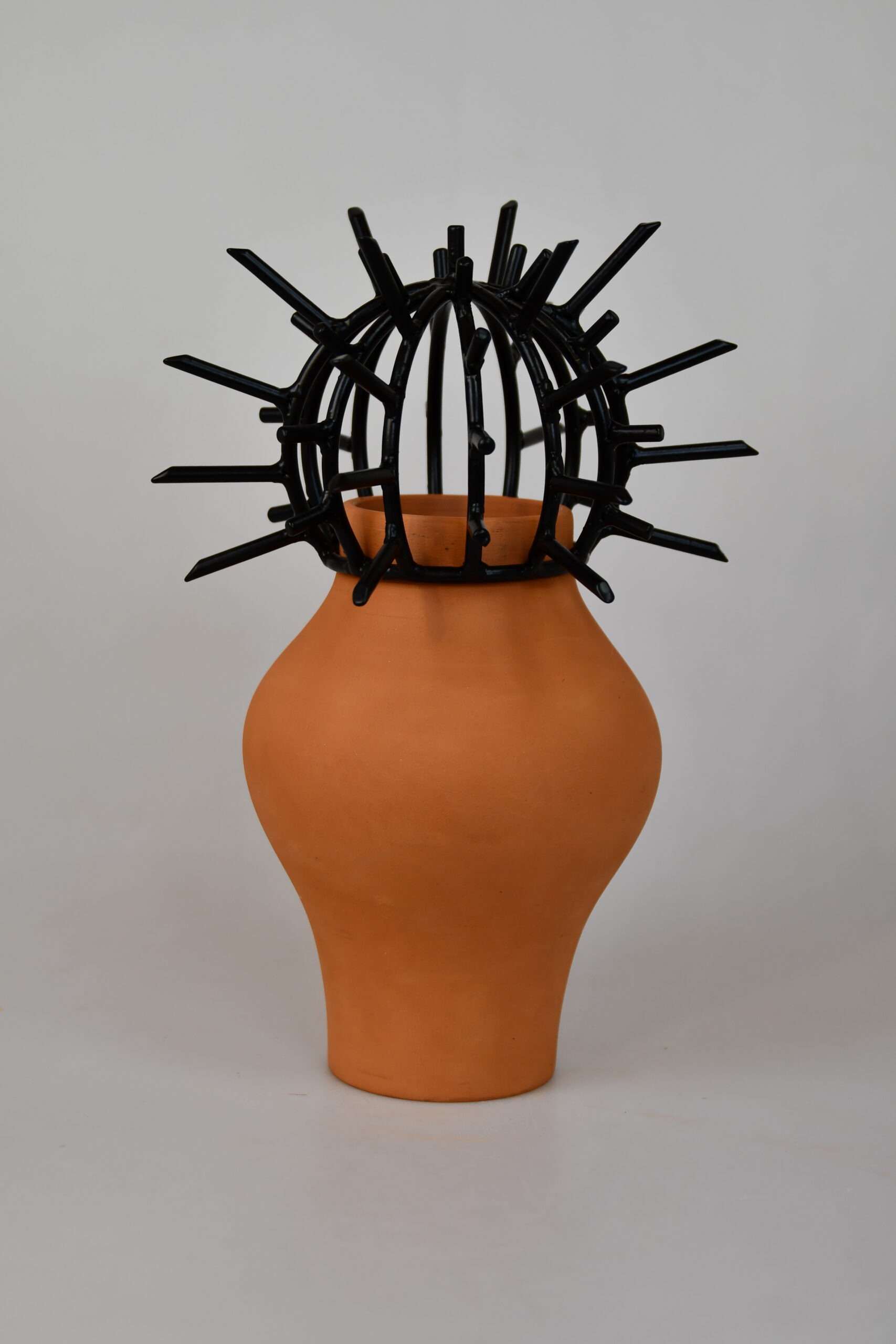
Leni Farenzena
Casa da Empreita
Empreita de palma
Alentejo by birth, she soon moved to the municipality of Loulé, where she learned to work with a neighbor. In the meantime, life took many turns, he worked in several places and left the enterprise aside for a while. She is currently the youngest artisan at Casa da Empreita. Passionate about crafts, she is always eager to learn new things. In recent times he discovered the palm knit technique, to which he has dedicated himself, working it individually or together with the contract, trying to make different and innovative pieces.
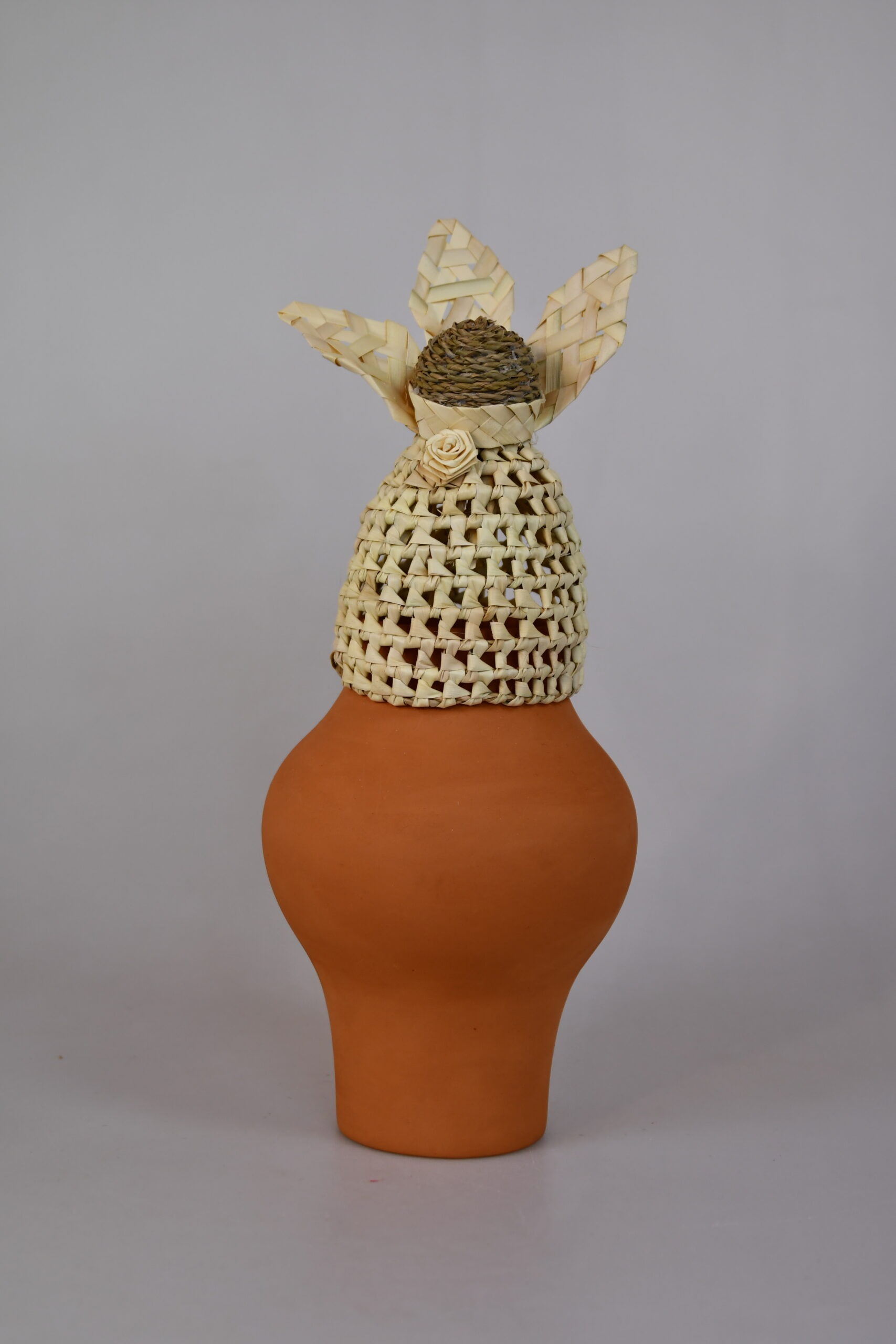
Lurdes Costa
Casa do Esparto
Trança de esparto pisado
She was born in Penina, a village about 3 km from Sarnadas, where, from a very young age, she saw her grandmother go to get the raw esparto grass and step on it with a wooden mallet. At that time, she helped her grandmother to step on the esparto and make the baraço, without yet knowing what it was for. Years later, when he got married, he went to live in Sarnadas, and it was there that he became truly aware of what it was to work the esparto and what the pieces produced were used for - essentially for working with nets and ropes. With the evolution of technique, rugs and donkey heads also began to be made. There were people in the villages near Sarnadas who made the braid, the empreita and the various pieces - rounds, leaves, shuttles - which they then delivered to D. Aldegundes, a merchant who sold the product. She and other colleagues from the village built the carpets and donkey heads with the material produced by the people from the other villages. After many years without contact with esparto, she was challenged, through the Casa do Esparto project, to work again in this art. Today he makes his own pieces, some imagined by him. It gives him great pleasure to work with esparto again and to transmit to young people his history and shared knowledge, so that this art is not lost. It is gratifying to be able to combine two good things: the transmission
knowledge and socializing with colleagues and other artisans, interacting with the people who visit them and value their work.
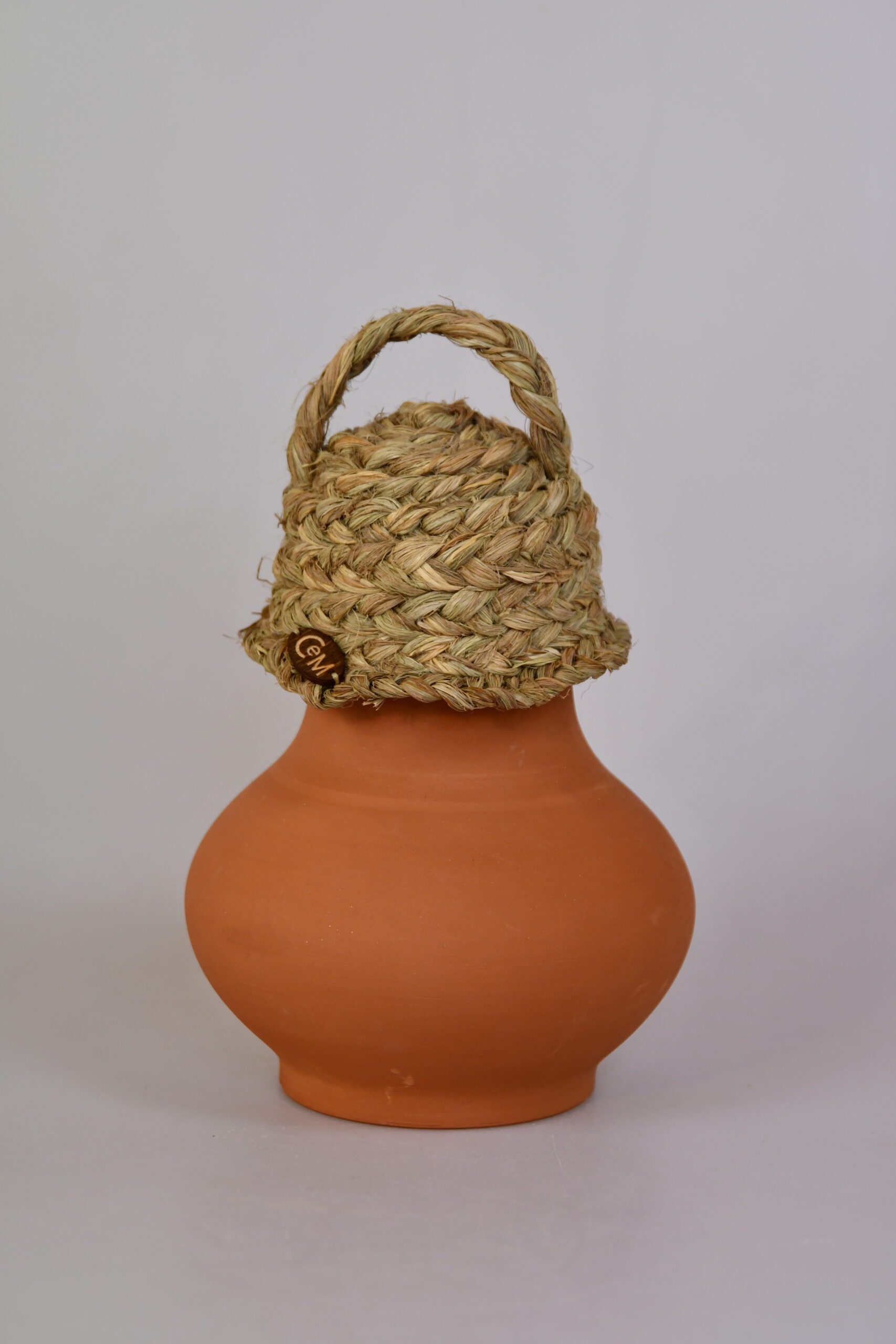
Manuela Limas
Casa da Empreita
Malha e ripas de palma
Originally from Loulé, at the age of 12 she learned the palm weaving technique from her stepmother and began contributing to the family income. He emigrated to France, where he lived for 45 years. At that time I came to Portugal on vacation and liked to make some pieces, so as not to forget what I had learned. After retirement, he returned to his origins and dedicated himself again to palm work, as a way of occupying his time and not letting the craft die. She teaches her art in workshops, with the support of her husband - Jorge Ferreira - who is a master of the baracinha.
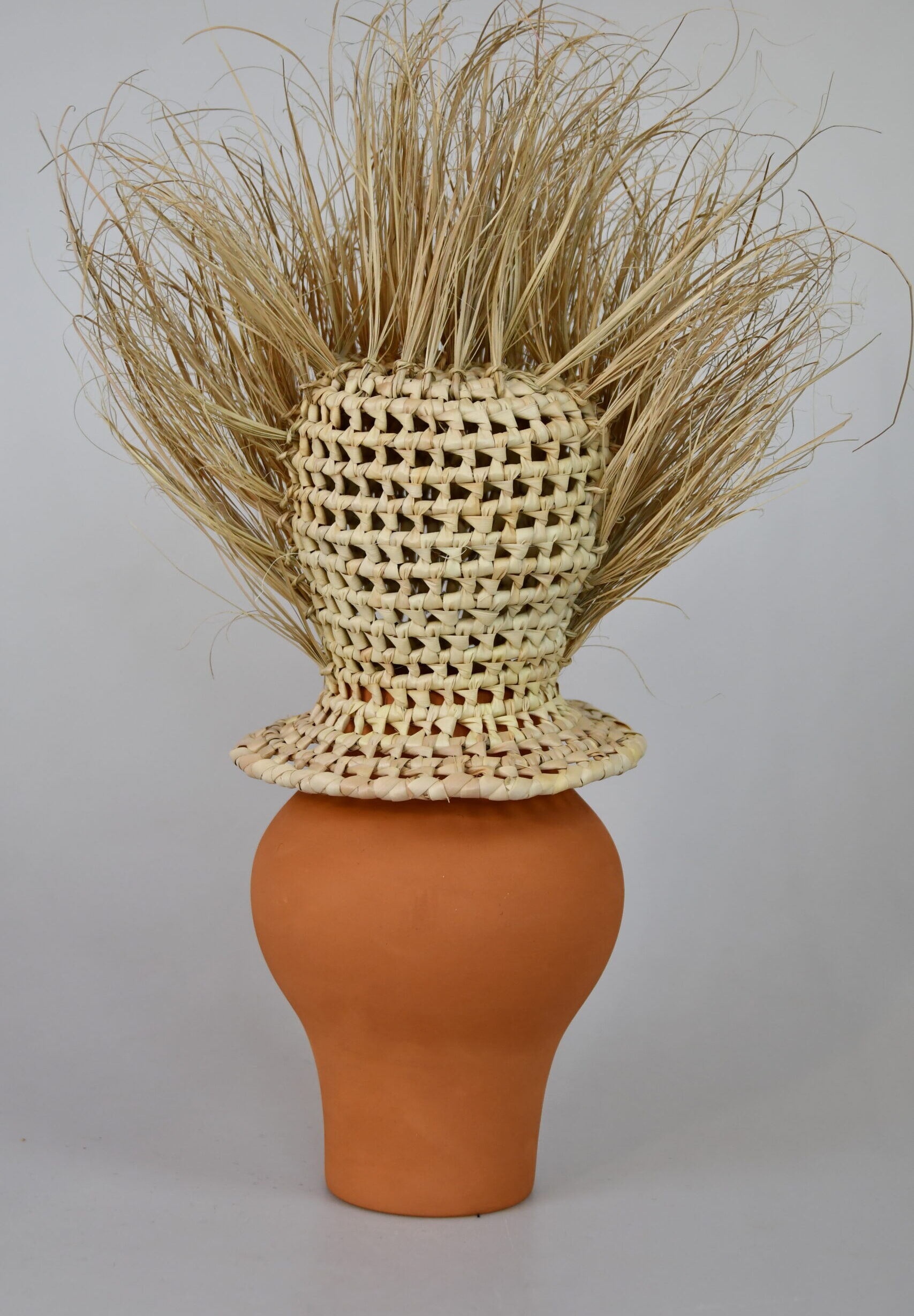
Margarida Cortez
Desperdício de fábrica têxtil e rede
plástica, trabalhados em esmirna
With an initial training that went through the Interior Architecture, Restoration and Furniture Course at the Ricardo Espirita Santo Foundation, and workshops in fresco painting and jewellery at the ar.co, she attended a degree in Anthropology at the New University of Lisbon and a Post-Graduation in Cultural Management at the Lusófona University. From 1990 to November 2021 he worked in an Art Gallery in Lisbon. From 2003 to the present he has developed projects in the areas of equipment design and fashion accessories with Margarida Valente and utilitarian ceramics with bonnie.and clay. Artist and artisan, Margarida bases her work on the exploration of different materials, their colors and textures, and the way they combine. The starting point for each piece is always defined by changing the original function of these materials to create new parts, or products that have already served their purpose and can thus be reused.
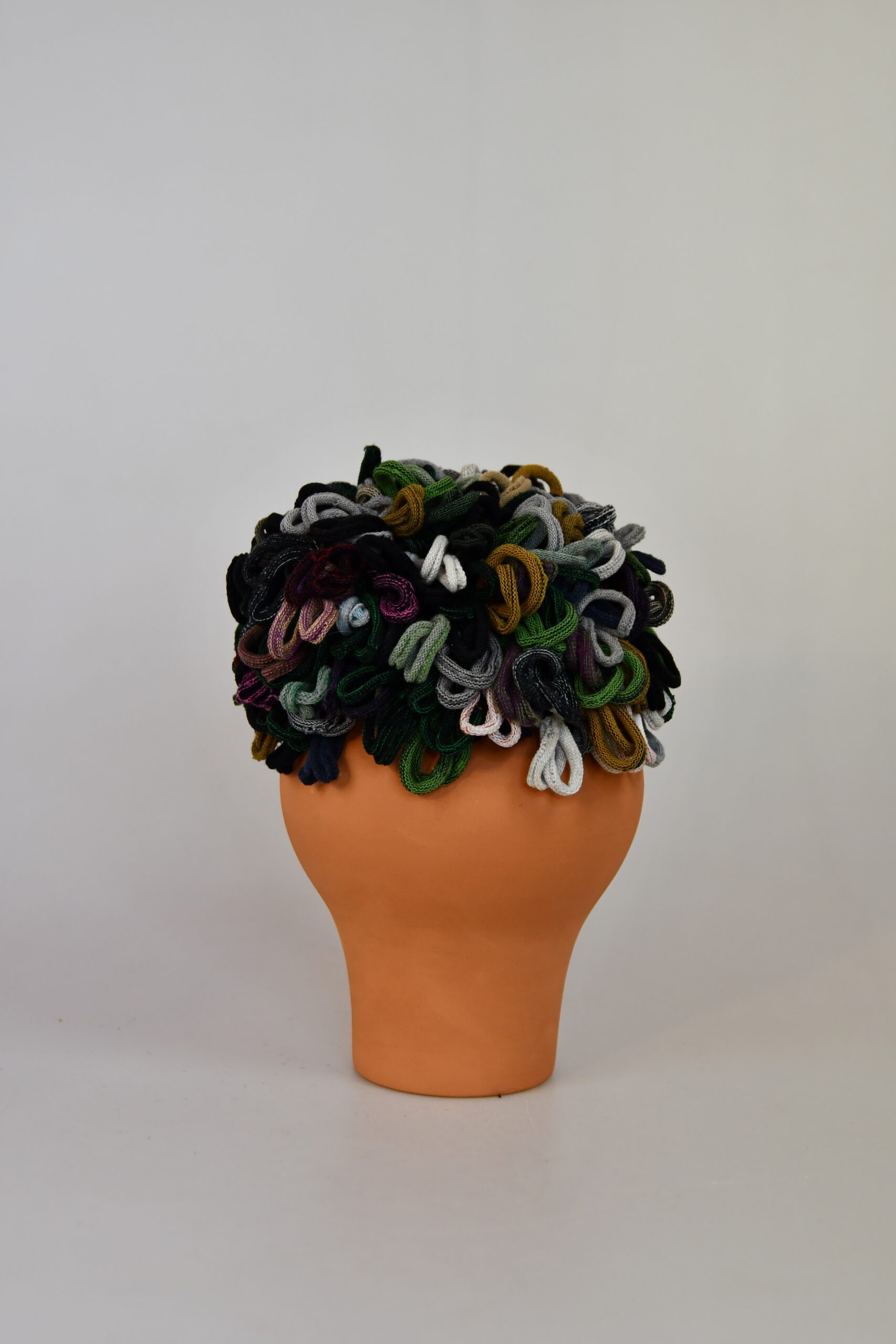
Margarida Valente
Casa do Esparto
Trança de esparto pisado com rede
vai-vem
Maria Fernanda Martins was born in Sarnadas, parish of Alte, where she has always lived, married and raised her children. He attended grade 4 and, at the age of 12, he was already working in the fields helping his parents in dealing with the various harvests. Later, she learned to sew and embroider by machine, and at that time she made the repairs of clothes for her family and also for the local community. Around the age of 20, he began to work in handicrafts. Initially, he dedicated himself to macramé, using a material called sisai. He made crossbody bags, wine cellars, vases and other items. Then he worked with palm, making cedoiras and shallow rafts. Only later did he start in the art of esparto, doing everything from scratch - the empreita and the tape measure - to then be able to create donkeys, doormats of various sizes, bases, baskets, wine racks, cruets and rugs of different sizes. Currently, she is still active, managing a family restaurant in Sarnadas, the Rosmaninho Restaurant, which began its activity in this small village in 1995. She is also an artisan who continues to work and disseminate the art of esparto, producing utilitarian and decorative pieces at Casa do Esparto, in the village of Sarnadas.
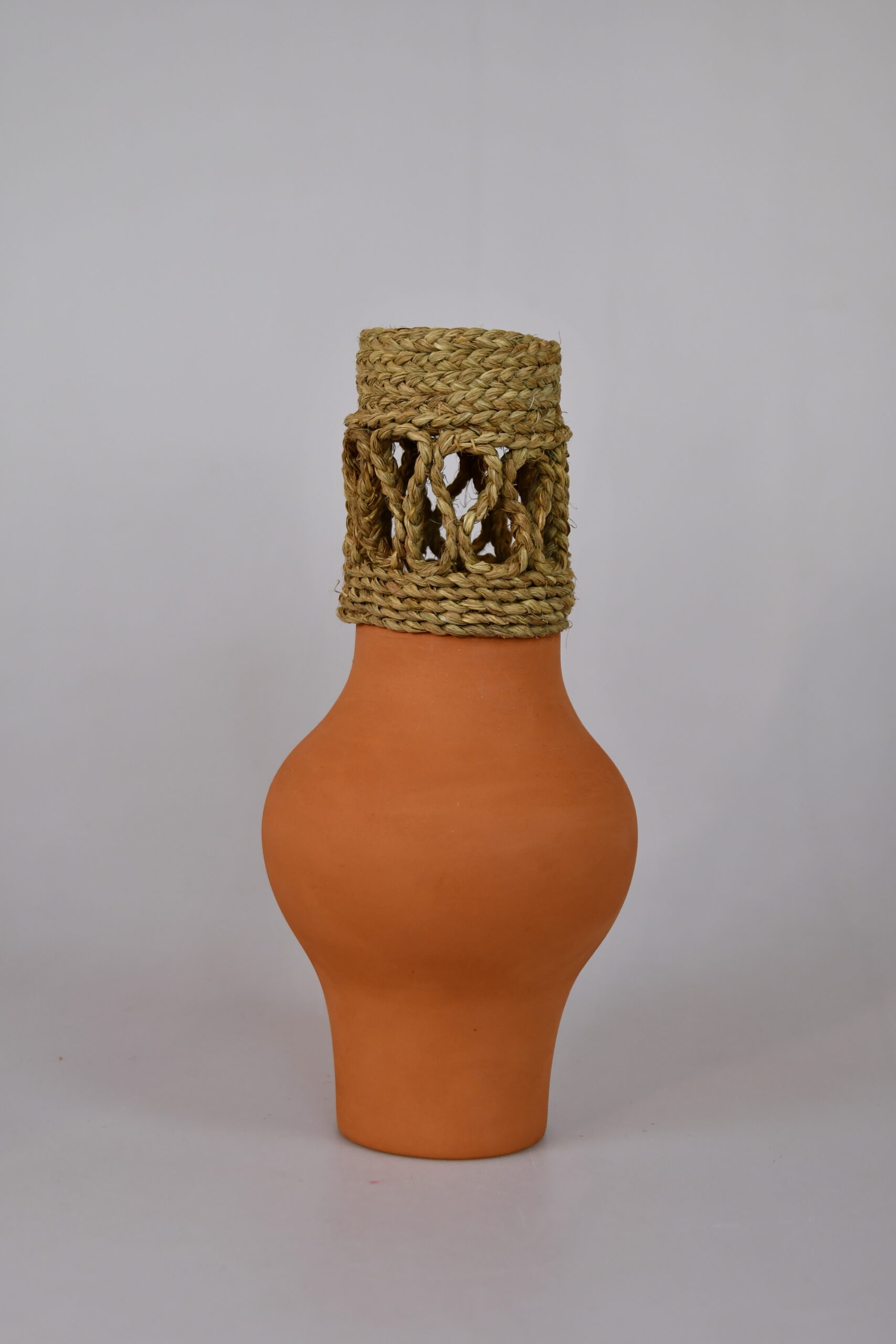
Maria Fernanda Martins
Casa do Esparto
Trança de esparto pisado
His first contact with esparto was at the age of 14. There were people who, at the time, worked esparto in the village and elsewhere in the parish. They created various pieces, such as: leaves, rounds, squares, braids and nets. The ladies brought these pieces to D. Aldegundes' house, and it was she who assembled and produced the rugs with those pieces, in various ways. Around the age of 20, he abandoned art, now returning at the age of 69. He enthusiastically embraced the "Casa do Esparto" project, where new, innovative pieces have been produced, with the support of several designers. Her final feeling at the end of each new piece is one of great joy and enormous pride for each completed work, as if it were a son.
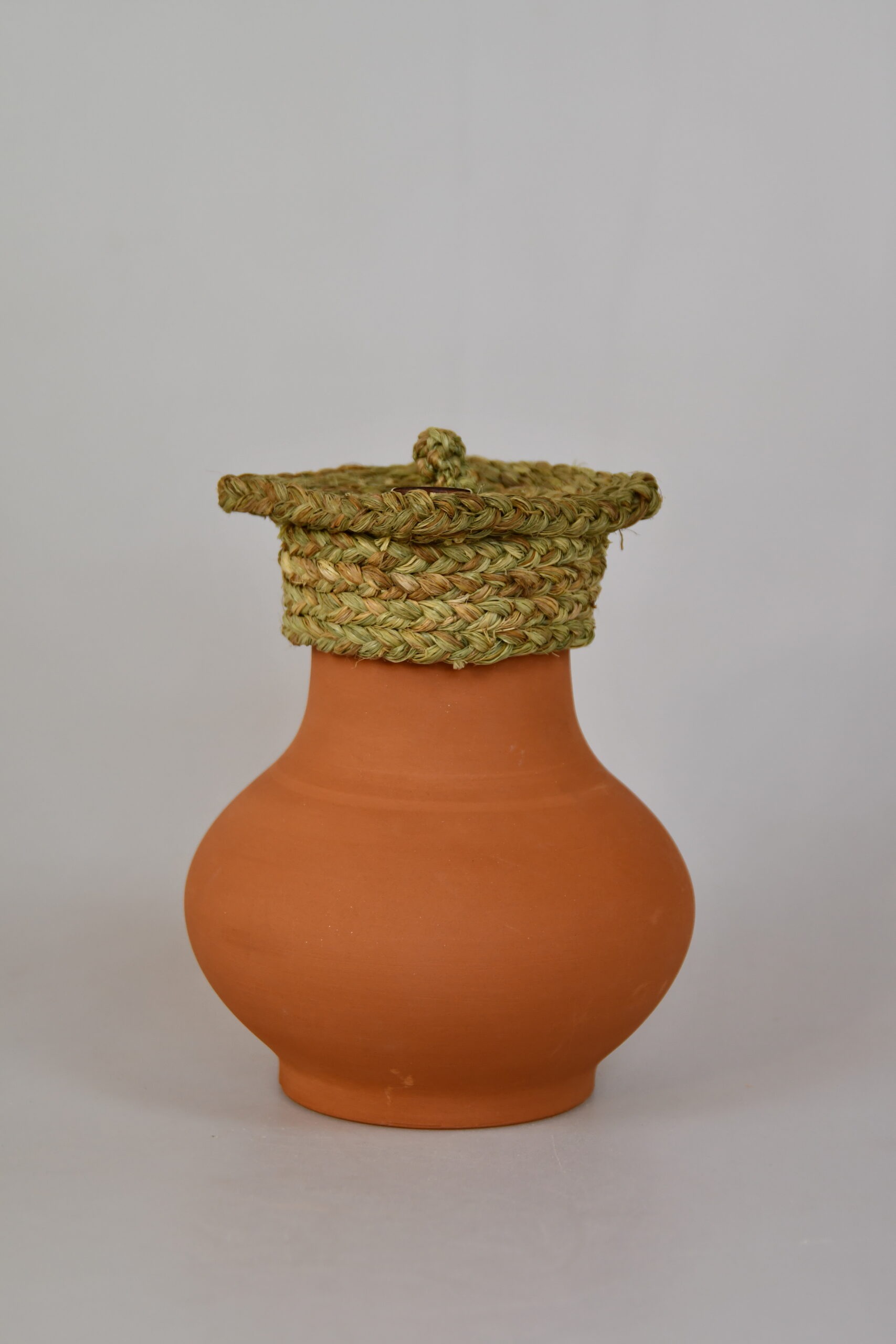
Maria José Ramos
Casa da Empreita
Empreita de palma
Born on October 14, 1960 in Monte do Zambujal de Boliqueime, in a family where her father was emigrated to France and her mother took care of the children and did work at home, selling her pieces for resale, in order to help the economy
family. It was at this time, under the guidance of his mother, that he had his first contact with the art of interlacing the palm. Noélia entered school at the age of 7 and completed the 6th year of schooling until she was 12 years old, the age at which she left for France with her mother and brother, to join her father, and where she stayed until she was 32 years old. When she returned to Portugal, she opened a beach shop, where she had some handicrafts, namely in palm contracting, but she only started weaving again in 2019, relearning and perfecting the technique with the support of her mother and a neighbor (Cesaltina), and the pieces she made were to offer to friends and family. In 2024 he closed the store and started to dedicate himself to this art full-time, participating in handicraft fairs in the Municipality of Loulé (Quarteira Summer Fair, Serra Fair, Santa Bárbara Fair, Tôr Fair, Quarteira Christmas Market, among others). In February 2025, he joined Casa da Empreita.
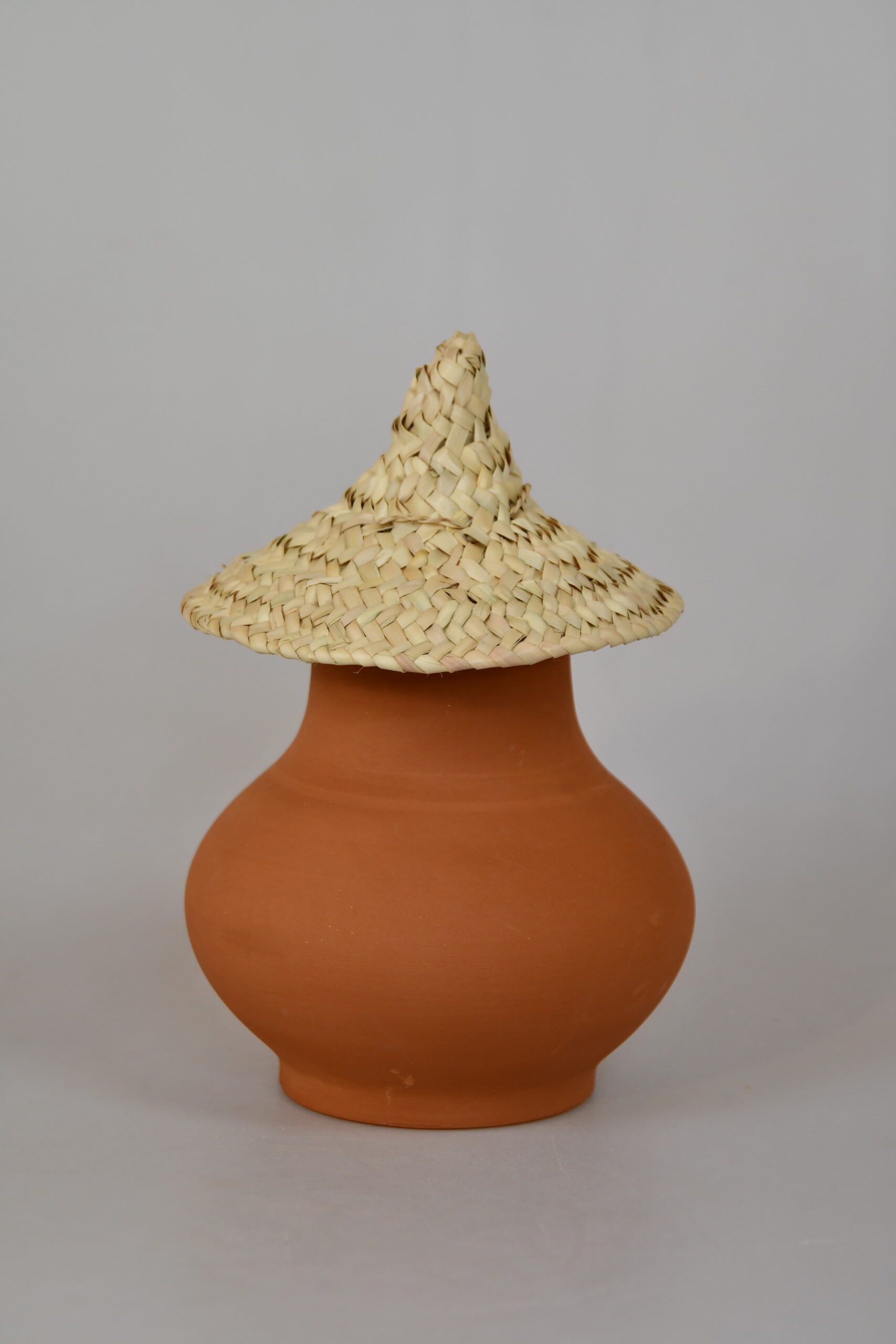
Noélia Sousa
Oficina de Caldeireiros
Chapa de Cobre
He was born in 1979 in Faro. The connection to copper has happened since his first memories that he has a connection to the production of arbutus, in which copper stills are used. He has always accompanied his father, a producer of arbutus, and his fascination with the manual construction of copper stills was present. Several times he visited Mestre "TI" Ricardo, Mestre Ana Lide (who would later train him in this art), and where he consolidated
the desire to learn how to work copper. After a stint in computer science in the 2000s, with a desire to get closer to something more human and personal, he graduated in physiotherapy in 2009. In 2016 he learned of the first training of boilermakers to which he could no longer access, leaving the bug. In 2019 he joined a second training .... And the rest is history.
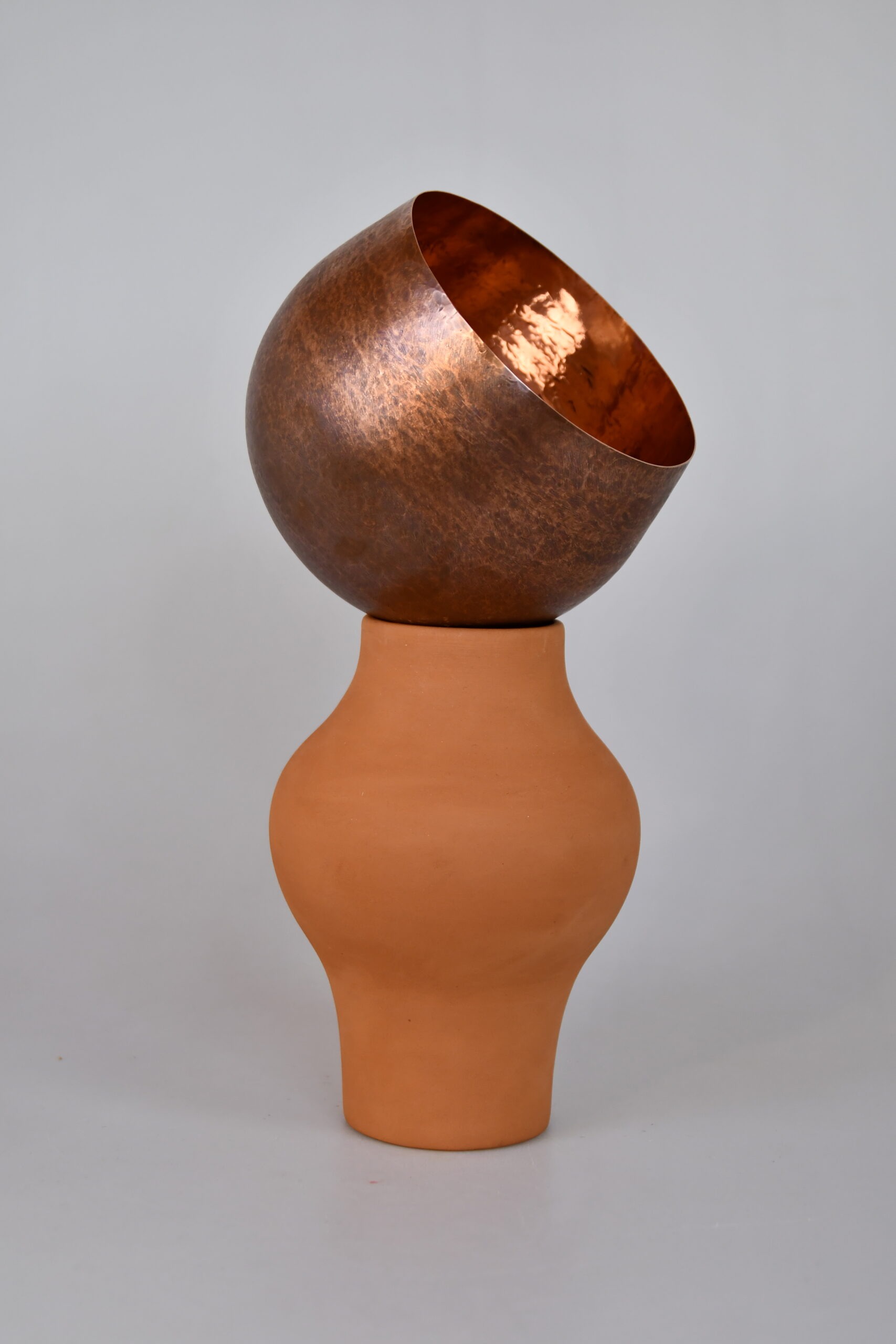
Nuno Palma
Casa da Empreita
Empreita de palma com palmas
tingidas
Odete was born back when most girls stayed home learning sewing, embroidery, and housework. At 15, she began working with her mother, and since then, it has become a part of her life, supplementing her income from the land. She has participated in fairs throughout the Algarve and elsewhere in the country and was part of the group of artisans who participated in the first editions of the famous Fatacil. Her favorite technique is the 9-branch work, with which she makes Moses baskets, bags, rugs, doormats, or whatever her imagination dictates.
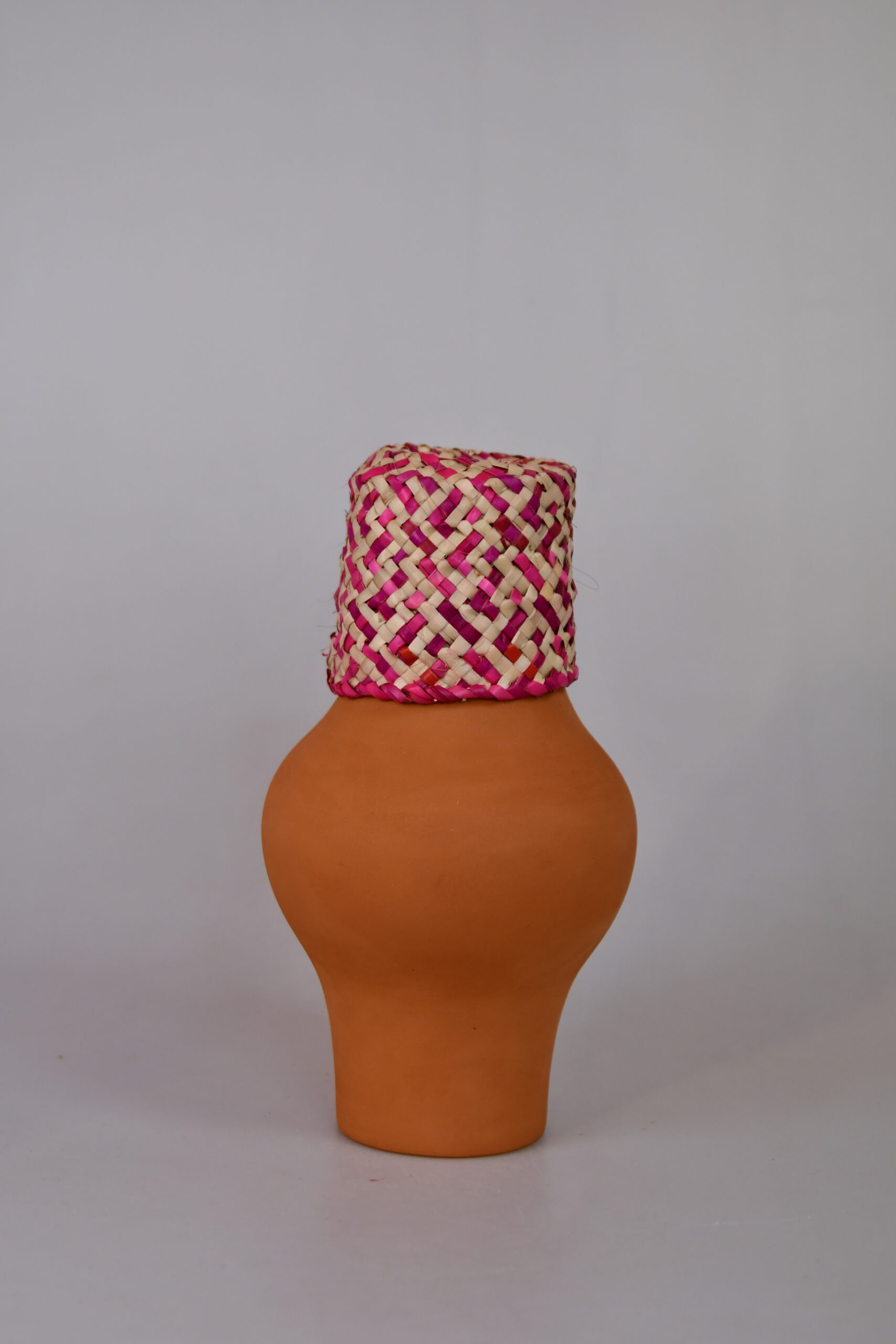
Odete Dias
Madeira de Acácia de Monchique
com corte CNC e Burel da Serra da
Estrela cortado a laser
Oficina Poeta Azul was created by the duo Sofia Correia and Christopher Whitelaw in 2016 to create timeless pieces of everyday use that pay homage to the rural Algarve. Local and natural materials are crafted in a combination of artisanal and digital techniques. Each series is a collection of patterns: a platband from Vale da Boa Hora continues on a ruler, hot base, notebook or bookmark; a tile remains on a cardboard, stamp, coaster or, here, pot head. Their products can be found in their Colectivo 28 store in Loulé.
www.poetaazul.pt
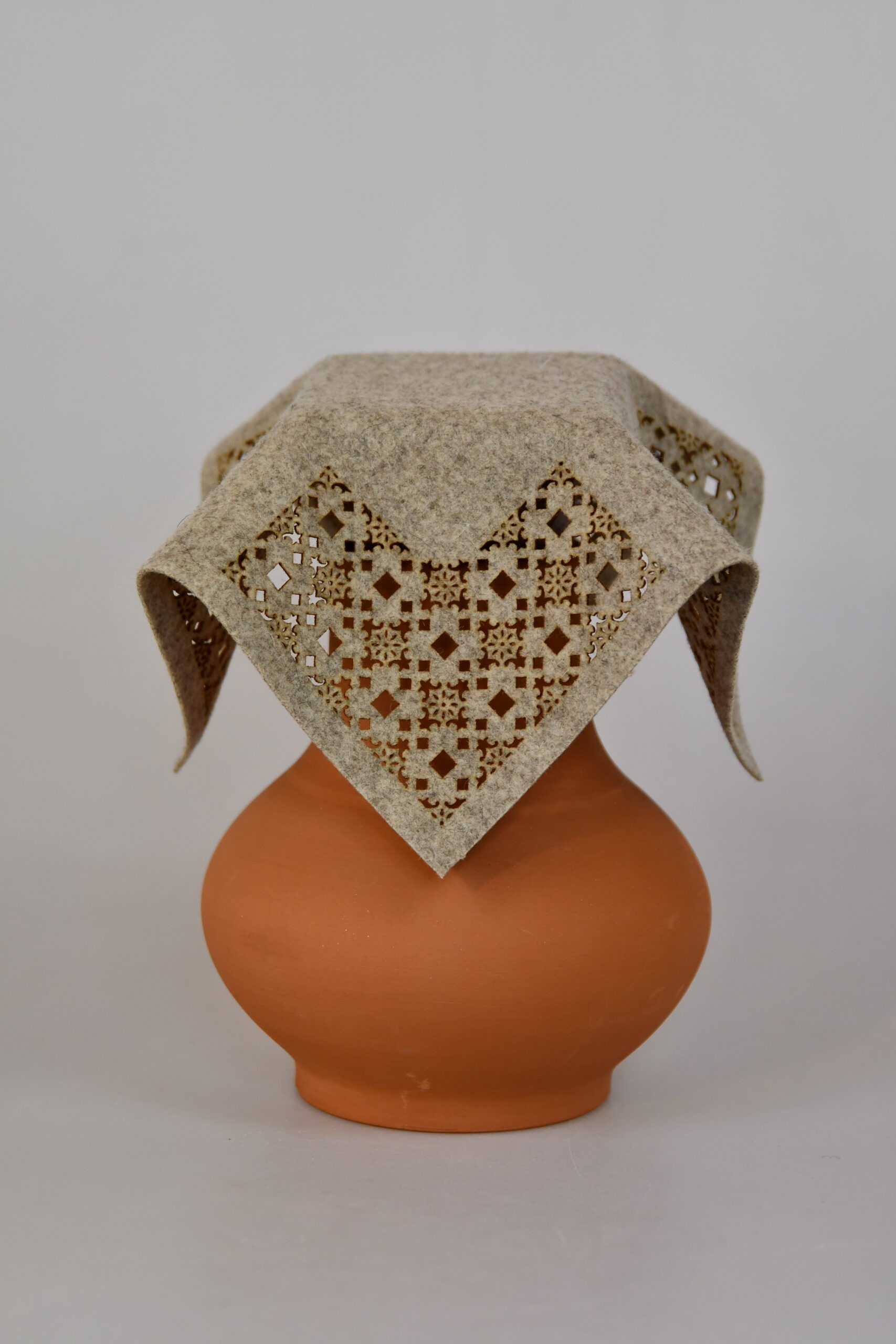
Blue Poet Workshop
Malha com palma e cana
Originally from the parish of Alte, but living in Monte Seco, Olimpia is a master of an ancient technique, now little used, which combines sugarcane with palm mesh. She learned the technique at a young age, from her mother and neighbours. This technique is more physically demanding than other palm oil work because it involves harvesting the sugarcane and preparing it. She enjoys challenges, and so far, there hasn't been a piece she hasn't managed do create. Every piece she makes, she does it with joy. She pays close attention to the final details and is proud of having visitors compliment her on the perfection of her work.
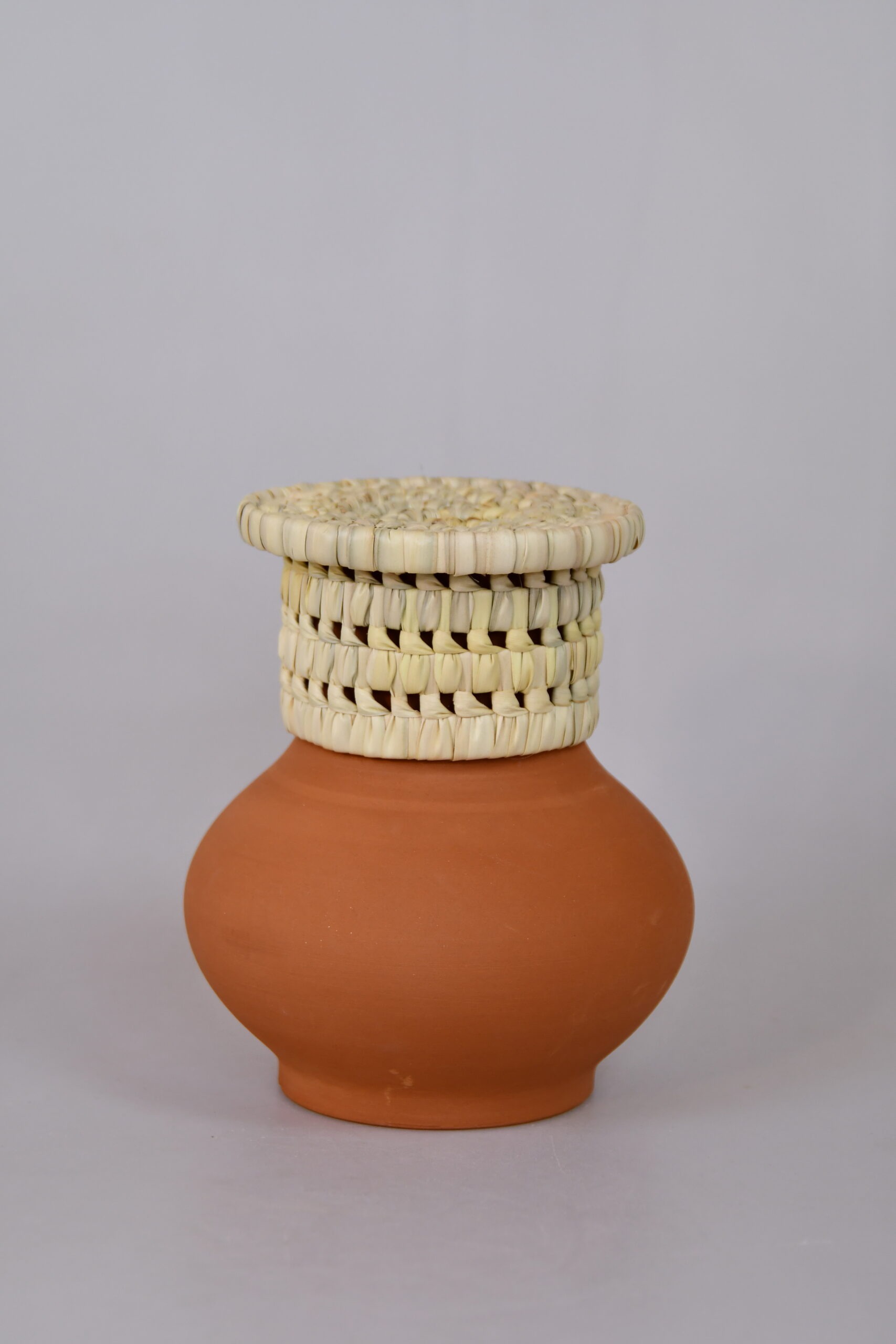
Olimpia Cabrita #1
Malha com palma e cana
Originally from the parish of Alte, but living in Monte Seco, Olimpia is a master of an ancient technique, now little used, which combines sugarcane with palm mesh. She learned the technique at a young age, from her mother and neighbours. This technique is more physically demanding than other palm oil work because it involves harvesting the sugarcane and preparing it. She enjoys challenges, and so far, there hasn't been a piece she hasn't managed do create. Every piece she makes, she does it with joy. She pays close attention to the final details and is proud of having visitors compliment her on the perfection of her work.
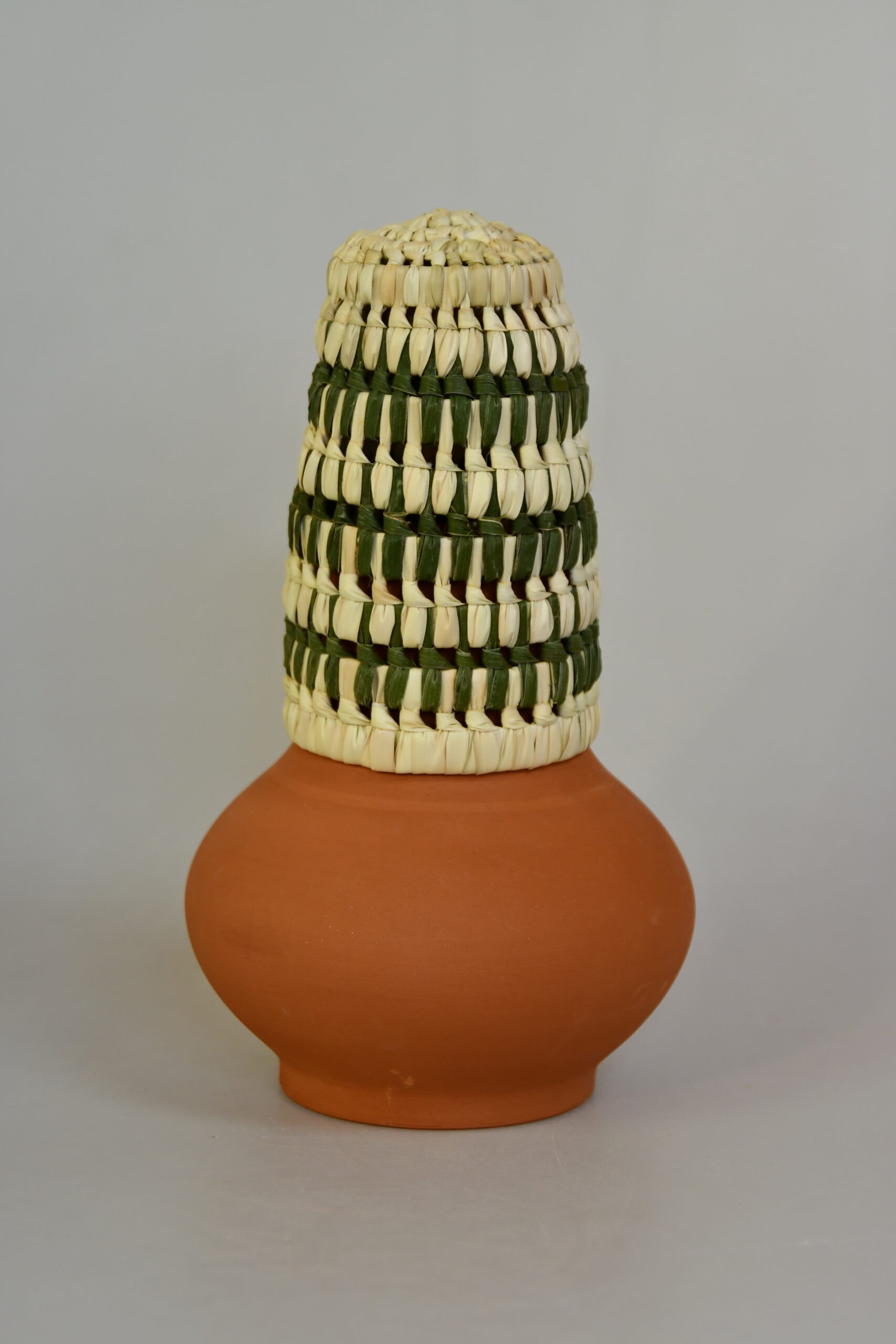
Olimpia Cabrita #2
Crioula
Chapa de cobre e latão com corte
laser e manual, com embutimento,
soldadura e rebite
Paula Ramos e Ramos was born and raised in the municipality of Loulé, until she spent a long time living in Lisbon exploring the possibilities of a career
in the world of arts. Between threads, fabrics, paints and pearls in 2018
began a journey of discovery through goldsmithing techniques. Today, back in her homeland, she seeks to establish a relationship between her Cape Verdean roots and an entire experience as Louletana
in today's world using jewellery as a means of expression.
From this idea comes the Creole project.
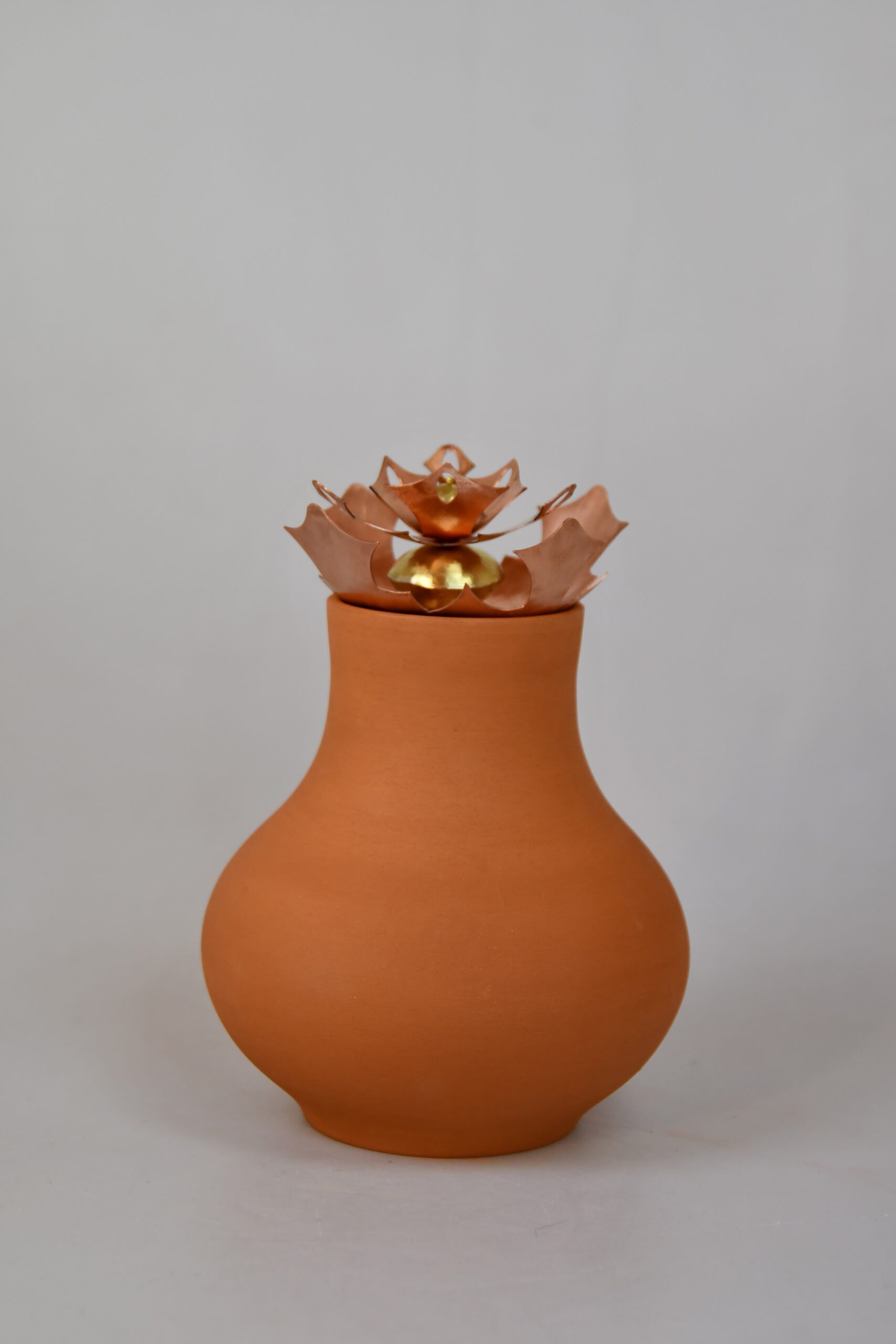
Paula Ramos e Ramos
Cortiça aglomerada, conformada manualmente
Pedro Ramalhete, in addition to his activity as a product designer, has a PhD in design from the University of Aveiro. He studied new methodologies for the selection of materials and subsequently created an innovative methodology for the selection of materials employed in a national database. He has taught in secondary and higher education, and has presented lectures on design and selection of materials at several universities. The Ramalhete Design brand works with handmade objects for everyday life, which reconcile local resources with new materials, giving rise to multifunctional, innovative and durable objects. Its line includes innovative concept objects that "play" with functionalities
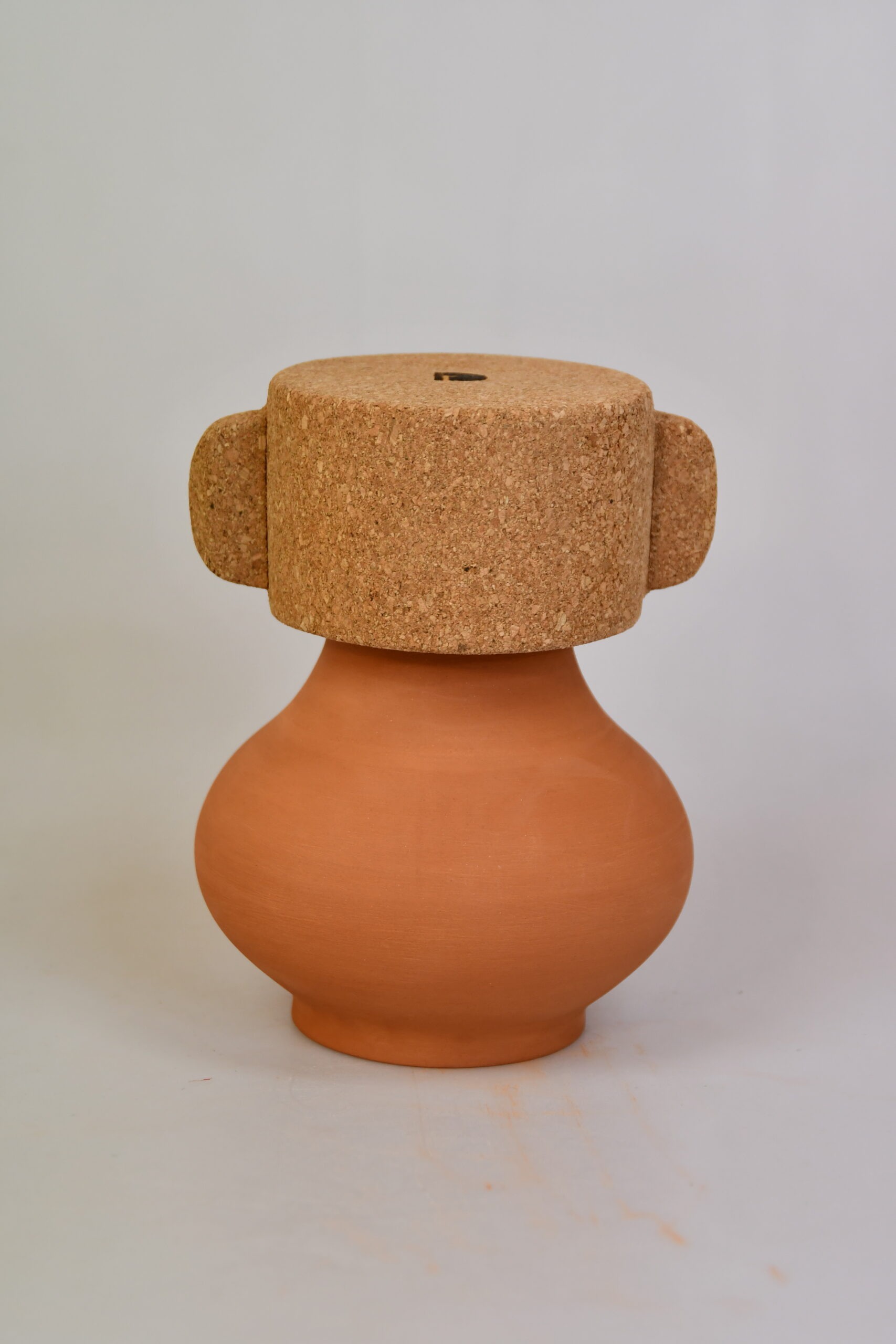
Ramalhete
Madeira da Oliveira torneada e papel colado com cola branca de madeira
The duo Pidutournée seeks to contribute to a sustainable future with practical ideas and provocative language. The result is several eco-design objects built with local organic materials - stones and logs - which are combined with recycled or reused materials - paper, cardboard, glass, among others. His pieces are produced using archaic and artisanal techniques, giving rise to unique and functional objects that question the current perception of use.
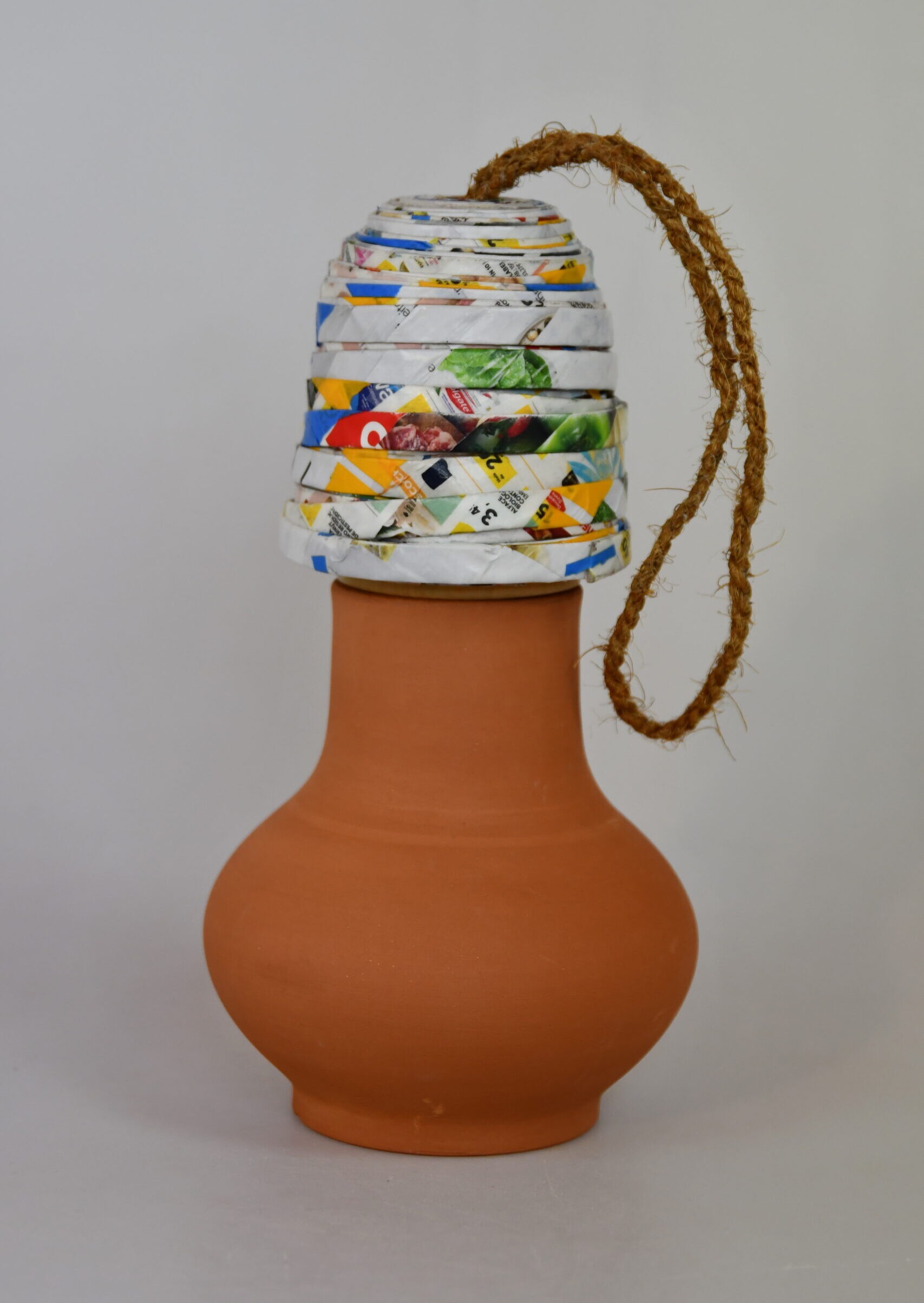
Pidutournée Design
Pedra Brecha do Algarve com corte,
desbaste e acabamento amaciado
Samuel dos Santos works in the areas of space and object design. As a young man, he helped artisans in the creation of architectural elements and products in wood and natural stone.
Memories, nature, manufacturing and "resourcefulness" serve as a platform of inspiration for his works.
The goal is to seek a disruptive balance between form and function.
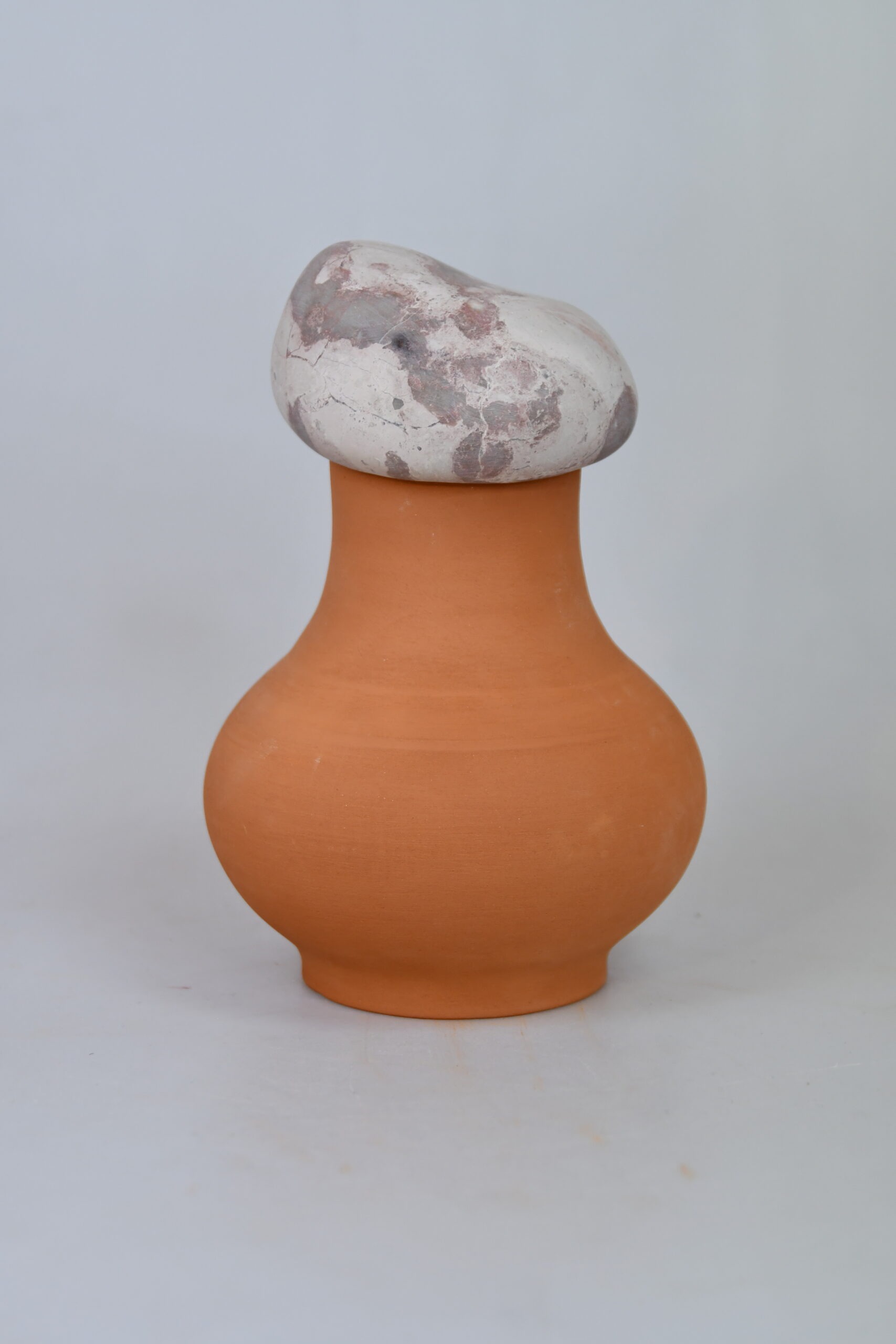
Samuel dos Santos
Like Cork
Cortiça natural e aglomerado de
cortiça talhada com corte e torno
com acabamento em verniz aquoso
Sandra Louro is an equipment designer, graduated from the Faculty of Fine Arts of Lisbon in 1999, works in the area of Museography, graphic design and furniture. She participated in several national and international exhibitions. He develops projects for interiors and in the area of furniture, he was inspired by Portuguese culture and Algarve handicrafts, where he uses cork combined with other materials. In order to create a unit for his creations at the end of 2012, the Likecork brand was born, where he is creative responsible. The Like Cork brand combines the Portuguese adventurous spirit and respect for nature with innovative, eco-friendly organic products, predominantly using cork, due to the richness of its properties and the quality and comfort of the final result.
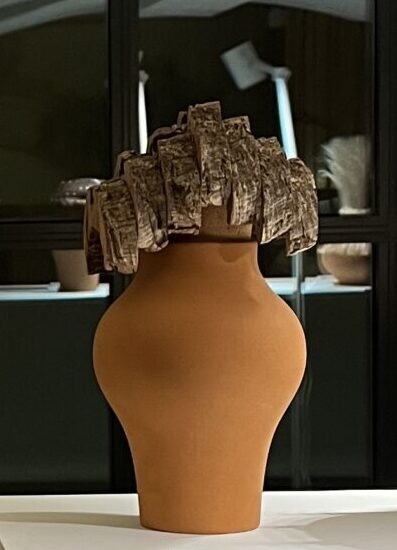
Sandra Louro
MESS
Fitas decorativas de presentes
recuperadas, enroladas e preenchidas com resina de base biológica
Mess is a project that was developed in the Design Lab created by Sandra Neto that studies and develops ecologically-based constructive and decorative coatings - they are 'green' composite surfaces, whose raw material comes from rejected, expired, second-line materials or from by-products.
Mess's objectives are to supply a sustainable and circular aspect of products and offer a unique and distinctive 'materiality'.
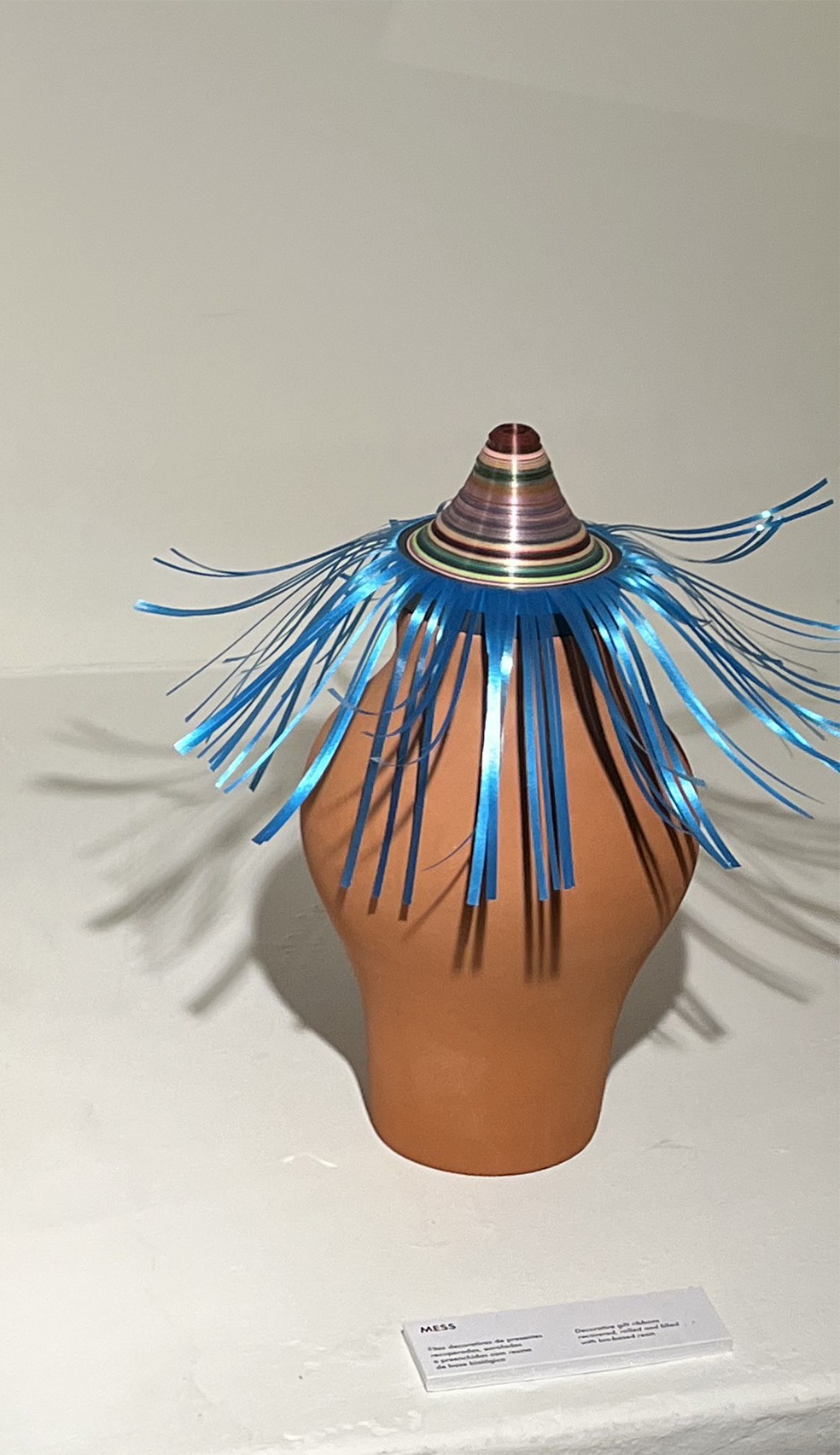
Sandra Neto
Casa da Empreita
Empreita de palma
Born in Venezuela, it was in Loulé that, as a child, she had her first contacts with the art of the palm by the hand of her maternal grandmother. Creative, she likes to work with her own hands. He experimented with various techniques and materials throughout his life and discovered a taste for teaching in the handicraft classes he taught for 8 years. He won several national awards and coordinated the construction of a nativity scene in contract, a single piece, which involved 500 hours of work. A versatile artisan, she never says no to a challenge.
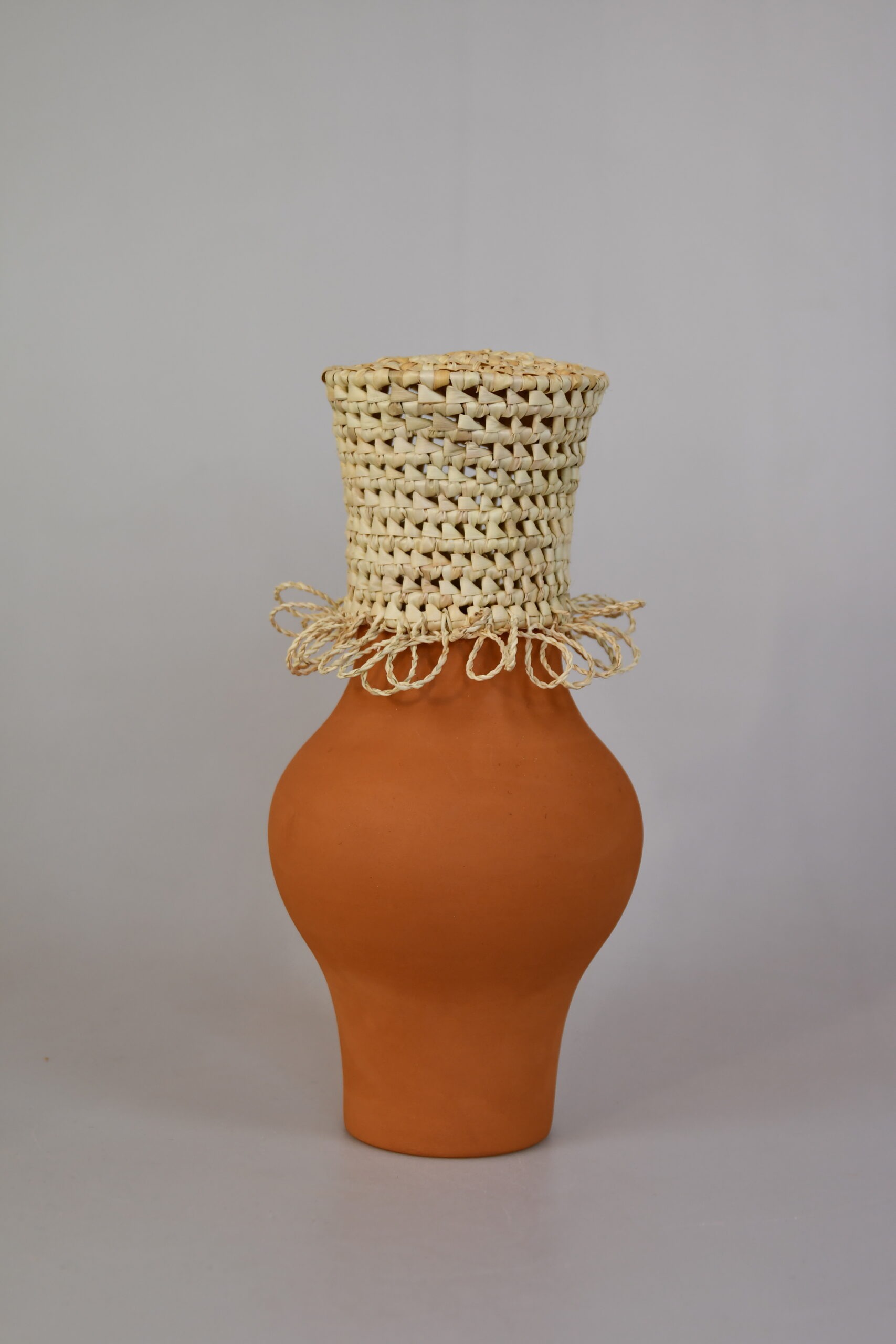
Sonia Mendez #1
Casa da Empreita
Malha e baracinha de palma
Born in Venezuela, it was in Loulé that, as a child, she first encountered palm art at the hands of her maternal grandmother.
Creative, she enjoys working with her own hands. She experimented with various techniques and materials throughout her life and discovered her passion for teaching in the crafts classes she taught for eight years. She won several national awards and coordinated the construction of a one-of-a-kind nativity scene, a project involving 500 hours of work. A versatile artisan, she never says no to a challenge.
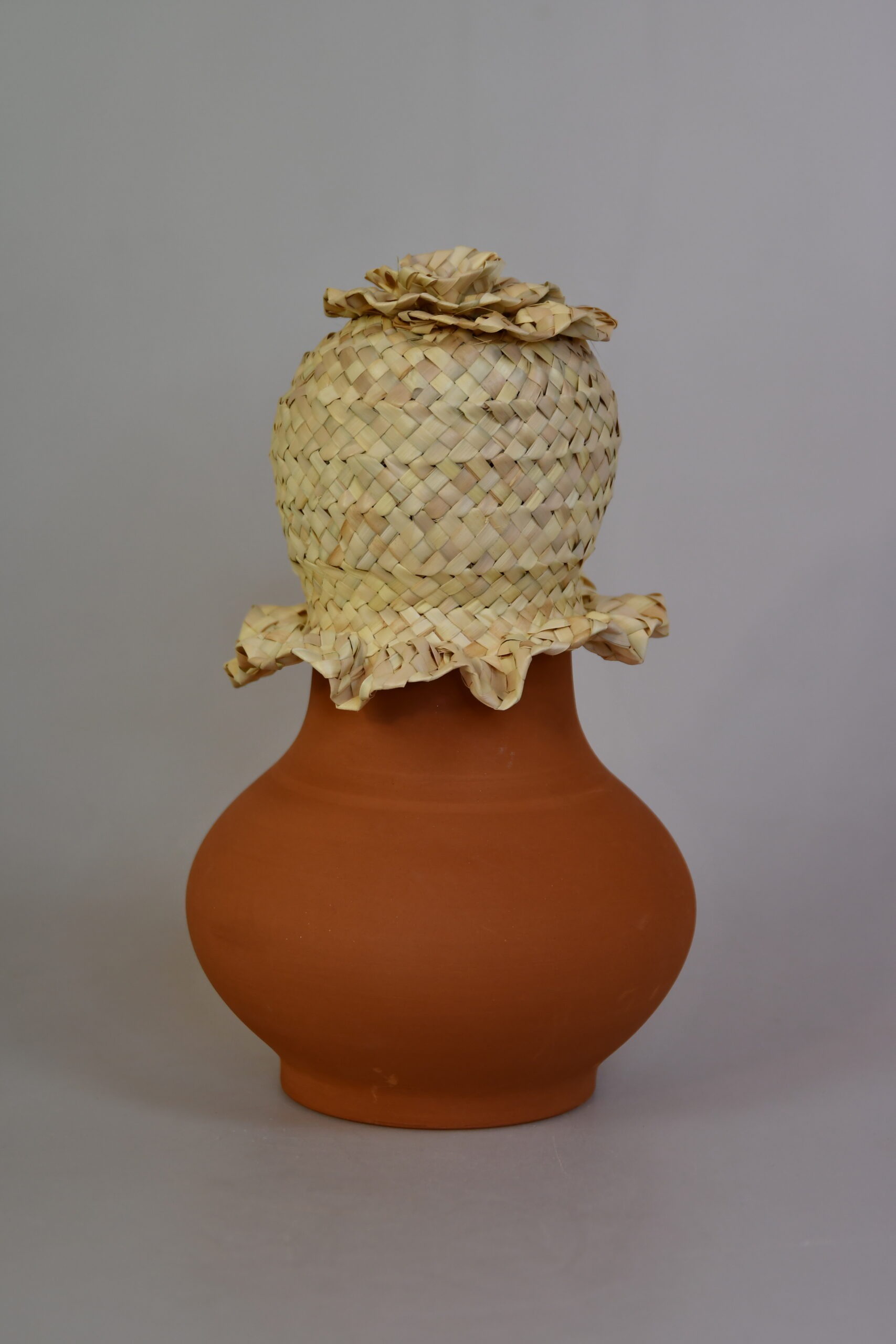
Sonia Mendez #2
Lã tecida em tufting
Carefully handmade between the sun and the sea of the Algarve, SÕNMUN is a handmade work that uses colors, textures and three-dimensionality to its works using mainly the tufting technique as its signature. Emilie Cavaco, French-Portuguese, graduated in Communication Sciences and Image Consulting. After many years of experience in the textile industry in Paris and as a project/decoration manager in the Algarve, she dedicated herself to the development of skills in digital illustration and was co-founder of SÕNMUN. Marcos Altares, born in Alentejo, from the Algarve by adoption. Musician and composer and graduated in Artistic Studies in the Algarve. His experience as a visual merchandiser in the city of Paris gave him the necessary tools to understand the textile industry and design and gave him enough inspiration and motivation to return to the Algarve and create SÕNMUN.
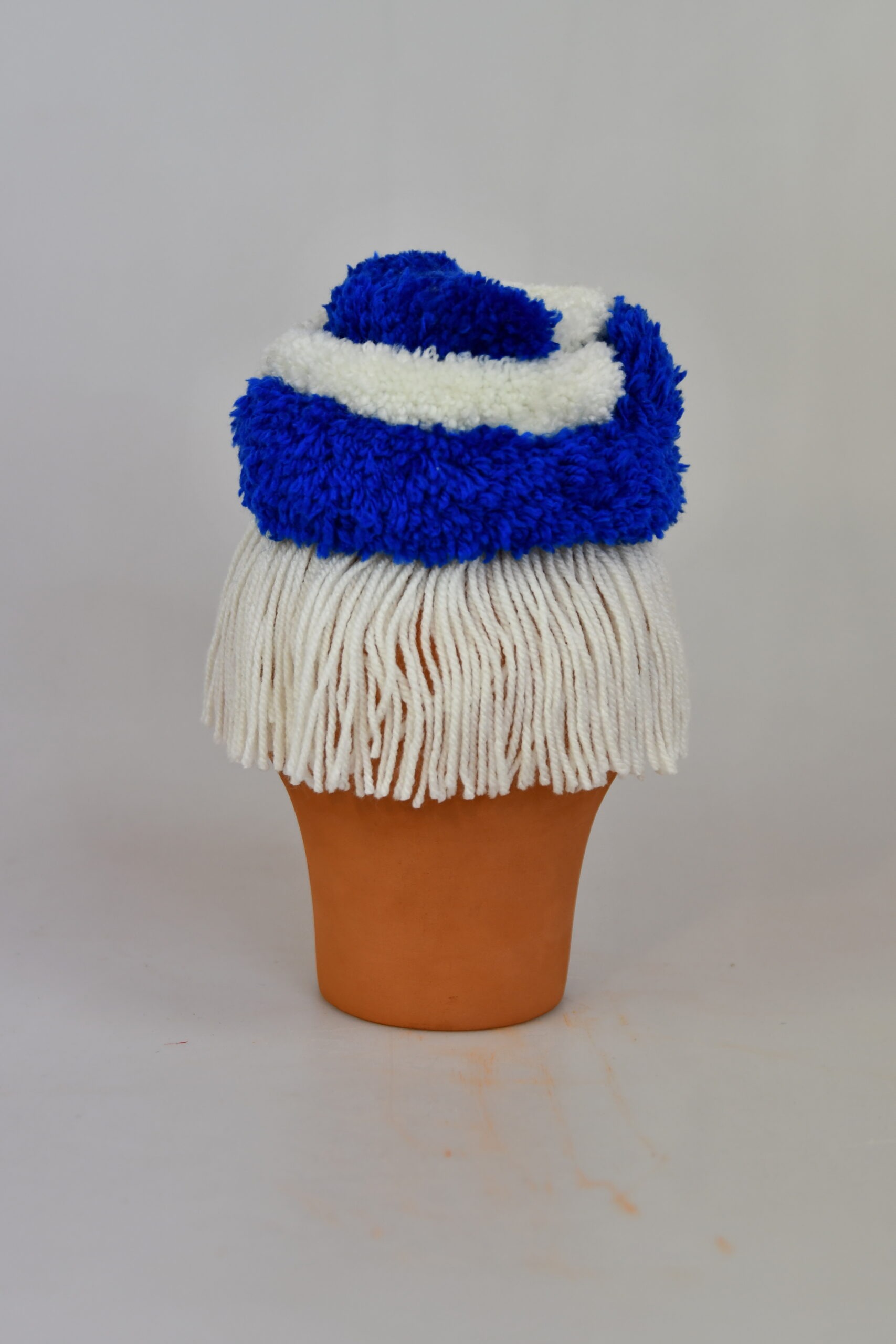
Sonmun
Oficina dos Têxteis
Lã de ovelha campaniça, fiada à mão numa roda de fiar e depois tricotada à mão
Susan Sutherland was born in Scotland, but she chose Portugal to live a long time ago. Growing up in an environment where yarn reigned supreme - her father owned a large carpet manufacturing - Susan is passionate about spinning and wool, dedicating herself to the design of knitted garments, accessories and even toys. However, her project does not stop here and it is Susan who cards
and spins the raw material with which he works, creating skeins that he sells or that he uses in the pieces he produces, exclusively handmade. The artisan also gives workshops where she teaches the process of spinning wool with a handmade spinning wheel or spindle.
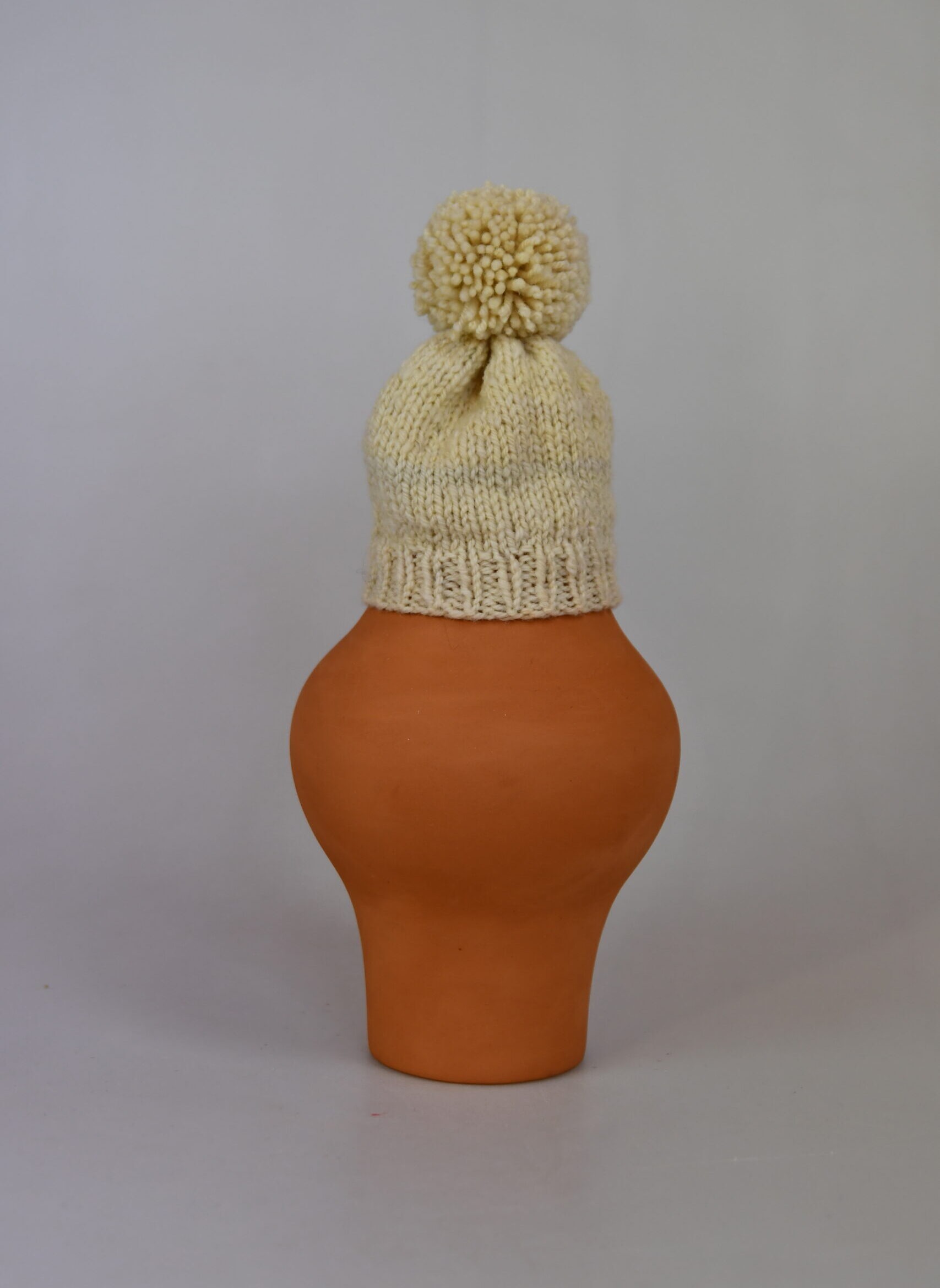
Susan Sutherland
Oficina dos Têxteis
Lã de Ovelha Churra Algarvia
Susana Mendez is from the Algarve, born in the city of Loulé. He studied arts and graduated in graphic design where he explored his first passion, illustration. She worked in her field of training for several years but at the same time she was always connected to textiles as a hobby. Until the roles were reversed and nowadays she is a full-time textile artist and trainer, it was in manual weaving and tapestry that she found her way and form of artistic expression. She integrates several projects and creative residencies with the purpose of disseminating her knowledge and transmitting it to more people".
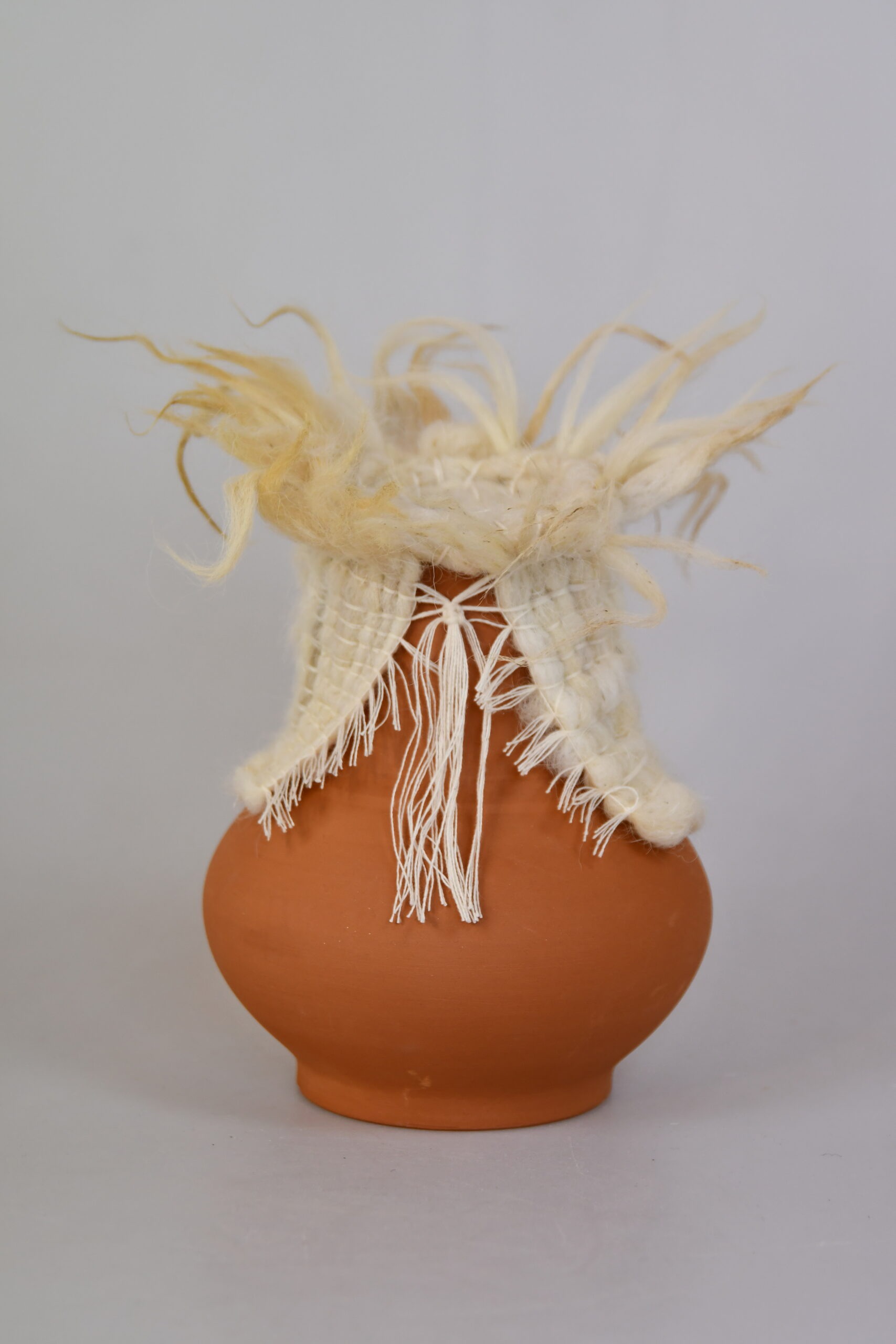
Susana Mendez
Casa da Empreita
Empreita de palma
She learned palm weaving and palm knitting by observing the women in her family. She regretted not having gone further with her studies, but life's circumstances didn't allow for it. After the age of 50, she completed the 9th grade, and she proudly says that she has mastered social media. Weaving is a daily addiction. When she weaves Palm, she forgets everything else — all the stress of daily life. She works a lot with raw, untreated palm, so she still goes into the forest to collect it. She enjoys teaching, and is hopeful for the future of weaving in the Algarve.
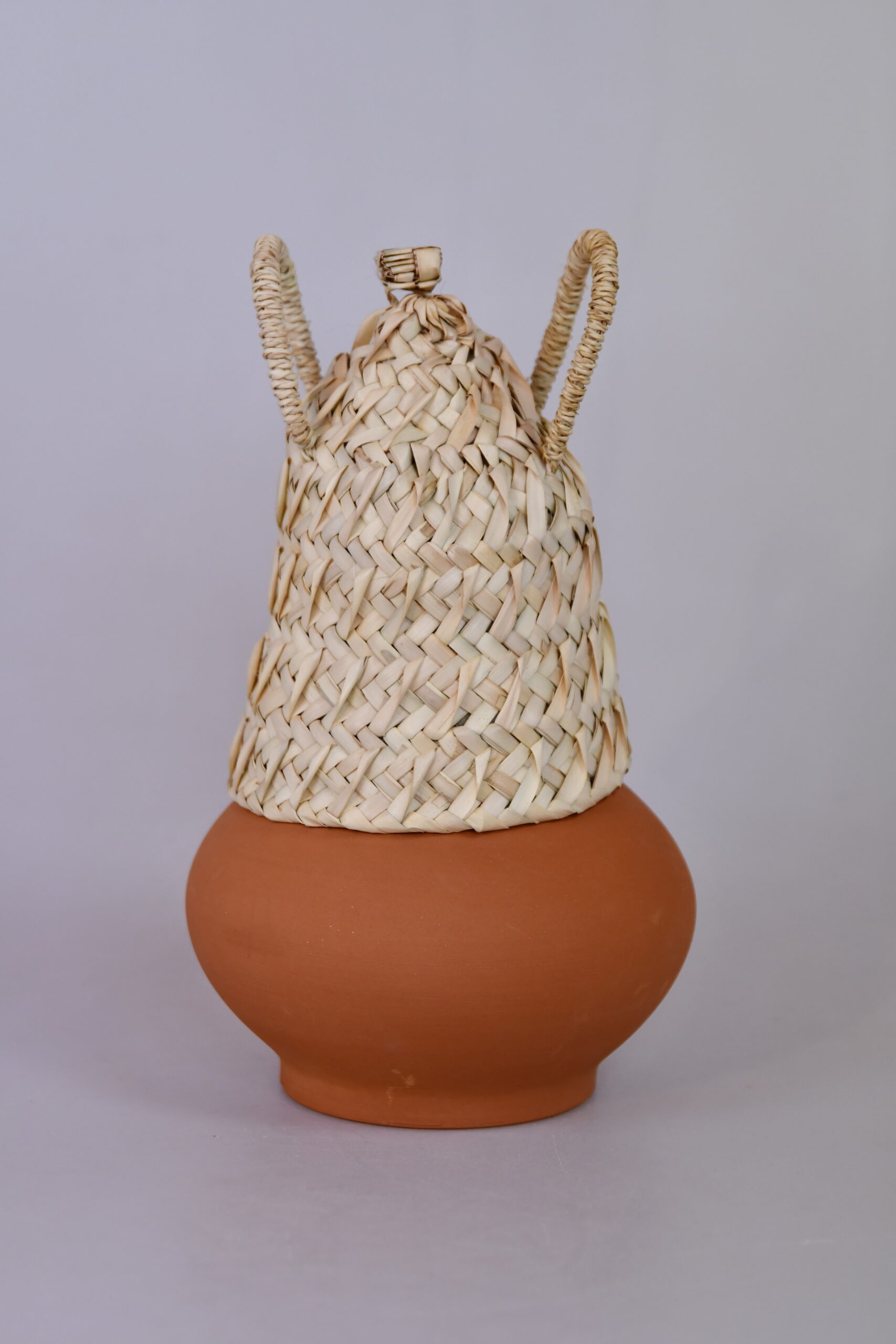
Valentina Silva
Madeiras de Mogno (descarte) e Oliveira, tornedas e com acabamento em cera.
Born in August 1981, he defines himself as an eternal learner of the world, passionate about creativity and sharing knowledge. He began and established his artistic career in 2016, when he left his area of academic training in Social Communication to dedicate himself to the creation and production and creation of pieces in solid wood. His influences include architecture or different styles such as Nordic or wabi sabi, which he likes to mix in his works. In 2021, in the midst of creative chaos, the endless collection is born, named the Descartes Series, in addition to the raw material.
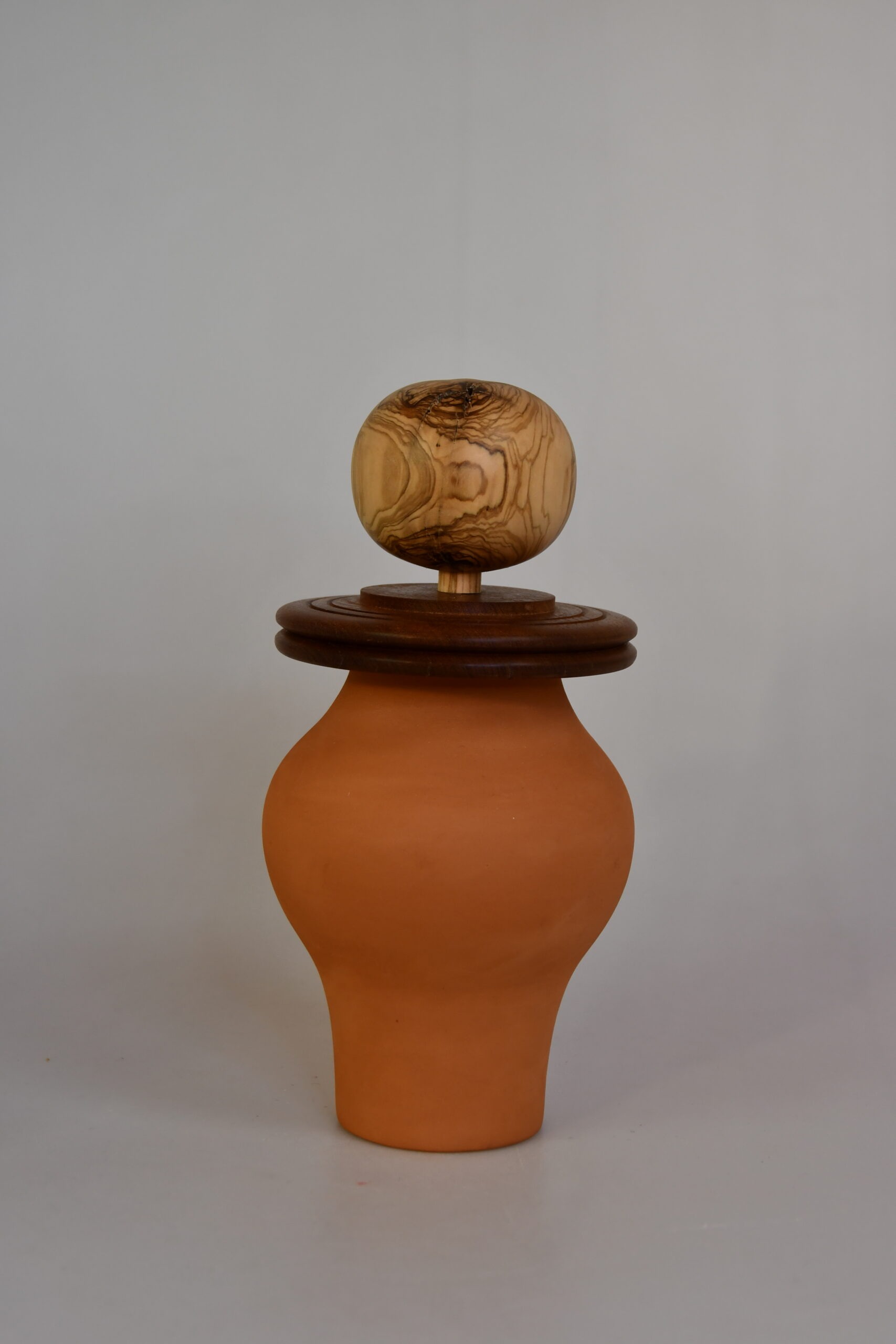
Wesley Sacardi


