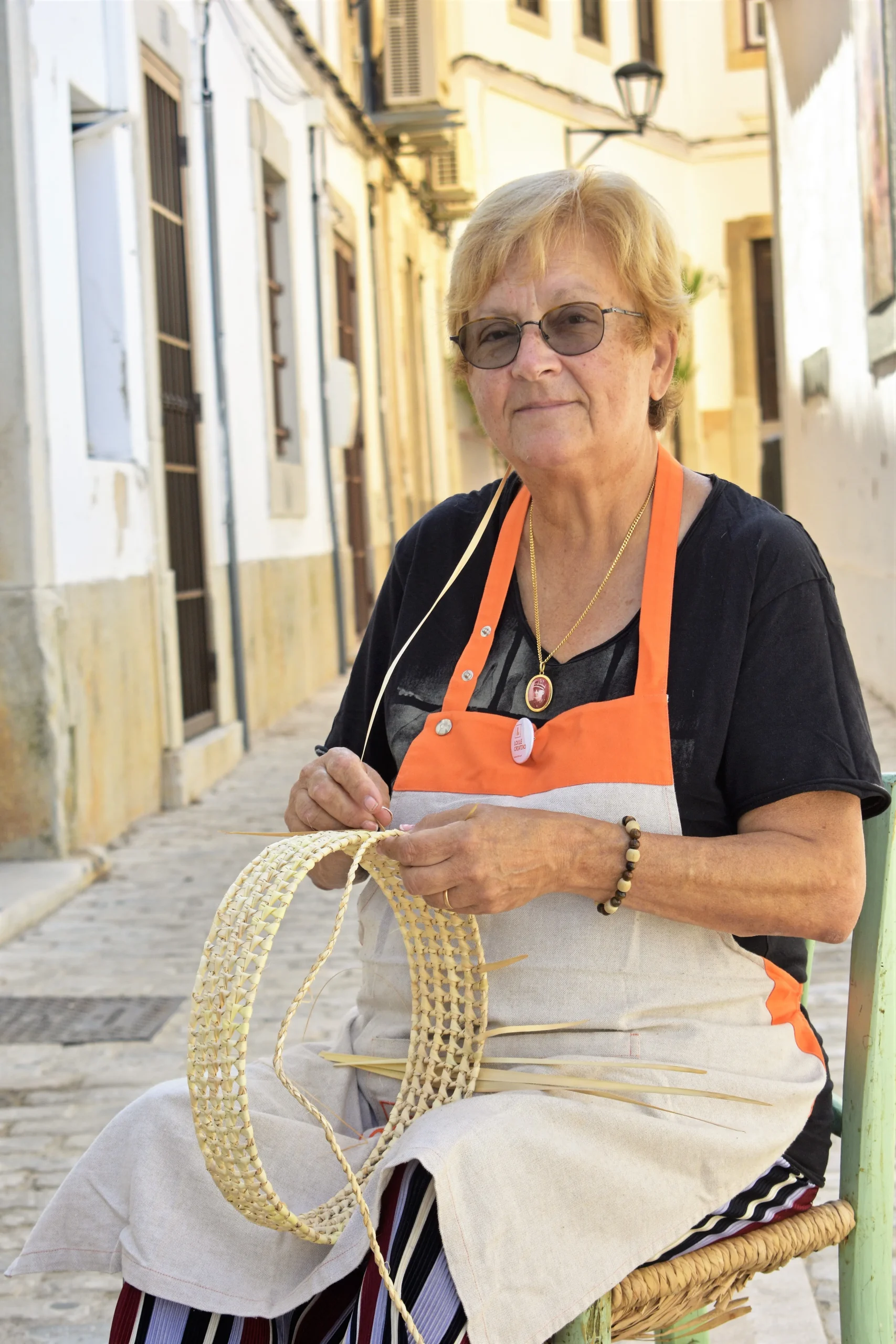
Originally from Loulé, she learned the palm knitting technique at the age of 12, with her stepmother and began to contribute to the family budget. She emigrated to France, where she lived for 45 years. At that time she came to Portugal on vacation and liked to make some pieces, so as not to forget what I had learnt. After retirement, she returned to her origins and dedicated herself again to palm work, as a way of occupying her time and not letting the craft die.
She teaches her art in workshops, with the support of her husband - Jorge Ferreira - who is a master of the baracinha.
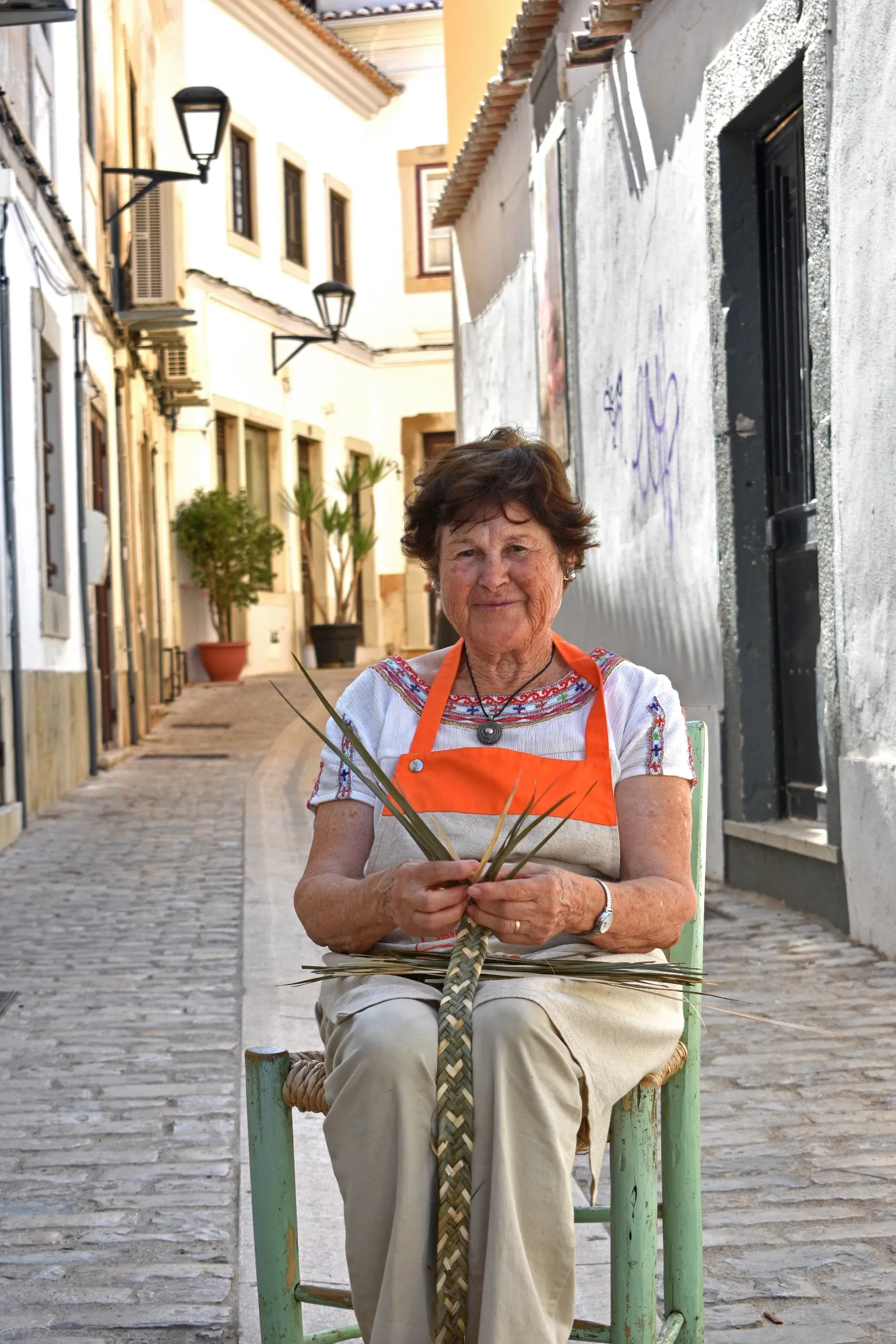
An artisan from Boliqueime, Alzira has dedicated herself to the art of the enterprise since she was 11 years old, following her mother's teachings. A master of colourful patterns and the undertaking of 7 and 9 extensions, she creates traditional pieces such as carrycots, rugs, fans and dukes — her hallmark. With a regular presence at fairs such as Fatacil, Feira da Serra and Feira de Artesanato de Loulé, she has proudly been part of Casa da Empreita since its foundation, keeping the tradition of the Algarve palm alive.
With a restless spirit and a will to constantly improve, the art of crafting came late into this artisan's life. From an early age she began to sew, and at the age of 45 she attended a course in palm and esparto - an old dream, which she had the opportunity to fulfill. With a particular taste for innovation, she combines her talent for sewing with different techniques and materials that result in unique objects that seek perfection.
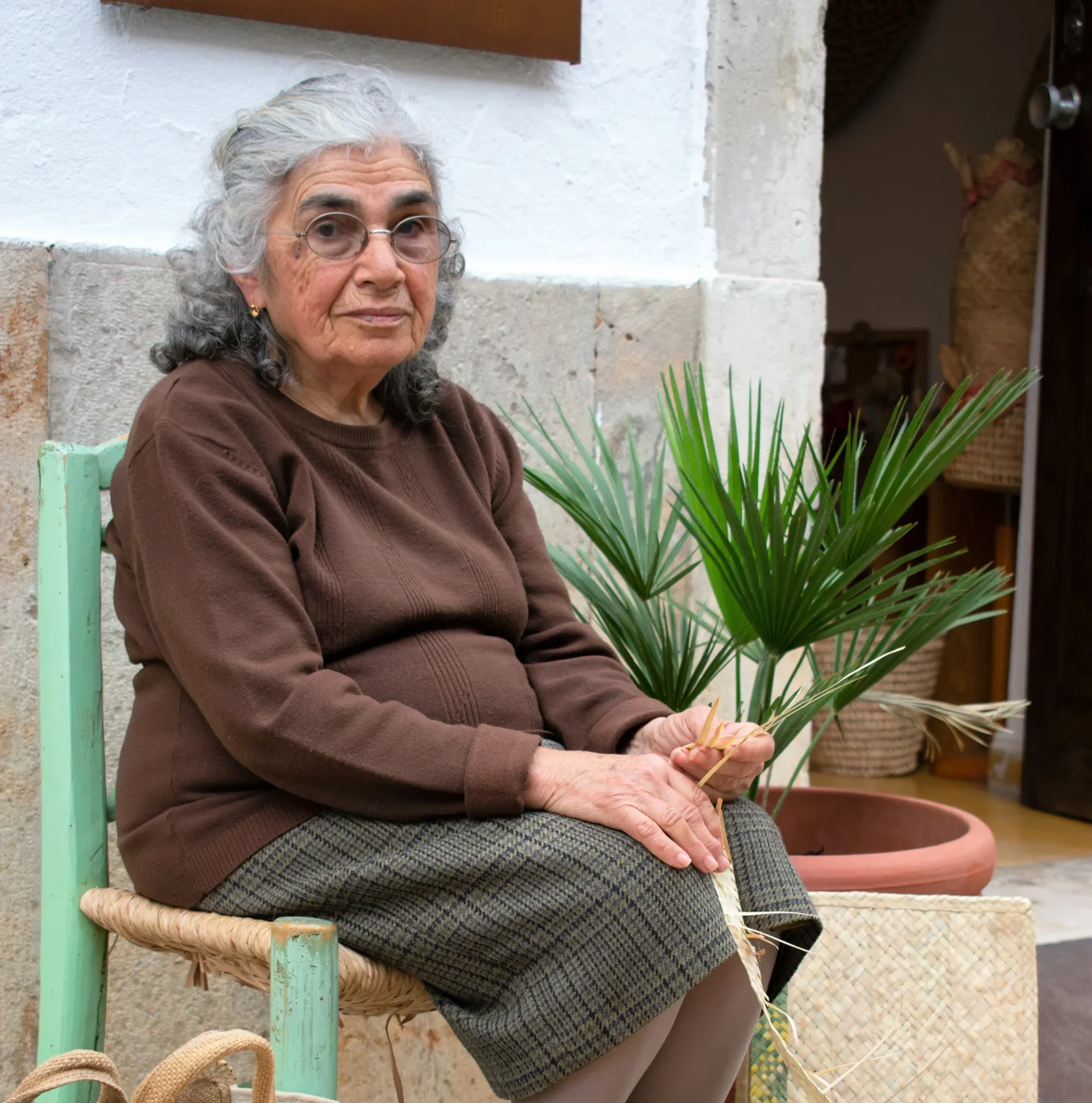
Born in Alentejo, she soon moved to the municipality of Loulé, where she learned to weave with a neighbor. However, life took many turns, and she worked in various places and put her weaving aside for some time.
She is currently the youngest artisan at Casa da Empreita. Passionate about crafts, she is always eager to learn new things. In recent times she discovered the palm knit technique, to which she has dedicated herself, working it individually or together with the contract, trying to make different and innovative pieces.
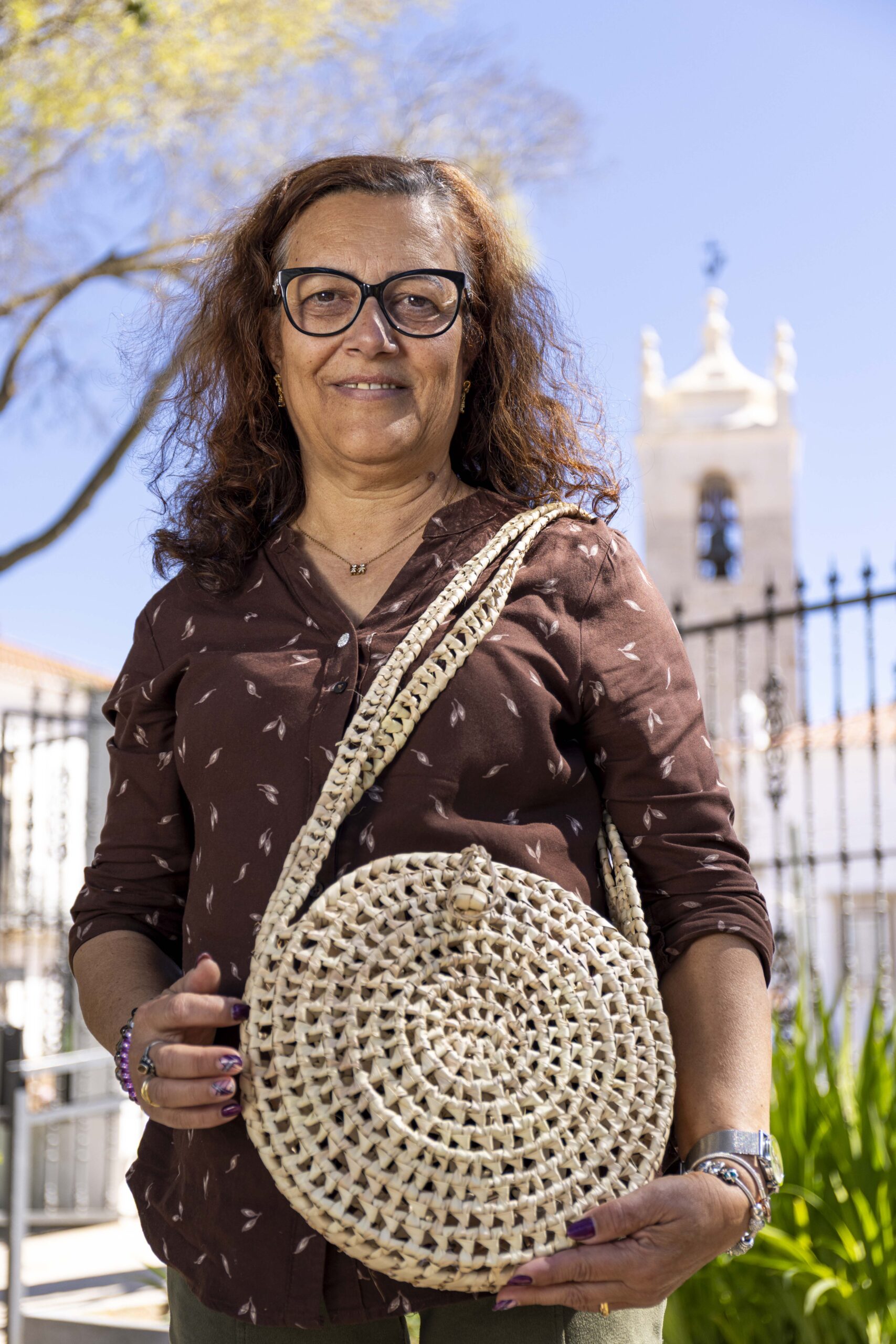
Born in Venezuela, it was in Loulé that, as a child, she had her first contacts with the art of palm by the hand of her maternal grandmother. Creative and versatile, she masters various artisanal techniques and combines tradition and innovation in her pieces. In 2019 she conceived and coordinated a nativity scene in an almost life-size contract, a work that earned her national prominence. She is a member of Casa da Empreita, where she continues to challenge herself and share her knowledge.
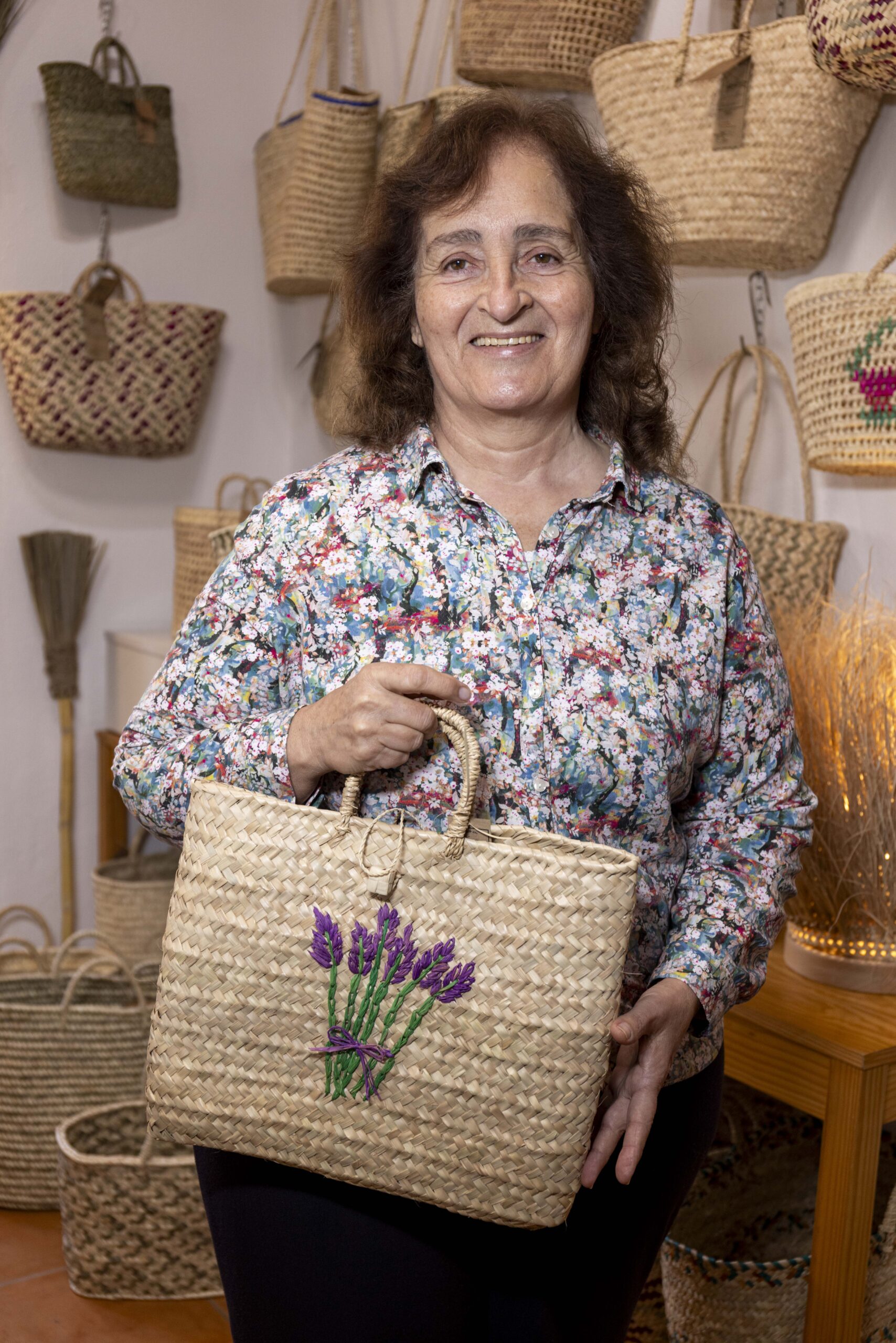
She is from the time when most girls stayed at home learning sewing, embroidery and taking care of the housework. At 15, she began working with her mother, and since then, palm weaving has become a part of her life, supplementing her income from the land.
She has participated in fairs throughout the Algarve and elsewhere in the country and was part of the group of artisans who participated in the first editions of the famous Fatacil. Her favorite technique is the 9-branch work, with which she makes Moses baskets, bags, rugs, doormats, or whatever her imagination dictates.
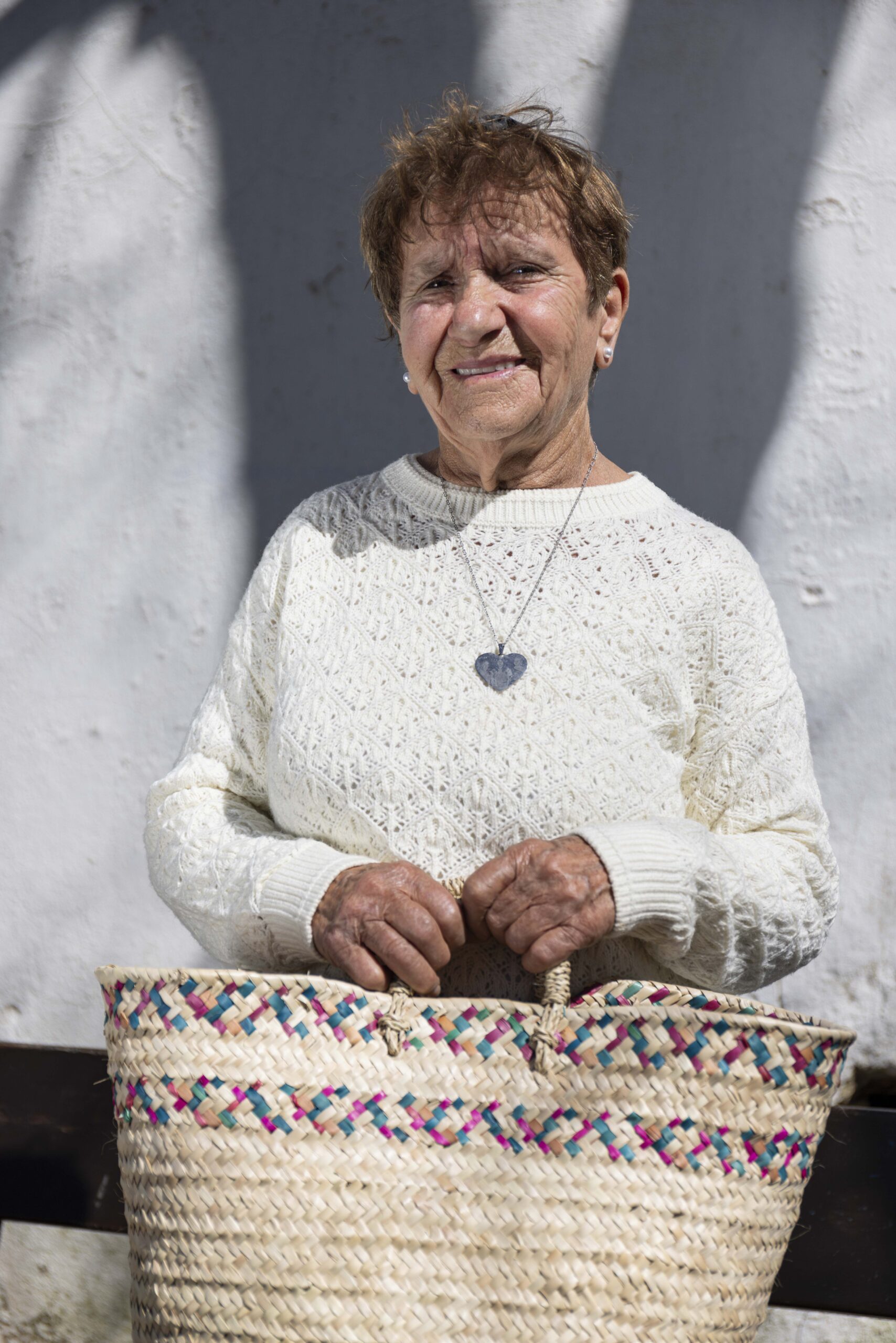
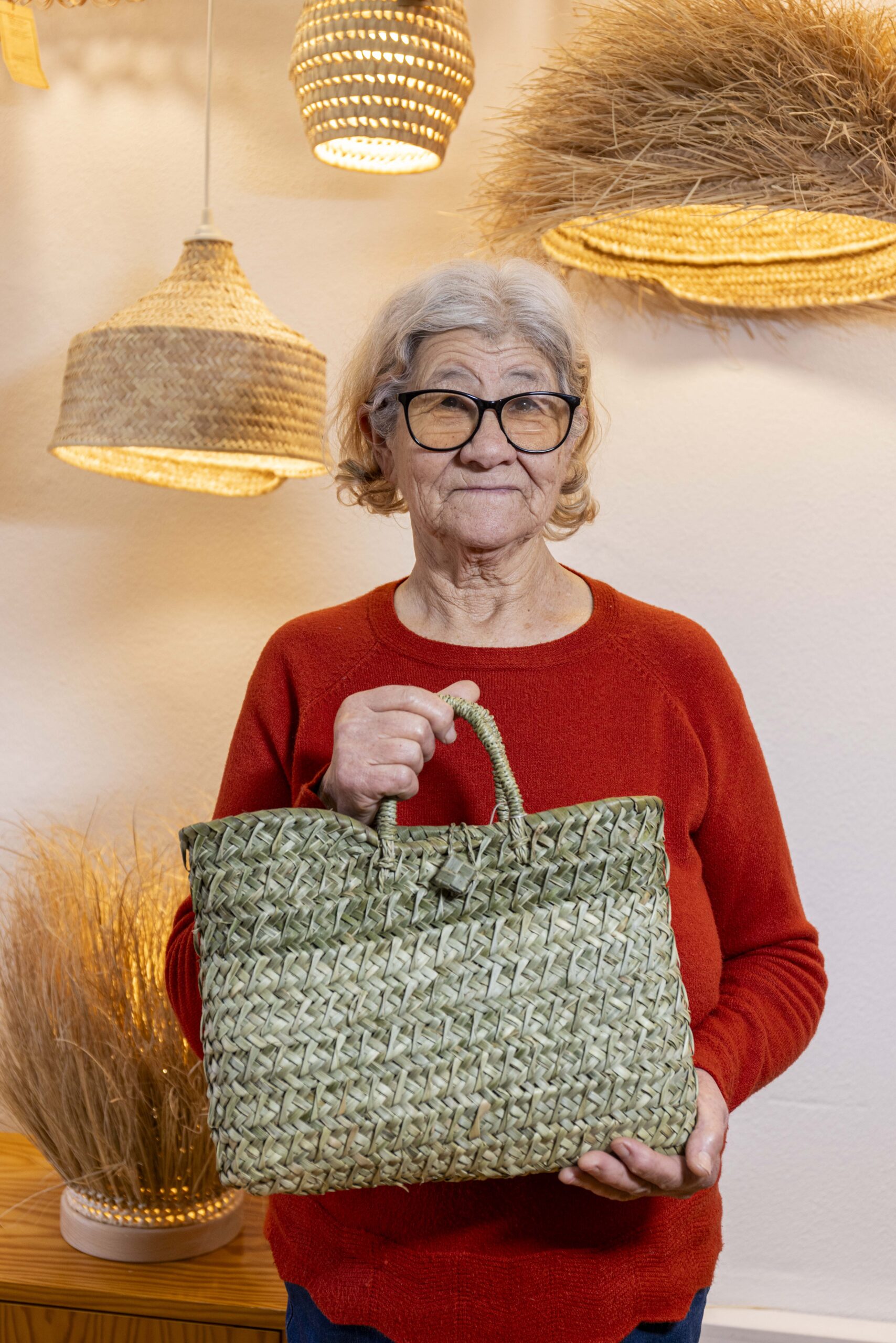
Born in Alte and resident in Monte Seco, Olímpia Cabrita is a master of an ancient technique that combines cane with palm mesh. She learned from her mother and neighbors and dedicates herself to this demanding craft with passion and precision. She likes challenges and is proud to have never found a piece that she could not make, being recognized for the perfection of her finishes.
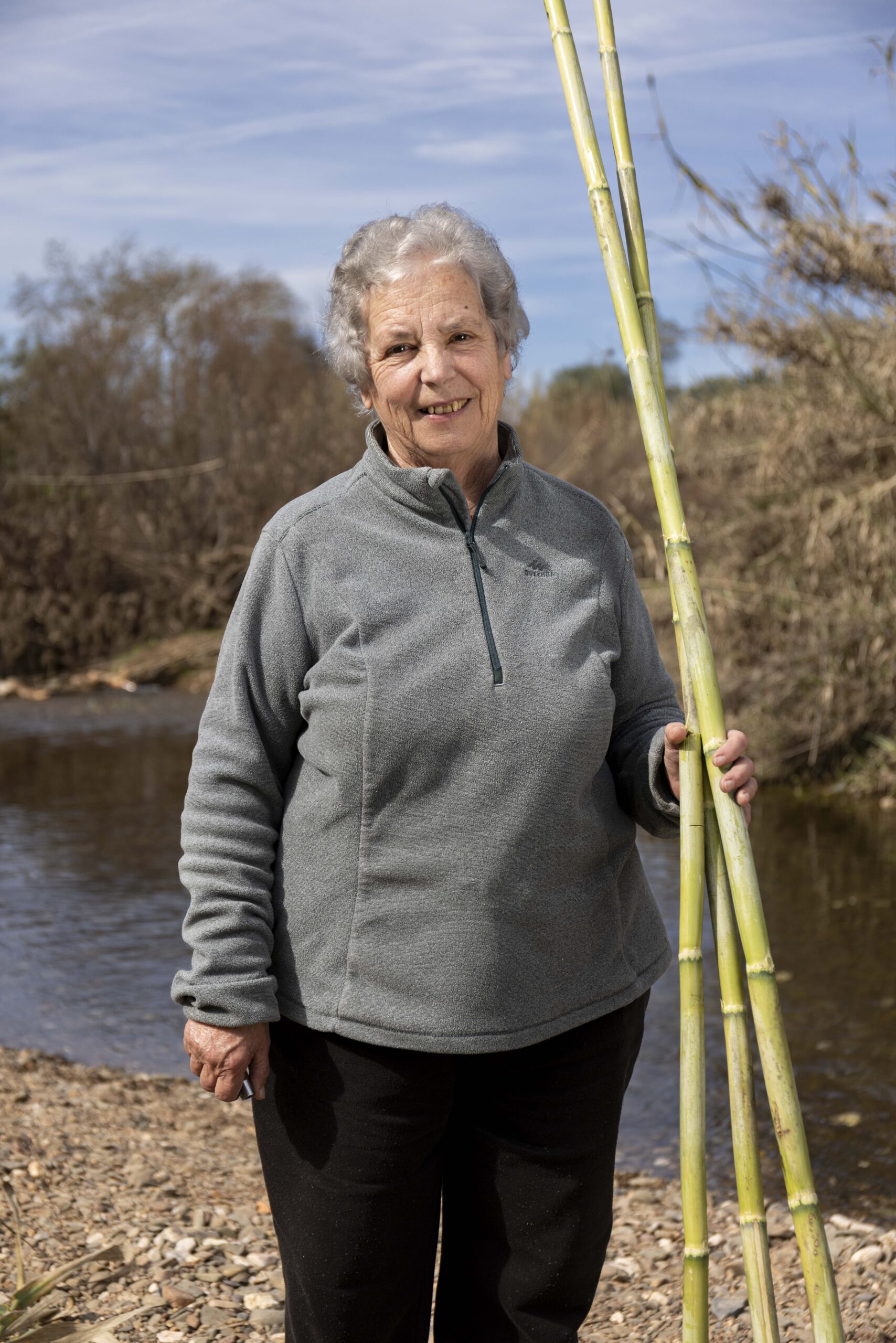
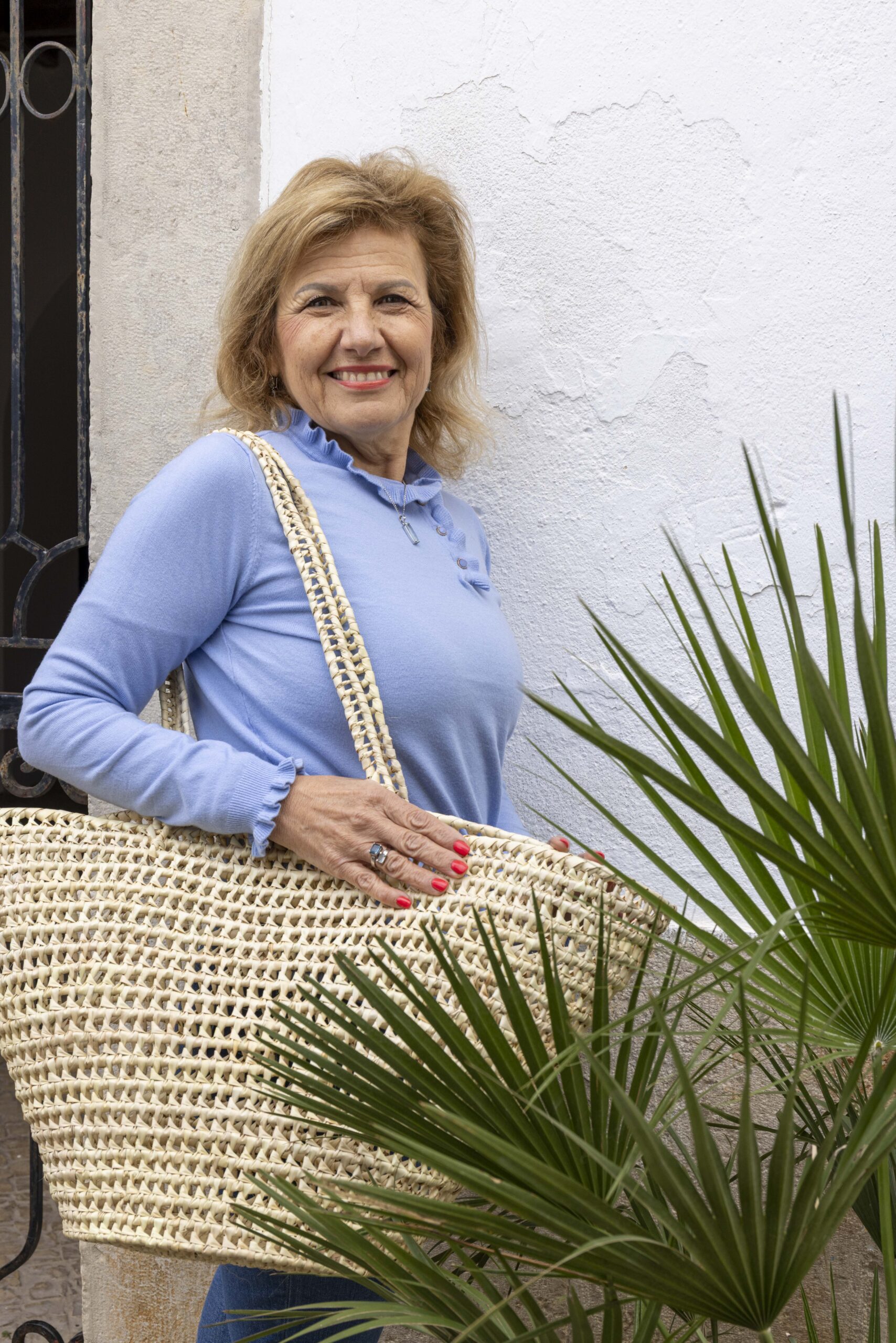
Between France and her Algarve roots, Eugénia Duarte rediscovered in palm weaving the tradition that has always accompanied her. Today, at Casa da Empreita, she proudly shares this legacy and already transmits it to her granddaughter, ensuring that the art of palm lives on.
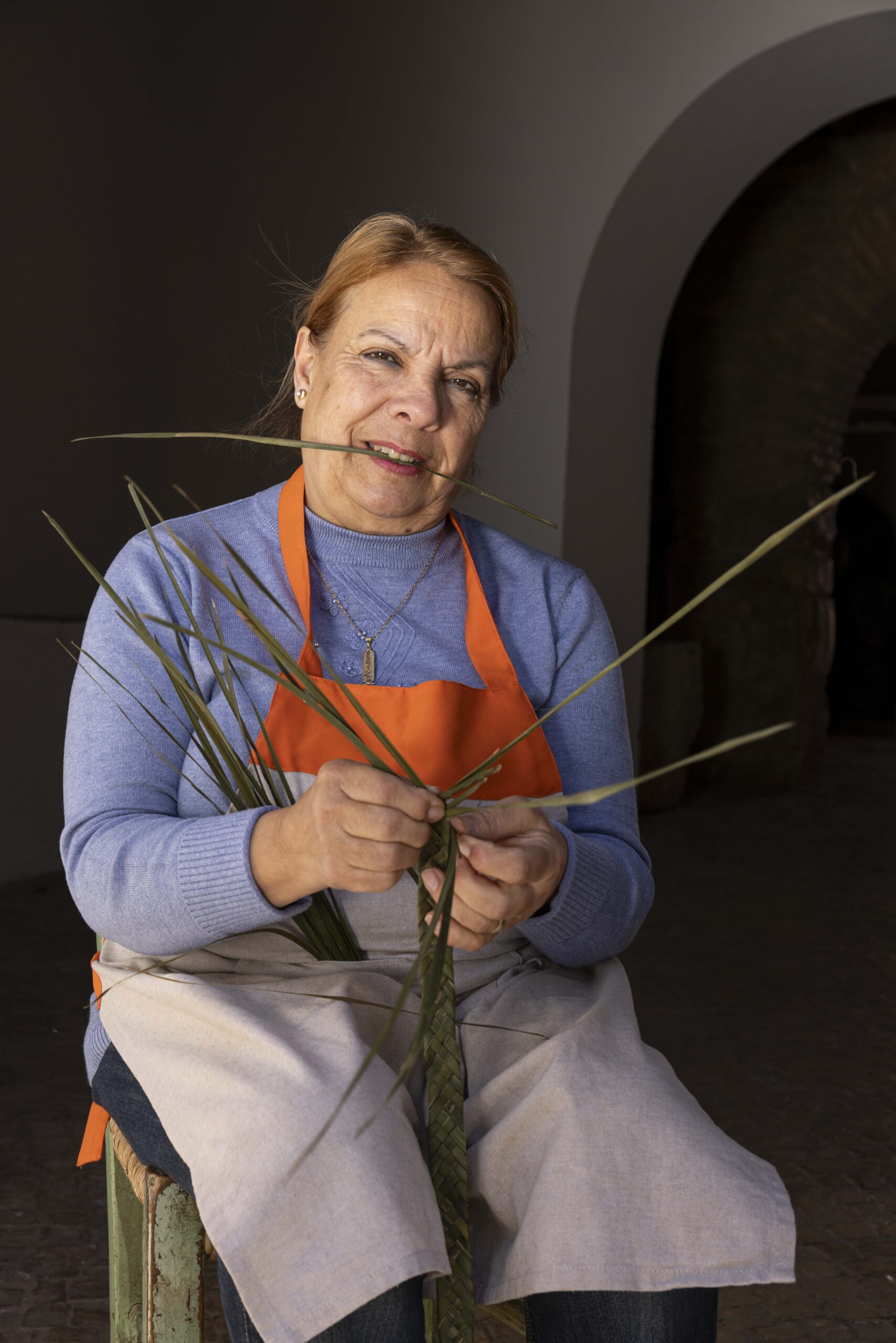
Born in Cerro Alto, in Parragil, Florinda Guerreiro discovered her passion for palm farming as a child, learning from her mother. Even during the years she lived in France, she kept her connection to this art alive. Back in Portugal, she enthusiastically dedicates herself to the creation of pieces recognized for their skill and perfection.
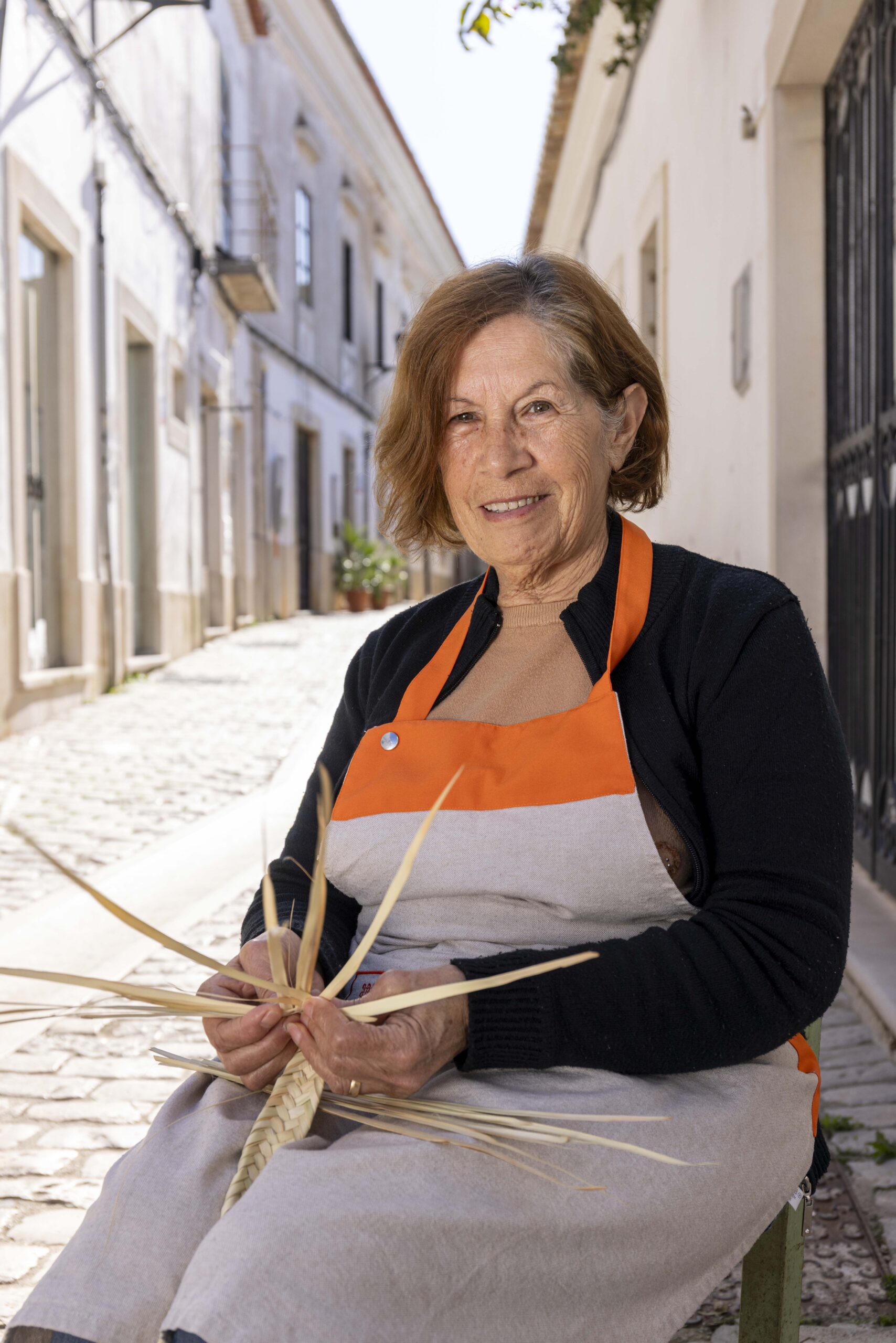
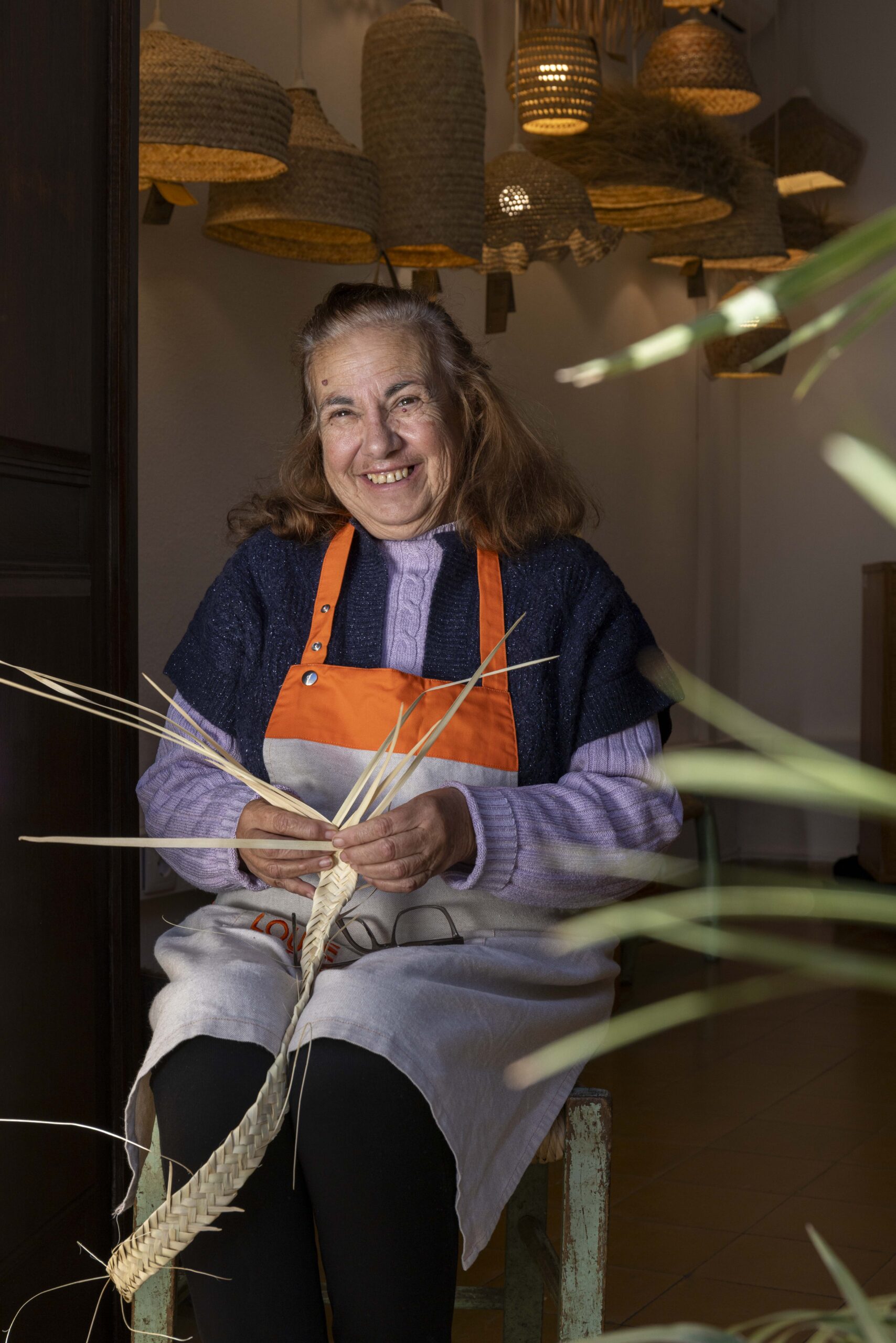
Born in Águas Frias, parish of Alte, Inácia Coelho learned the art of palm construction on her own initiative, after the age of 30, with her neighbors in Monte Seco, where she lived most of her adult life. She combines the tradition of palm weaving with machine sewing, a technique that she pioneered. She is part of the original group of artisans who started Casa da Empreita.
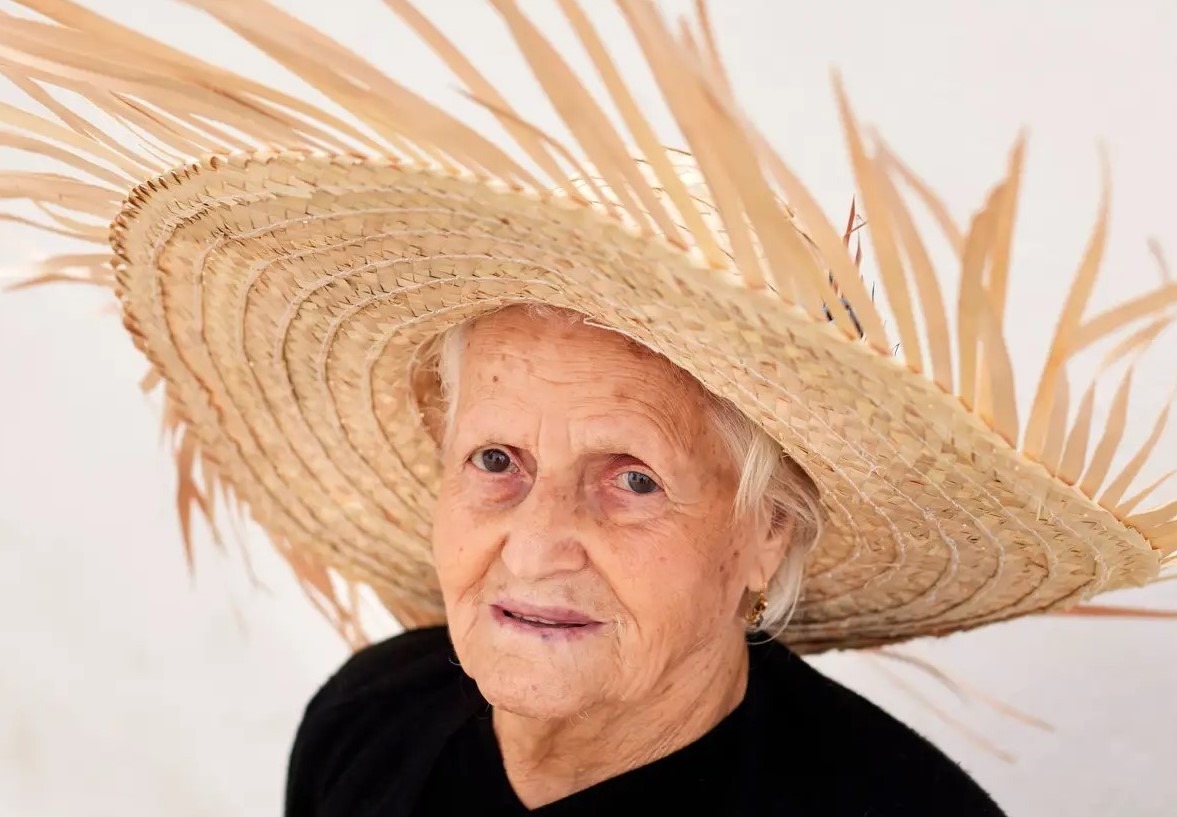
A master craftswoman, Almerinda Miguel started in the art of palm at the age of 8, learning from her mother and grandmother. Recognized for its mastery in the slat construction and in the techniques of 11 and 13 branches, she combined tradition and innovation in unique pieces. She was part of the group of founding artisans of Casa da Empreita. Her dedication and knowledge remain as inspiration at Loulé Criativo.
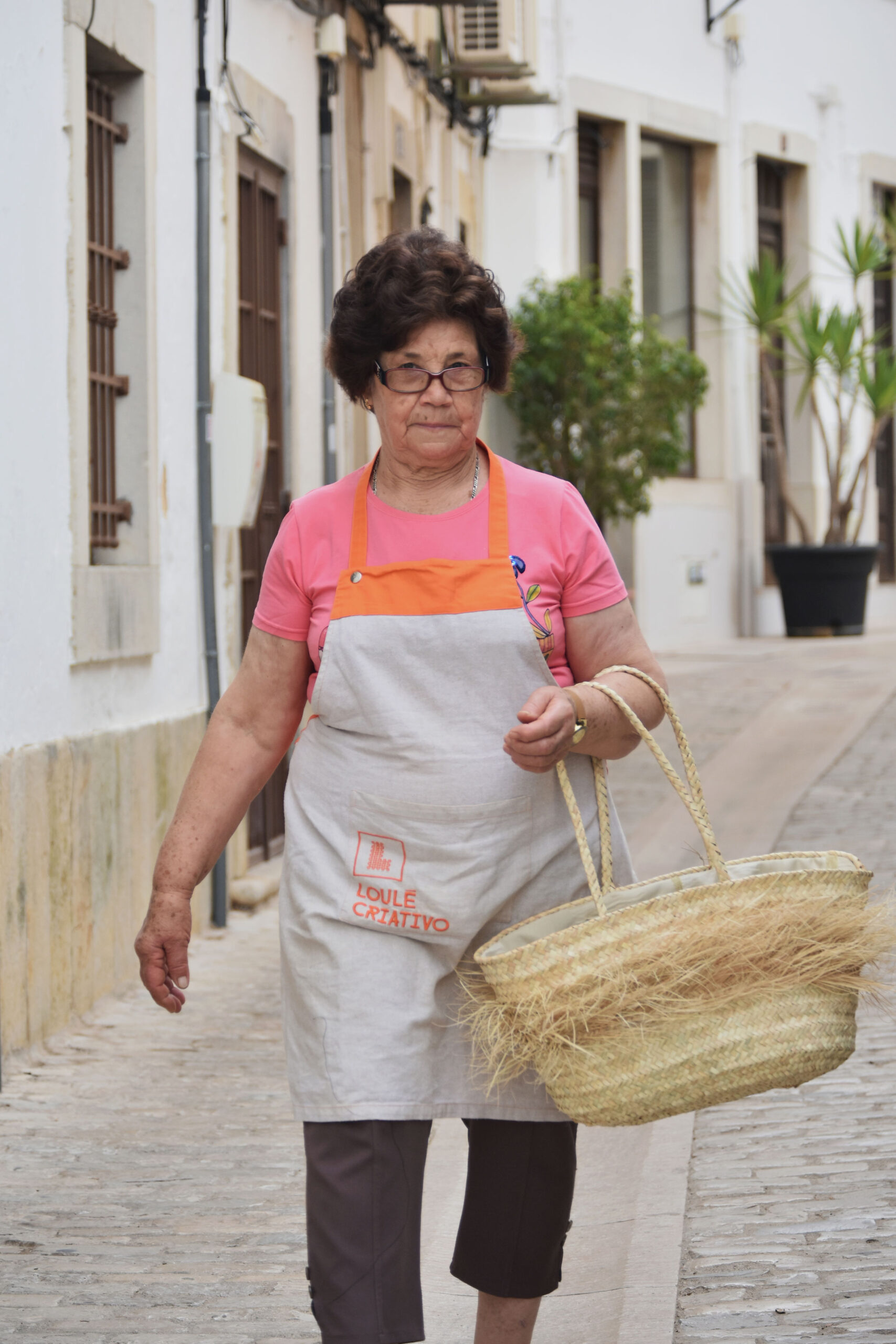
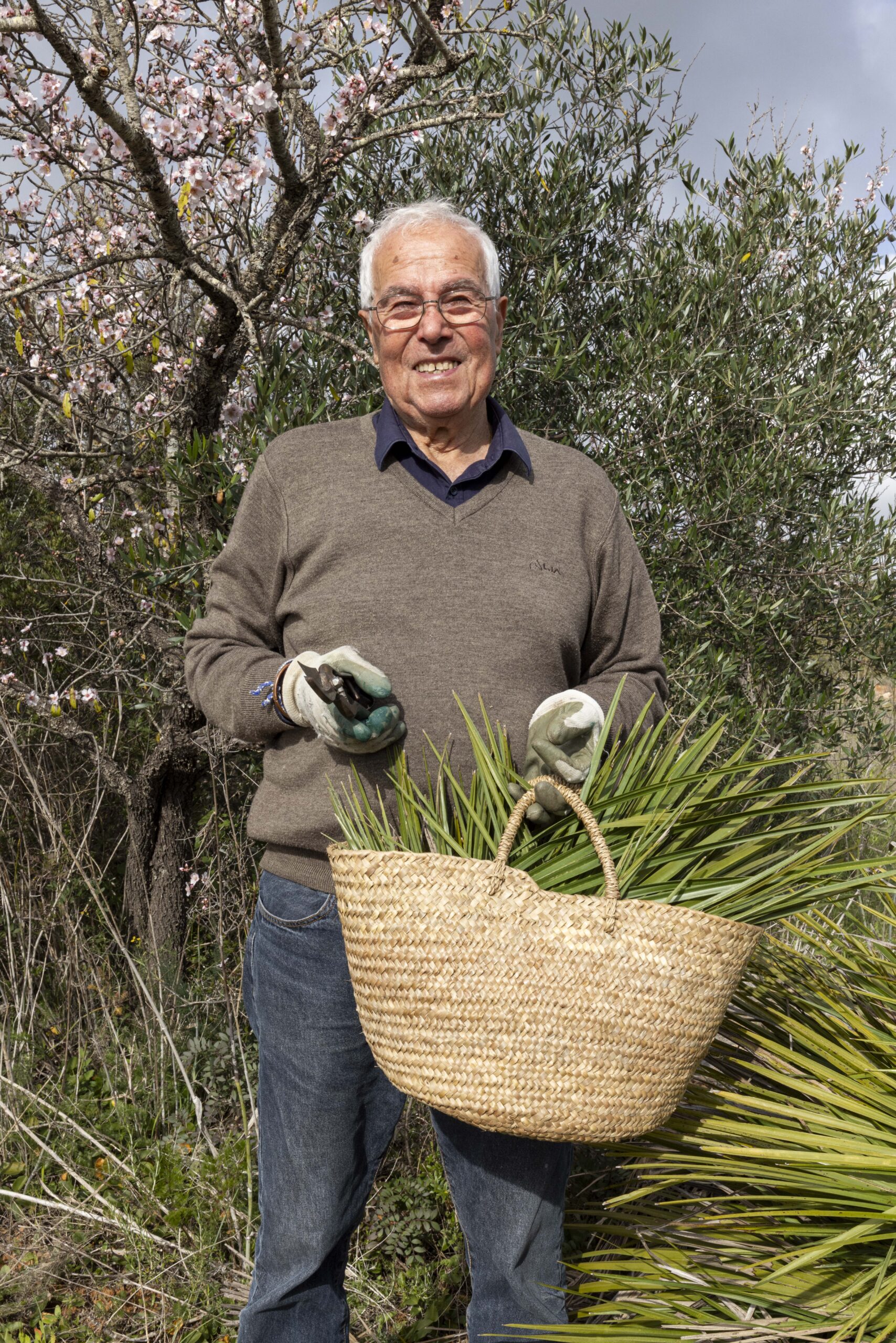
Jorge Santos, known as the Master of Baracinha, learned since he was a child to create the cord that gives shape to the knitted pieces. He currently keeps this tradition alive, integrating together with his wife, the artisan Margarida Cortez, the collective of artisans of Casa da Empreita, where he dedicatedly shares the knowledge and culture of the territory.