Project Infinity
#infinity was the name chosen for the project that Inframoura, a Municipal Company, in partnership with the Design Lab submitted to the Environmental Fund in the category of Sustainable Production and Consumption. The selection of the project in the top 10 at national level allowed the funding to make it happen!


Leni Farenzena
For Nature Design
An instrument for children, developed during Covid due to the need for greater use of outdoor spaces, it helps to stimulate the senses (tactile, sound, visual) increases the ability to concentrate and reason, and can be used individually or collectively.
The sound fish, created by reusing metal tubes from traffic signals with different diameters and lengths, produces higher and lower sounds. The colours were inspired by the coast of the Algarve beach, with the tubes of the highest sounds painted with warm colours – orange gradient from the dunes of the Algarve coast, and the bass sounds in cooler colours – turquoise gradient from the Algarve sea water.
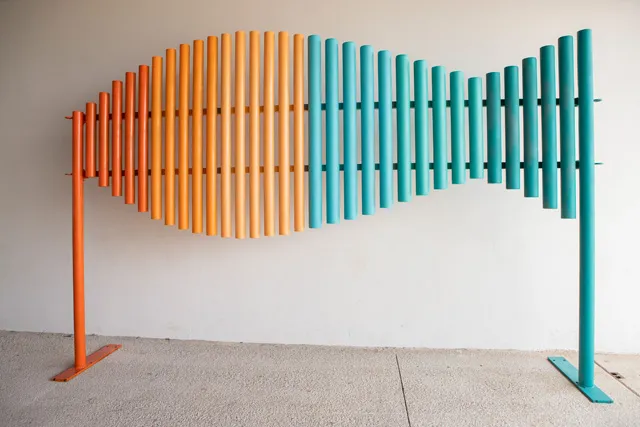
Fish — An outdoor musical instrument
This object arises from the need to attract birds near the Humanitarian Association of Parkinson's and Alzheimer's Patients, in order to brighten up the outdoor space and the users. In a combination of local arts and materials recycled in the region.
Strategy: Life cycle extension.
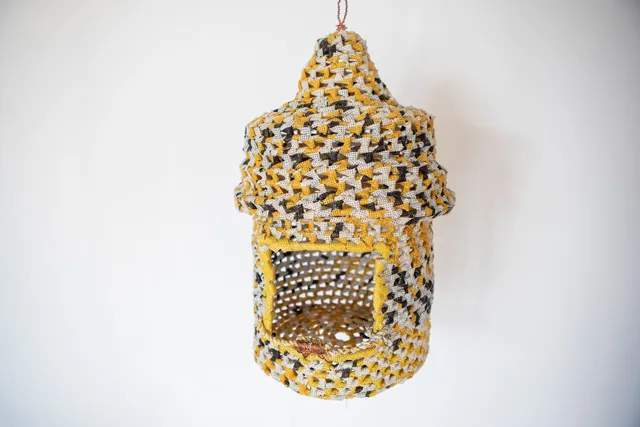
Birdhouses
Gustavo Arguello and Carla Martins
Martins Arguello Design Studio
Forgotten drawers that were lost from their chests of drawers and gained new life. Each drawer received recovered chair legs. These small gardens are living experiences that transform over time according to your care. The intention is to promote tactile, visual and olfactory stimuli and a little green into the closed spaces, in addition to providing users with reduced mobility with the pleasure of taking care of a small garden.
Strategy: Recondition furniture drawers that were already damaged to create a new product.
Remanufacturing and repurposing a product by extending its life cycle with a new function.
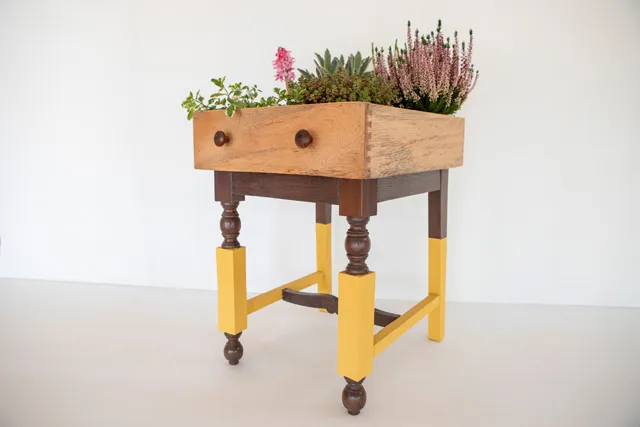
Sensory Garden
Marta Lourenço
PURE belovedbynature
Mill for aromatic herbs consisting of an octagonal granite base and a solid wood (mahogany) rotating wheel that rotates around an axis through a cylindrical handle.
Small leaves of dried aromatic herbs (oregano, mint, lavender, rosemary, among others) can be used and placed under the wheel. With a rotating movement of the wheel, the herbs will rub between it and the stone, releasing aroma.
Strategy: Reuse and repurpose chipped staircase stones and pieces of wood. To value surpluses of aromatic plants from garden pruning: lavender and rosemary.
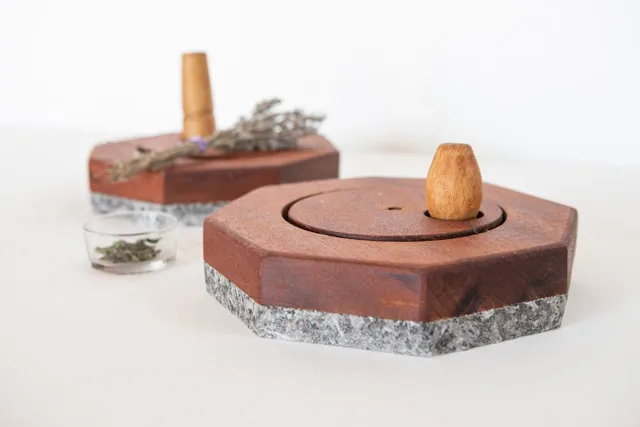
Herb mill
Sandra Neto
Mess
Bio-resin table set composed of 28 pieces of colored faces that can be paired with other chromatically congruent ones, placing them side by side. It aims to cognitively stimulate the player through scales of chromatic harmony and simultaneous contrasts, challenging and exercising their attention and perception.
Strategy: Valorization of surpluses, by-products and waste with the aim of innovating in the extraction and use of materials from waste streams.
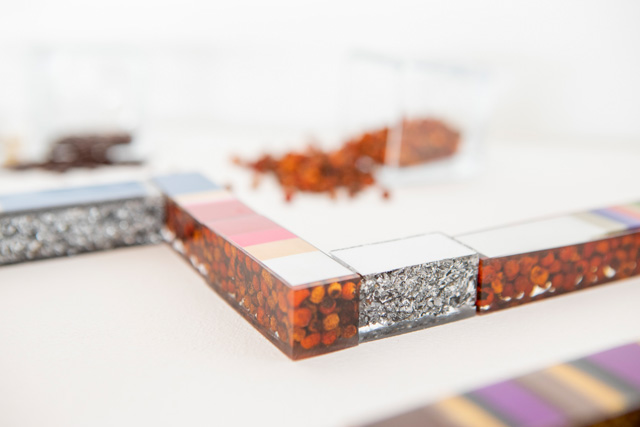
Dominor
Verónica Guerreiro and Paulo Tomé
PidutournéeDesign
Sacos organizadores para uso diário destinado às funcionárias dos viveiros da Inframoura. Dar uma nova vida às lonas de publicidade, este era o principal objetivo, desenhou-se então um simples saco mas específico para o seu dia-a-dia. Com medidas específicas pardsadsdaa facilitar o transporte do equipamento, vestuário de segurança e de ferramentas pequenas. O saco foi criado com bolsas interiores abertas que facilitam o retirar e posicionar de pequenas ferramentas e acessórios quotidianos. Contém uma fita em velcro ajustável para transporte de garrafas. No exterior existem bolsos laterais com abas com medidas próprias para resguardo das luvas de trabalho e ferramentas pequenas como a tesoura de podar.
Estratégia: Extensão do ciclo de vida de lonas usadas reutilizando-as na remanufatura de sacos organizadores e de transporte.

Work accessories (organizer bags)
André Silva Sancho
BlowPlastic
“Assumindo o upcycling como meio de elevação do desperdício ao produto de valor acrescentado, foi explorada a estética de construção, de processo, de mutação, mas mais que tudo, da materialização de um conceito”
Estratégia: Extensão do ciclo de vida
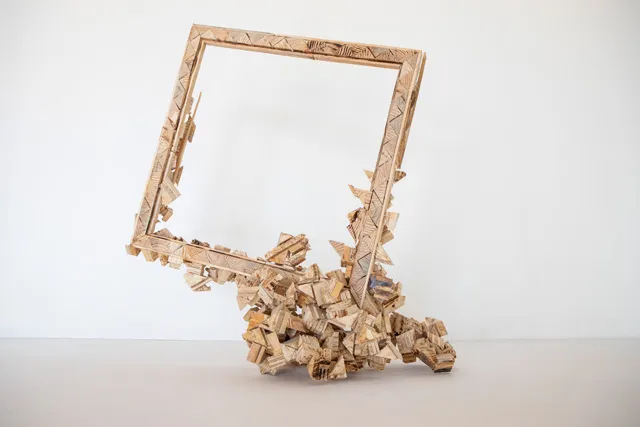
Fragmentum
Verónica Guerreiro and Paulo Tomé
PidutournéeDesign
São duas cadeiras iguais de sala de jantar com apoio de braços, foram descartadas devido ao desgaste exterior das suas forras. Foram recondicionadas para uso em ambiente exterior. Optou-se por criar novas forras, reutilizando pedaços de lonas usadas recortadas, procurou-se assumir o modelo de retalho para construir um padrão de cores dinâmicas.
A lona é uma material impermeável, conferindo-lhe proteção extra para uso em ambientes exteriores.
Estratégia: Reparar e recondicionar para prolongar a vida útil
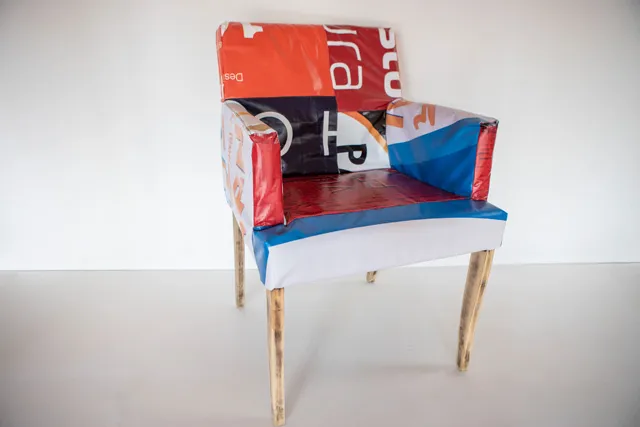
Cadeiras Retalhadas
Verónica Guerreiro and Paulo Tomé
PidutournéeDesign
Made from pallet wood, it has been designed with standard measurements to be used on kitchen countertops where it can be easily stored due to the castors. It consists of 3 individual modules that separate and change order, allowing the collection of food waste in the upper module, the maturation of the compost in the second module and the collection of liquid humus in the third.
The handles have been reused from an old chest of drawers existing on both sides to allow easy handling. The double-opening worktop allows the upper module to be used on both sides. It is lined with canvas used inside to extend the life of the woods.
Strategy: Relocation of raw material (wood) and reuse of tarpaulins
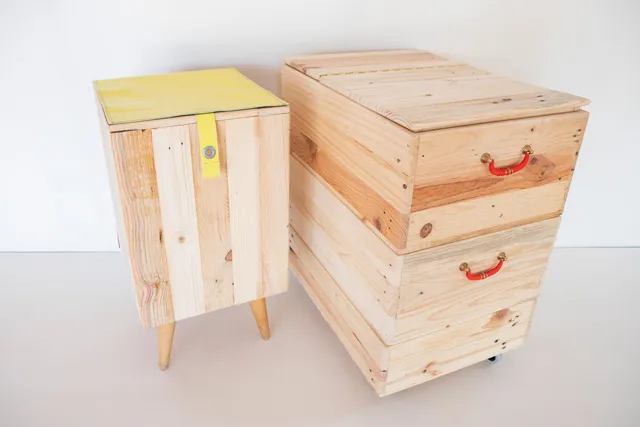
Composter
Gustavo Arguello and Carla Martins
Martins Arguello Design Studio
Used chair seats have been transformed into boards for stimulating and creative play. It is a matrix of wooden pins where with colored elastics of different sizes it is possible to draw an infinity of figures, letters, numbers and everything that the imagination allows. It stimulates fine motor skills, imagination, abstraction and communication. Dual function game: playful and decorative. Its differentiated shape allows a comfortable support on the armchairs used in the Institutions, folded and hung on the wall they can be transformed into paintings. Strategy: Recondition chair seats with solid wood that were already damaged to create a new product. Remanufacturing and repurposing a product by extending its life cycle with a new function.
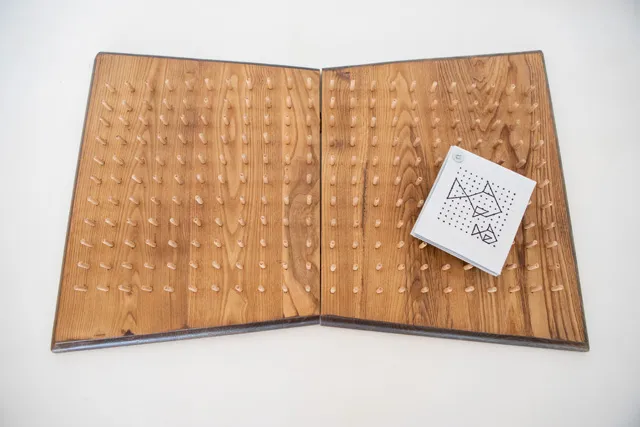
Geoboard Game
Verónica Guerreiro and Paulo Tomé
PidutournéeDesign
The side table created for the Lar Casa do Povo do Ameixial, has the purpose of improving the comfort and quality of life of elderly people. This auxiliary table was created to support glasses, cups or plates, light meals, or to support small personal objects and use in games.
It is easy to manoeuvre, with 4 wheels for easy movement and the top has rounded corners for greater safety for the elderly.
The tubes of the advertising stands were given a second life, reusing them in the table structure and for the top, part of an OSB plate was reused from the remains of a work.
Strategy: Give a second life to the metal structures of the advertising stands in the creation of an auxiliary table for the elderly.
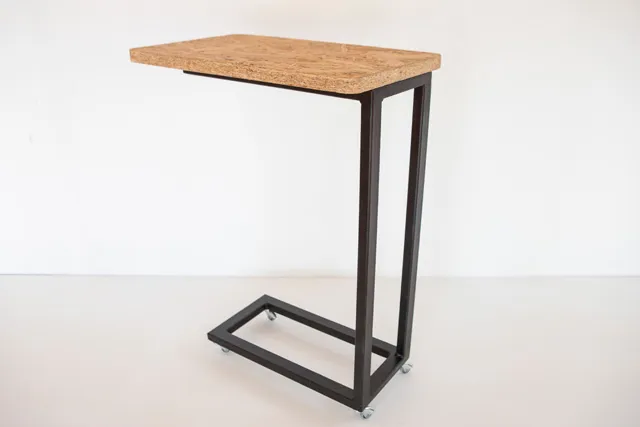
Side table
Sandra Neto
Mess
Bio-resin board game composed of 28 pieces containing textures and small objects that can be identified and related by size and material, through a visual analysis exercise. There are 14 possible pairs, in which a texture is identified and its analogous pair (object or material) is sought. This textural and material recognition game aims to stimulate quick personal memory and the ability to relate images by similarity.
Strategy: Recovery of surpluses, by-products and waste with the aim of innovating in the extraction and use of materials from waste streams
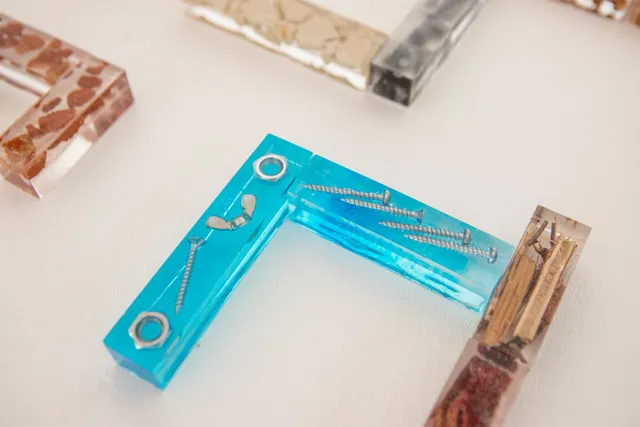
Matthew
Sandra Neto
Mess
Furniture with Oliva CL 50 sewing machine, the first automatic sewing machine of a Portuguese brand, to support the sewing room of the nursing home. The long-standing used furniture has been fully restored and the sewing machine repaired and adapted. This was achieved through the installation of a belt that made the machine work manually, with the aim of contributing to stimulate the motor skills of users, namely the lower limbs.
Strategy: Extend the useful life of the furniture and the machine that were out of use. Both were all restored and the sewing machine repaired and adapted to manual.
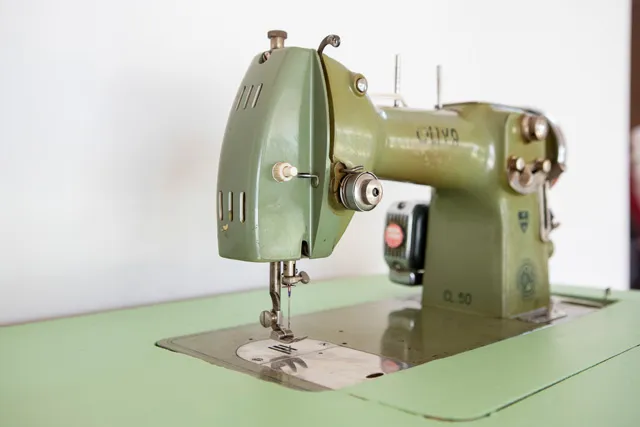
Olive Cabinet
Silva Sancho
André Silva Sancho
After noting the sedentary pace of the users of the Casa do Povo do Ameixial Home, the construction of 2 pedalboards + 1 pedalboard with a pine fan reused from pallets was planned, in order to exercise the lower and upper limbs, thus reducing the decrease in mobility of the community that lives there.
Strategy: Life cycle extension.
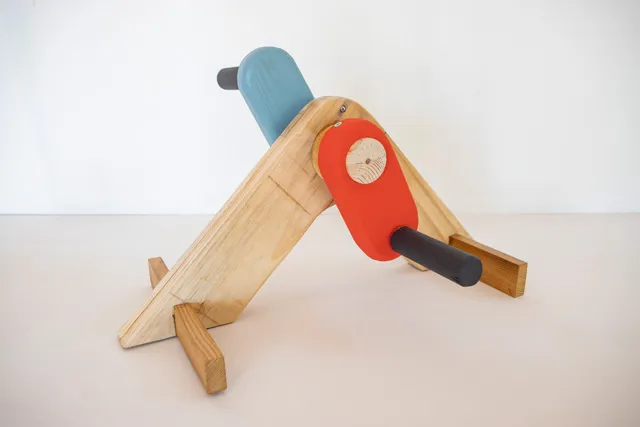
Stationary cranksets
Marta Lourenço
PURE belovedbynature
Structure of a kitchen, with dimensions suitable for the age group between 3 and 7 years old, built in wood, to be used outdoors. It has a container to put water with a mini tap. A stove and oven space designed essentially for the games of the
"make-believe" that may arise.
Strategy: Reuse and redirect pallets and wooden parts.
Extension of the life cycle of plastic objects.
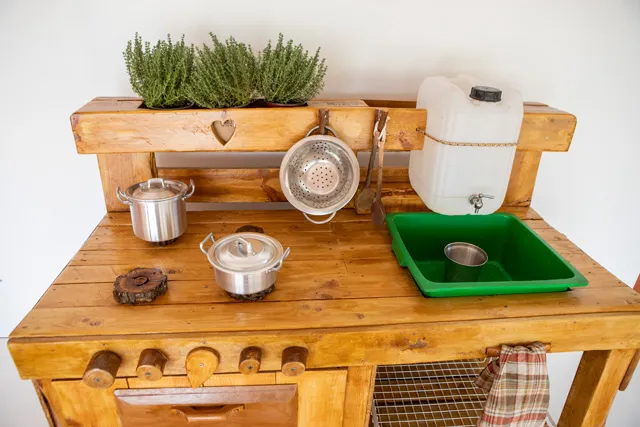
Outdoor kitchen for children


